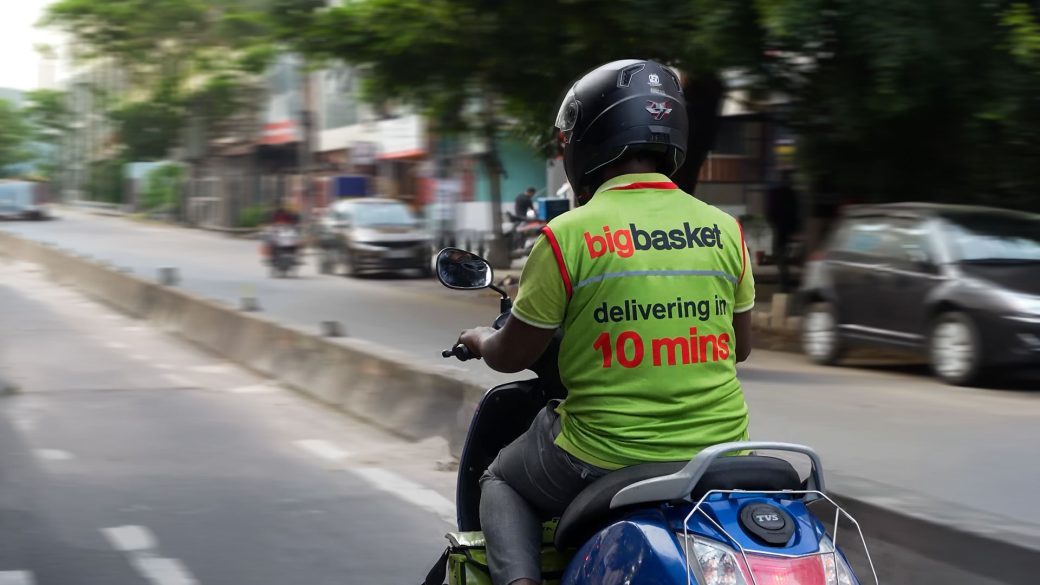
BigBasket, the Tata Digital-owned online grocery platform, is significantly reducing its operational footprint as newly appointed CEO Amit Nanda prioritizes profitability over rapid expansion. The company is reportedly scaling back operations from around 80 cities to nearly 40 profitable markets, marking a strategic shift as competition intensifies in India’s quick-commerce industry.
The restructuring comes as BigBasket faces mounting pressure from rivals including Blinkit, Zepto, Swiggy Instamart, and Flipkart Minutes, all of which continue to invest aggressively in ultra-fast grocery delivery. Instead of chasing market share at any cost, BigBasket’s new leadership is focusing on improving margins, optimizing operations, and achieving sustainable profitability.
BigBasket Narrows Focus to Profitable Cities
The company is restructuring its operations to improve financial performance.
| Key Details | Information |
|---|---|
| Company | BigBasket (Tata Digital) |
| New CEO | Amit Nanda |
| Previous footprint | Around 80 cities |
| Planned footprint | Nearly 40 profitable cities |
| Primary objective | Profitability and operational efficiency |
The move reflects a broader strategy to prioritize financially sustainable markets over nationwide expansion.
Why BigBasket Is Cutting Its Footprint
The operational overhaul is driven by increasing pressure on margins in the quick-commerce sector.
Key reasons include:
- Intensifying competition.
- High delivery and logistics costs.
- Pressure to improve profitability.
- Focus on operational efficiency.
- Better utilization of dark stores.
- Higher returns from profitable markets.
Management is shifting its strategy from aggressive expansion toward disciplined capital allocation.
Amit Nanda’s New Mandate
Former Amazon India executive Amit Nanda has been appointed to lead BigBasket’s turnaround.
His priorities reportedly include:
- Achieving profitability.
- Streamlining operations.
- Improving unit economics.
- Expanding private-label sales.
- Increasing customer retention.
- Strengthening execution.
The leadership transition signals Tata Digital’s renewed focus on financial performance after years of rapid growth.
India’s Quick-Commerce Market Remains Highly Competitive
| Company | Strategic Focus |
|---|---|
| BigBasket | Profitability and operational efficiency |
| Blinkit | Rapid expansion and dark-store growth |
| Zepto | Premium grocery and quick delivery |
| Swiggy Instamart | Expansion and product diversification |
| Flipkart Minutes | Leveraging Flipkart’s ecosystem |
Competition continues to intensify as companies seek to balance growth with sustainable economics.
Why Profitability Matters
Quick commerce remains one of India’s most capital-intensive retail segments.
Major cost pressures include:
- Last-mile delivery.
- Dark store operations.
- Customer acquisition.
- Heavy discounting.
- Inventory management.
- Technology investments.
Companies are increasingly prioritizing positive unit economics alongside revenue growth.
BigBasket’s Growth Strategy
Despite reducing its footprint, BigBasket is expected to continue investing in strategic areas.
Likely priorities include:
- High-demand urban markets.
- Private-label products.
- Supply chain optimization.
- Customer experience.
- Technology-driven operations.
- Higher-margin grocery categories.
The company aims to strengthen profitability while maintaining competitiveness in core markets.
Challenges Ahead
BigBasket still faces several industry challenges.
These include:
- Aggressive pricing by rivals.
- Rising logistics costs.
- Consumer demand for faster delivery.
- Maintaining service quality.
- Balancing growth with profitability.
Execution will be critical as the company reshapes its operating model.
Outlook
BigBasket’s decision to reduce its operational footprint marks a significant shift in strategy under new CEO Amit Nanda. Rather than pursuing nationwide expansion, the company is concentrating resources on cities where it can generate sustainable profits. The move reflects a broader trend across India’s quick-commerce industry, where investors and parent companies are increasingly emphasizing profitability over market-share growth.
If successful, the restructuring could strengthen BigBasket’s financial position and provide a more sustainable platform for long-term growth. However, the company will need to compete effectively against well-funded rivals that continue to expand aggressively while meeting consumer expectations for speed, convenience, and competitive pricing.
What It Means for India’s Quick-Commerce Industry
BigBasket’s strategic reset illustrates how India’s quick-commerce market is entering a more mature phase. After years of rapid expansion fueled by investment, companies are increasingly being judged on profitability, operational efficiency, and unit economics rather than customer acquisition alone.
For the industry, this shift could lead to more disciplined expansion, greater emphasis on private-label products, and improved supply chain efficiency. While competition is expected to remain intense, sustainable business models are likely to become the defining factor for long-term success in India’s fast-growing online grocery market.
Get the day’s top stories in your inbox
One concise email. No spam, unsubscribe anytime.