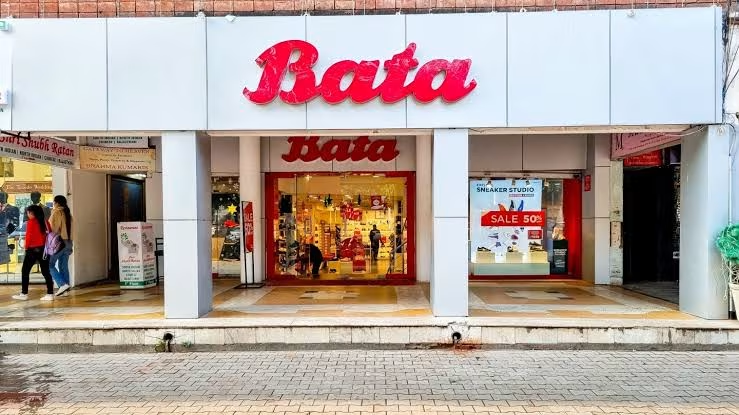
Bata India has crossed the milestone of 2,000 retail stores across the country, becoming India’s largest footwear retail network. Building on this achievement, the company has unveiled plans to expand to 3,000 outlets over the next few years, with growth driven primarily through a franchise-led model focused on Tier III and Tier IV cities. The strategy reflects Bata’s push to deepen its presence in underserved markets while maintaining capital efficiency.
India remains Bata’s largest global market and its biggest manufacturing and sourcing hub, contributing nearly one-fourth of the Bata Group’s global revenue. The company sells close to 50 million pairs of footwear annually through company-owned stores, franchise outlets, multi-brand retailers, and digital channels. Alongside physical expansion, Bata is strengthening its omnichannel capabilities to capture rising demand from both online and offline shoppers.
Bata India Crosses 2,000 Stores
The company has reached a major milestone in its retail expansion journey.
| Key Highlights | Details |
|---|---|
| Company | Bata India |
| Current retail network | 2,000+ stores |
| Expansion target | 3,000 outlets |
| Growth strategy | Franchise-led expansion |
| Focus markets | Tier III and Tier IV cities |
The milestone reinforces Bata’s leadership in India’s organized footwear retail sector.
Franchise-Led Expansion Strategy
Future growth will rely heavily on franchise partners.
Key objectives include:
- Expanding into smaller towns and cities.
- Improving market accessibility.
- Lowering capital expenditure.
- Accelerating store openings.
- Strengthening local entrepreneurship.
- Building a wider retail presence.
The franchise model allows Bata to scale more rapidly while maintaining operational efficiency.
India Remains Bata’s Most Important Market
India continues to play a central role in Bata’s global operations.
| Business Metric | Details |
|---|---|
| Largest global market | India |
| Global revenue contribution | Nearly 25% |
| Annual footwear sales | Around 50 million pairs |
| Manufacturing role | Largest sourcing and production hub |
The Indian market remains a key driver of Bata’s long-term global growth strategy.
Omnichannel Strategy Gains Momentum
Bata is investing heavily in integrating its physical and digital channels.
Current initiatives include:
- Hyperlocal order fulfillment.
- App-led customer engagement.
- Click-and-collect services.
- Seamless online-to-offline shopping.
- Faster last-mile delivery.
- Digital customer experience enhancements.
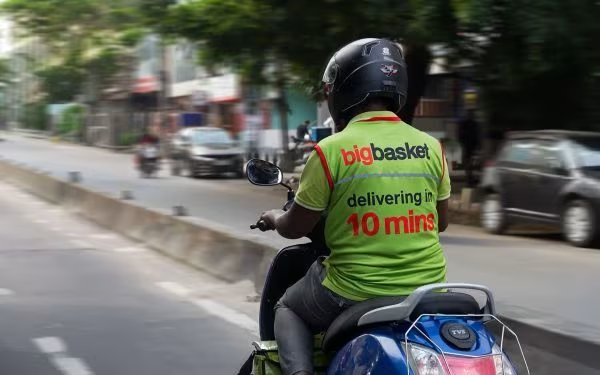
Nearly 90% of Bata’s stores now function as hyperlocal fulfillment centers, enabling quicker deliveries and better inventory utilization. The company expects digital channels to contribute 20–25% of total business over the next few years.
Retail Transformation Underway
Bata is also modernizing its store network.
Major initiatives include:
- Expanding the Zero-Based Merchandising (ZBM) format.
- Improving inventory efficiency.
- Enhancing in-store merchandising.
- Creating a better shopping experience.
- Modernizing store layouts.
The company has expanded its ZBM format to around 775 stores and plans to increase this to nearly 900 stores by the end of 2026.
Why the Expansion Matters
The expansion strategy aligns with broader trends in India’s footwear market.
Growth drivers include:
- Rising disposable incomes.
- Increased demand in smaller cities.
- Growth of organized retail.
- Expansion of branded footwear.
- Stronger omnichannel adoption.
Tier III and Tier IV markets are expected to become important contributors to future retail growth.
Challenges Ahead
Despite its strong position, Bata faces several challenges.
These include:
- Intensifying competition from domestic and international brands.
- Rising operating costs.
- Changing consumer preferences.
- Growth of online-first footwear companies.
- Maintaining franchise quality and consistency.
Balancing rapid expansion with operational excellence will remain critical.
Outlook
Bata India’s plan to expand from 2,000 to 3,000 stores reflects its confidence in the long-term growth potential of India’s footwear market. By combining franchise-led expansion with omnichannel investments and retail modernization, the company aims to strengthen its leadership while reaching consumers in emerging markets.
As consumer spending grows beyond metropolitan areas, Bata’s strategy of focusing on Tier III and Tier IV cities could provide a significant competitive advantage. Continued investments in digital commerce, fulfillment capabilities, and store modernization are also expected to support sustainable growth while improving customer experience across channels.
What It Means for India’s Retail Sector
Bata’s expansion highlights the increasing importance of franchise-led growth in India’s organized retail industry. Rather than relying solely on company-owned outlets, retailers are increasingly partnering with local entrepreneurs to accelerate expansion while keeping costs under control.
For the broader retail sector, Bata’s strategy demonstrates that future growth is likely to come from a combination of physical retail, digital commerce, and omnichannel fulfillment. As consumer demand spreads across smaller cities, brands with strong distribution networks and integrated online-offline experiences are expected to be well positioned for long-term success.
Get the day’s top stories in your inbox
One concise email. No spam, unsubscribe anytime.