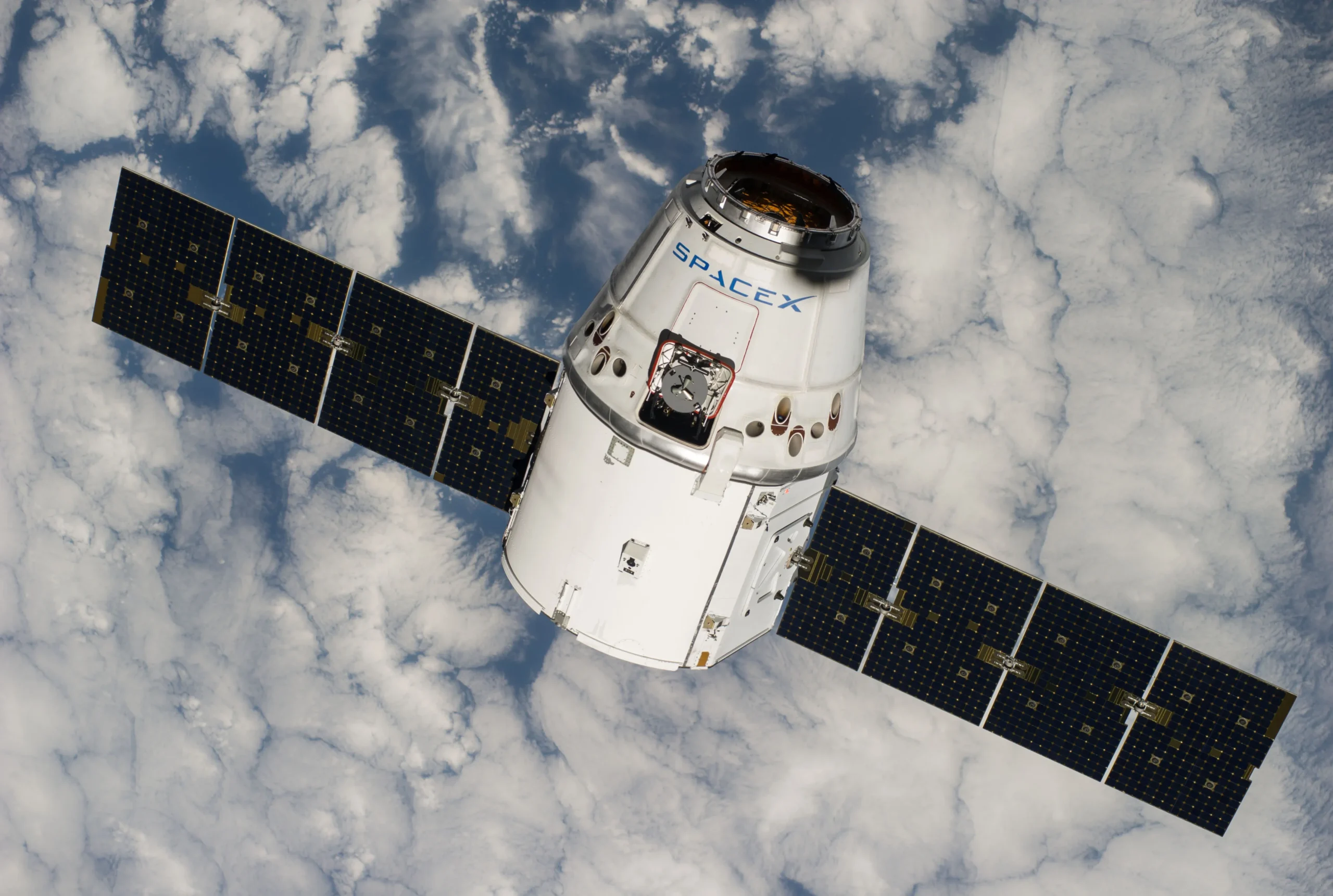
SpaceX has successfully launched BOHR (Betavoltaic Orbital High-Reliability), the world’s first commercially built nuclear-powered satellite, aboard its Falcon 9 Transporter-17 rideshare mission from Vandenberg Space Force Base in California. Developed by Florida-based City Labs, the CubeSat is designed to demonstrate the company’s NanoTritium betavoltaic power technology, which generates electricity from the natural radioactive decay of tritium rather than relying solely on solar panels. The mission also marks the first commercial launch of a nuclear-powered satellite approved under the U.S. Federal Aviation Administration’s (FAA) modern regulatory framework for space nuclear systems.
The successful launch is considered a major milestone for the commercial space industry, as compact nuclear power sources could enable future spacecraft to operate in environments where sunlight is limited, including permanently shadowed regions of the Moon, deep-space missions, and long-duration autonomous satellites. The FAA approval also demonstrates that commercial nuclear payloads can meet stringent public safety and licensing requirements established under Part 450 and related guidance for space nuclear systems.
BOHR Becomes the First Commercial Nuclear-Powered Satellite
BOHR is a demonstration CubeSat built to validate City Labs’ NanoTritium betavoltaic battery technology in orbit.
Mission highlights include:
- World’s first commercially built nuclear-powered satellite.
- Launched aboard SpaceX’s Transporter-17 mission.
- Developed by City Labs.
- Uses a compact betavoltaic power source based on tritium.
- Designed to test long-life nuclear power generation in space.
- First commercial nuclear satellite approved under the FAA’s current regulatory framework.
Unlike conventional satellites that depend primarily on solar panels and rechargeable batteries, BOHR evaluates whether nuclear-powered micro-energy systems can reliably support spacecraft over extended periods.
How Betavoltaic Nuclear Power Works
BOHR does not use a nuclear reactor. Instead, it relies on a betavoltaic battery, a technology that converts energy released during the radioactive decay of tritium directly into electricity.
The system works by:
- Using tritium sealed within a metal hydride matrix.
- Capturing low-energy beta particles emitted during radioactive decay.
- Converting those particles into electricity through semiconductor materials.
- Delivering continuous, maintenance-free power for years.
- Producing minimal heat compared with conventional radioisotope systems.
- Requiring no moving parts, improving long-term reliability.
Because tritium emits low-energy beta radiation that is easily shielded, developers say the technology is well suited for compact commercial spacecraft.
Why Nuclear Power Could Transform Space Missions
Most satellites today rely on solar arrays, which become less effective in environments with limited sunlight.
Compact nuclear power systems could enable:
- Lunar missions in permanently shadowed craters.
- Deep-space exploration.
- Long-duration scientific satellites.
- Autonomous sensors.
- Space infrastructure operating through eclipses.
- Continuous low-power operation without relying entirely on solar energy.
Although BOHR still uses solar power for many spacecraft functions, the mission is intended to validate nuclear micropower technology for future standalone applications.
First Commercial Mission Under FAA Nuclear Rules
A major aspect of the mission is its regulatory significance.
The BOHR satellite became the first commercial nuclear-powered spacecraft launched under the FAA’s guidance governing Space Nuclear Systems (SNS).
To receive approval, developers had to demonstrate that the payload met strict requirements covering:
- Public health and safety.
- Launch risk assessment.
- Radiation containment.
- National security considerations.
- Environmental protection.
- Mission safety throughout launch and operation.
The FAA evaluates commercial nuclear payloads individually before granting launch authorization under its commercial space licensing framework.
Why This Matters for the Commercial Space Industry
The successful launch represents an important step toward expanding commercial nuclear technologies beyond government-led missions.
Potential future applications include:
- AI-powered autonomous spacecraft.
- Lunar infrastructure.
- Defense and surveillance satellites.
- Space robotics.
- Scientific exploration.
- Long-endurance communication systems.
As commercial space missions become more ambitious, demand for reliable long-duration power sources is expected to increase.
Industry Outlook
Governments and private companies are investing heavily in advanced space power technologies as exploration expands beyond Earth orbit.
Key trends include:
- Growth in commercial lunar missions.
- Rising investment in deep-space exploration.
- Increasing deployment of autonomous spacecraft.
- Expansion of commercial satellite constellations.
- Development of next-generation nuclear power systems.
- Stronger regulatory frameworks for commercial nuclear missions.
BOHR serves as an early demonstration that compact nuclear power systems can potentially support future commercial space operations.
What Investors Will Watch
Following the successful launch, industry participants will monitor:
- BOHR’s in-orbit performance.
- Reliability of NanoTritium technology.
- Future commercial partnerships for City Labs.
- Additional FAA-approved nuclear missions.
- Adoption of betavoltaic power in lunar and deep-space missions.
- Regulatory developments for commercial nuclear payloads.
Positive mission results could accelerate investment in advanced spacecraft power systems and open new opportunities for commercial space technology companies.
Outlook
The launch of BOHR aboard SpaceX’s Falcon 9 marks a historic milestone for commercial spaceflight. As the world’s first commercially built nuclear-powered satellite and the first launched under the FAA’s modern space nuclear licensing framework, the mission demonstrates that compact nuclear power systems are moving from research into practical commercial applications.
If BOHR successfully validates its betavoltaic power technology in orbit, it could pave the way for a new generation of spacecraft capable of operating far beyond the limits of traditional solar-powered satellites. From lunar exploration to deep-space missions, compact nuclear energy may become a key enabling technology for the future of commercial space exploration.
Get the day’s top stories in your inbox
One concise email. No spam, unsubscribe anytime.