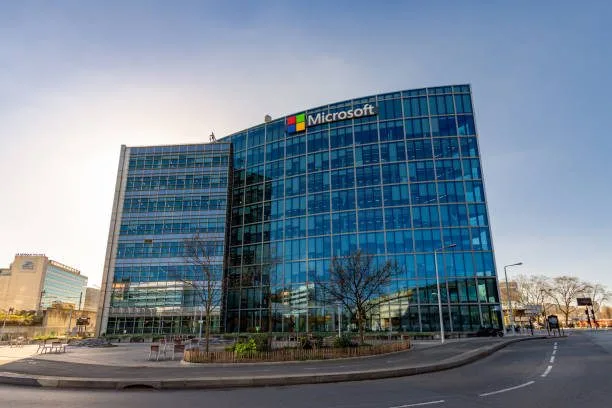
Microsoft’s carbon emissions increased by 25% in 2025 compared with the previous year, highlighting the environmental cost of the company’s aggressive artificial intelligence (AI) expansion. According to Microsoft’s 2026 Environmental Sustainability Report, total emissions reached 34 million metric tons of carbon dioxide equivalent (CO₂e), up from approximately 27.2 million metric tons in 2024, as the company accelerated investments in AI data centers, cloud infrastructure, and advanced computing capacity. Despite the increase, Microsoft reiterated its commitment to becoming carbon negative by 2030, while acknowledging that the rapid growth of AI infrastructure is creating significant sustainability challenges.
The report underscores a growing dilemma facing the technology industry: demand for AI computing is rising much faster than the deployment of clean energy and low-carbon infrastructure. Microsoft, along with rivals including Google, Amazon, and Meta, is investing hundreds of billions of dollars in new AI data centers, resulting in higher electricity consumption, increased construction-related emissions, and greater demand for cooling and water resources.
Microsoft’s Carbon Emissions Rise 25%
Microsoft’s latest sustainability report shows that its total greenhouse gas emissions climbed to 34 million metric tons CO₂e in 2025.
Key highlights include:
- Carbon emissions increased 25% year over year.
- Total emissions reached 34 million metric tons CO₂e.
- AI infrastructure expansion was the primary driver.
- Construction of new data centers significantly increased embodied carbon emissions.
- Electricity consumption continued to rise alongside AI workloads.
- The company remains committed to becoming carbon negative by 2030.
Microsoft noted that, without additional sustainability measures such as renewable energy procurement and carbon removal initiatives, its emissions would have been even higher.
AI Boom Drives Higher Energy Demand
The rapid deployment of AI services—including Copilot, Azure AI, and large language models—has dramatically increased Microsoft’s computing requirements.
The expansion includes investments in:
- AI-optimized data centers.
- High-performance GPU clusters.
- Cloud infrastructure.
- Advanced networking equipment.
- Cooling systems.
- Power infrastructure.
Training and running modern AI models require enormous computing resources, leading to increased electricity use and higher emissions associated with both facility construction and operations.
Data Centers Are the Biggest Challenge
Microsoft said much of the increase came from expanding its global data center footprint.
Key factors contributing to higher emissions include:
- Manufacturing of steel and concrete used in new facilities.
- Semiconductor production.
- Server manufacturing.
- Higher electricity demand.
- Supply chain emissions.
- Continued growth in cloud services.
The company also reported a sharp increase in emissions associated with purchased electricity, reflecting the rapid scaling of AI infrastructure in regions where clean energy availability remains limited.
Microsoft Continues Investing in Sustainability
Despite rising emissions, Microsoft says it remains focused on achieving its environmental goals.
Current initiatives include:
- Expanding renewable energy procurement.
- Investing in carbon removal technologies.
- Improving energy efficiency in data centers.
- Developing low-carbon construction methods.
- Supporting water replenishment projects.
- Purchasing high-quality carbon removal credits.
The company argues that many of today’s infrastructure investments are intended to enable lower-carbon operations over the long term.
AI Creates Industry-Wide Sustainability Challenges
Microsoft is not alone in facing higher emissions.
Several major technology companies have recently reported rising environmental footprints as AI investments accelerate:
- Google reported a significant increase in emissions linked to AI infrastructure.
- Amazon disclosed higher emissions as it expanded data center capacity.
- Meta is also investing heavily in AI-focused infrastructure.
The trend reflects the enormous energy requirements of next-generation AI systems and the difficulty of expanding clean energy quickly enough to match demand.
Balancing AI Growth With Climate Goals
Microsoft maintains that AI can ultimately contribute to sustainability by improving energy efficiency, optimizing industrial operations, and accelerating scientific research.
Potential AI applications include:
- Smart electricity grids.
- Climate modeling.
- Precision agriculture.
- Industrial automation.
- Building energy optimization.
- Carbon accounting.
However, environmental experts note that these long-term benefits must be weighed against the substantial emissions generated by rapidly expanding AI infrastructure.
What Investors and Policymakers Will Watch
As AI infrastructure spending continues to grow, stakeholders will monitor:
- Progress toward Microsoft’s 2030 carbon-negative target.
- Expansion of renewable energy capacity.
- Data center energy efficiency.
- Carbon removal investments.
- Water consumption.
- Regulatory developments related to AI infrastructure.
These factors will play an important role in determining whether major technology companies can meet ambitious climate commitments while continuing to scale AI services.
Outlook
Microsoft’s 25% increase in carbon emissions illustrates the growing environmental trade-offs associated with the global AI boom. Massive investments in data centers, cloud computing, and AI hardware are driving higher emissions across the technology sector, even as companies continue pursuing ambitious sustainability goals.
While Microsoft remains committed to becoming carbon negative by 2030, achieving that target will require rapid expansion of renewable energy, more efficient AI infrastructure, and large-scale carbon removal. As demand for AI continues to surge, balancing technological innovation with environmental sustainability is likely to become one of the defining challenges for the global technology industry.
Get the day’s top stories in your inbox
One concise email. No spam, unsubscribe anytime.