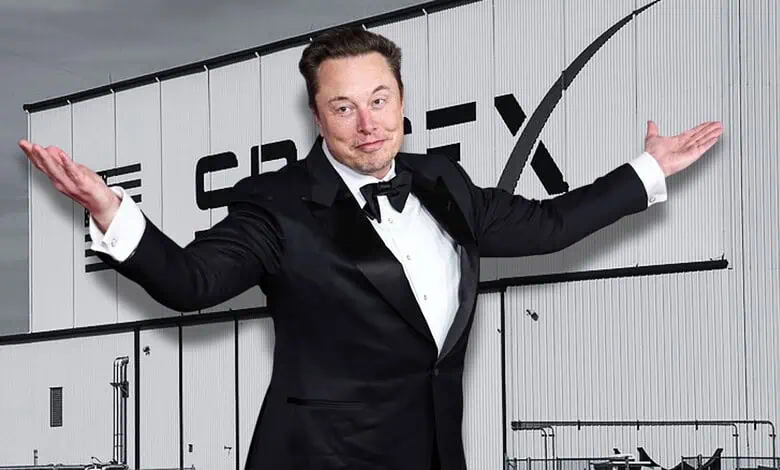
Elon Musk has said that SpaceX could eventually be worth more than the entire Earth economy if the company successfully achieves its long-term goals of making humanity a multi-planetary species. The remark reflects Musk’s ambitious vision for SpaceX, whose plans include expanding the Starlink satellite network, developing the fully reusable Starship launch system, and enabling large-scale human settlement on Mars.
While the statement is aspirational rather than a financial forecast, it underscores the scale of Musk’s long-term ambitions for the private space company.
Elon Musk’s Vision for SpaceX
Musk believes SpaceX’s ultimate value could exceed that of any company in history if it fulfills its mission.
The company’s long-term objectives include:
- Building a fully reusable space transportation system.
- Establishing a permanent human presence on Mars.
- Expanding the Starlink satellite internet network.
- Reducing the cost of access to space.
- Supporting lunar exploration.
- Enabling interplanetary travel.
These goals extend far beyond the company’s current launch and satellite internet businesses.
Why Musk Believes SpaceX Could Become Extremely Valuable
According to Musk, creating a self-sustaining civilization beyond Earth could unlock enormous economic opportunities over the coming decades.
Potential growth drivers include:
- Global satellite broadband.
- Commercial space transportation.
- Lunar and Mars logistics.
- Space infrastructure.
- Deep-space exploration.
- Future off-Earth economic activity.
If such markets develop at scale, they could significantly expand the company’s long-term business opportunities.
SpaceX’s Current Growth Engines
Even before realizing its Mars ambitions, SpaceX continues to grow rapidly through several businesses.
Its major revenue sources include:
- Falcon 9 launch services.
- Starship development.
- Starlink subscriptions.
- Government contracts.
- Commercial satellite launches.
- National security missions.
Starlink has become one of the world’s largest satellite internet providers, while Falcon 9 remains one of the most frequently launched rockets globally.
Challenges Ahead
Achieving Musk’s long-term vision will require overcoming significant technical, financial, and regulatory challenges.
Key hurdles include:
- Successful Starship development.
- Mars mission execution.
- Large-scale infrastructure investment.
- Regulatory approvals.
- Long-term funding.
- Technological breakthroughs.
Many of these milestones could take decades to accomplish.
Private Space Industry Continues to Expand
The global commercial space sector is experiencing rapid growth as governments and private companies increase investments in space technology.
Major growth areas include:
- Satellite communications.
- Space transportation.
- Earth observation.
- Space manufacturing.
- Lunar exploration.
- Deep-space missions.
SpaceX remains one of the leading companies driving innovation across these segments.
Outlook
Elon Musk’s statement that SpaceX could one day be worth more than Earth’s economy reflects the company’s extraordinarily ambitious long-term vision rather than a near-term valuation target. By pursuing fully reusable rockets, expanding Starlink, and working toward human settlement on Mars, SpaceX aims to create entirely new industries beyond Earth.
Whether those ambitions are ultimately realized will depend on decades of technological progress, sustained investment, and successful execution. Regardless of the outcome, SpaceX continues to play a pivotal role in shaping the future of the global commercial space industry.
Get the day’s top stories in your inbox
One concise email. No spam, unsubscribe anytime.