Key takeaways
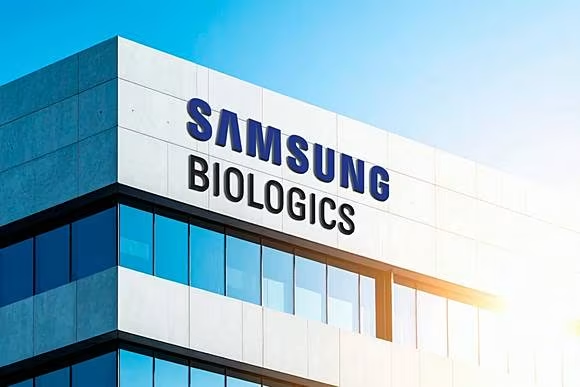
- Samsung Biologics deal means the Korean drug maker plans to buy PolyPeptide Group for about $1.8 billion in cash.
- PolyPeptide makes peptide ingredients. Peptides are short chains of amino acids, the tiny building blocks of proteins.
- The buyout would give Samsung a bigger footprint in Europe, the U.S., and newer drug types.
- Investors will watch for approval steps, integration plans, and how fast revenue grows after the takeover.
The Samsung Biologics deal is a plan to buy Swiss company PolyPeptide Group for about $1.8 billion in cash. A cash deal means the buyer pays money, not shares. The move would push Samsung deeper into fast-growing drug ingredients, especially peptides used in new medicines.
What is the Samsung Biologics deal?
Samsung Biologics said it will acquire PolyPeptide Group, a Swiss drug manufacturing company, in an all-cash transaction. The announced value is about $1.8 billion. That is roughly ₹15,000 crore at an exchange rate near ₹83 to the dollar.
PolyPeptide is known for making peptide-based active pharmaceutical ingredients. Active pharmaceutical ingredients are the core chemicals that make a medicine work. These ingredients are used in areas like hormone drugs, metabolic disease treatments, and other specialty medicines.
This Samsung Biologics deal matters because Samsung wants to expand beyond its current strength in biologics manufacturing. Biologics are complex drugs made from living cells. By adding peptides, Samsung could serve more drug companies and more kinds of therapies.
Why does Samsung want PolyPeptide?
The simple answer is growth. Samsung Biologics is already a major contract drug manufacturer, so it helps other pharma companies make medicines at scale. Contract manufacturing means one company makes products for another company that owns the drug.
Peptide drugs are drawing attention because they are used in several newer treatments. Some are linked to weight loss, diabetes, and rare disease care. That makes peptide production a valuable business, but it is also hard to do well.
PolyPeptide gives Samsung ready-made know-how, plants, and customer ties. Know-how means practical skill and experience. Instead of building all of that from scratch, Samsung can buy a company that already has it.
The deal also adds a wider global network. PolyPeptide has operations in Europe, the United States, and India, so Samsung would gain a broader map of factories and clients. That can help when drug companies want suppliers in more than one region.
How big is PolyPeptide, and what does the price suggest?
The headline number is $1.8 billion. That’s a huge sum, even for a large healthcare company. It shows Samsung sees peptide manufacturing as more than a side bet.
To picture it, $1.8 billion is 1,800 million dollars. If you spent $1 million every day, it would take about 1,800 days, or almost five years, to spend that much. Big acquisitions usually signal a long-term plan, not a short-term trade.
Deals like this often include a takeover premium. A premium is extra money paid above the market price to persuade shareholders to sell. If shareholders and regulators agree, the buyer then takes control of the company.
| Item | Figure | What it means |
|---|---|---|
| Deal value | $1.8 billion | Total cash Samsung plans to pay |
| Payment type | All cash | No stock swap in the offer |
| Main target area | Peptides | Drug ingredients used in specialty medicines |
| Countries linked | 2 main bases | Samsung in South Korea, PolyPeptide in Switzerland |
What are peptides, and why are they important?
Peptides are short strings of amino acids. Amino acids are the small parts that join together to build proteins in living things. In medicine, scientists use peptides because they can act very precisely in the body.
That precision can make them useful for modern drugs, but it also makes production tricky. Tiny errors can affect purity and safety. Purity means how clean and exact the ingredient is.
Drug companies care a lot about reliable production, so factories need strict controls. That’s why a specialist like PolyPeptide can be attractive. It already works in a tightly regulated field where mistakes are costly.
$1.8BCashPeptidesDeal valuePaymentFocus
What could change after the Samsung Biologics deal?
If the Samsung Biologics deal closes, Samsung could offer clients a broader menu of services. A client developing a drug may want cell-based manufacturing, fill-finish work, and peptide ingredients from trusted partners. Fill-finish means putting a drug into vials or syringes and sealing it safely.
That wider menu can make Samsung more useful to big pharma companies. It may also help Samsung compete with other global contract manufacturers. Competition is intense because the outsourced drug-making market keeps growing.
There is risk too. Big mergers can take time, cost more than expected, and distract managers. Samsung will need to blend teams, systems, and quality controls without slowing production.
Investors also watch regulators. Regulators are government agencies that check whether deals and factories meet the rules. In pharma, those checks matter because patient safety comes first.
How does this fit the wider healthcare and business picture?
Drug manufacturing is shifting as medicine gets more complex. Companies now chase fast-growing areas like obesity drugs, specialty injectables, and targeted treatments. That trend helps explain why specialized suppliers are getting more valuable.
The Samsung Biologics deal also shows how Asian healthcare giants want a larger global role. South Korean firms are no longer just building scale at home. They are buying skills, networks, and market access overseas.
We’ve seen similar expansion logic in other industries too, where companies buy capabilities instead of building them slowly. For another example of how big firms use deals to chase growth, see our report on Infosys Q1 preview: acquisitions may lift growth. And for a look at how markets react when companies push into new growth themes, read CXMT Shanghai IPO Faces Cooler Demand After Chip Selloff.
For primary details on the companies, readers can check Samsung Biologics and PolyPeptide Group. Those company pages are useful for business profiles, facilities, and product focus.
What should readers watch next?
First, watch the approval process. The Samsung Biologics deal still needs the usual steps before it can fully close. Those steps can include shareholder votes and regulatory sign-off.
Second, watch the integration plan. Investors will want to know how quickly Samsung can join PolyPeptide’s operations to its own. Even a smart deal can disappoint if the handover goes badly.
Third, watch for revenue clues in future earnings. Earnings are the profit and sales numbers companies report every quarter. If Samsung starts winning more peptide-related contracts, that would show the strategy is working.
Here’s the cleanest way to say it: the Samsung Biologics deal is a big bet on peptide drugs, global scale, and deeper ties with pharma clients. If Samsung executes well, it could become a stronger one-stop shop for making many kinds of advanced medicines.
FAQs
What is the Samsung Biologics deal?
It is Samsung Biologics’ plan to buy Swiss company PolyPeptide Group for about $1.8 billion in cash.
Why does Samsung want PolyPeptide?
Samsung wants PolyPeptide’s peptide expertise, factories, and customer base so it can expand into more drug-making services.
When will the deal be completed?
The companies still need to finish approval steps, so the exact closing date depends on regulators and other formal checks.
Get the day’s top stories in your inbox
One concise email. No spam, unsubscribe anytime.