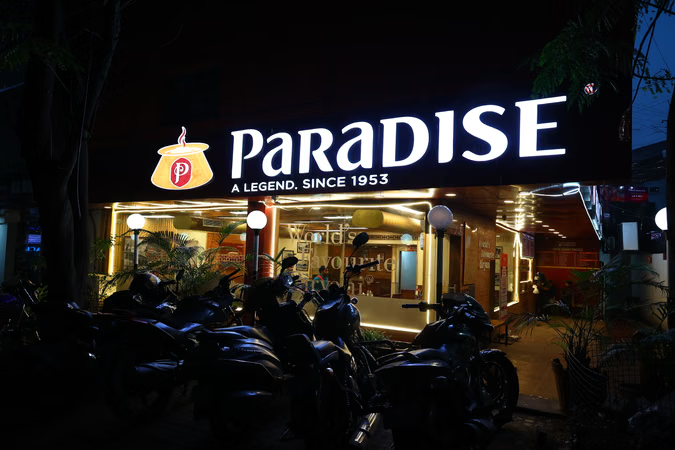
Paradise Biryani, one of India’s best-known restaurant chains, has announced plans to invest around ₹100 crore to open 100 new outlets across the country over the next few years, as it accelerates its national expansion strategy under the ownership of Samara Capital. The expansion aims to strengthen the brand’s presence in major metropolitan cities and emerging urban markets while capitalizing on the rapid growth of India’s organized food service industry.
The Hyderabad-based restaurant chain plans to expand from its current network of around 57 outlets to nearly 150–160 locations by FY29. The company expects the rollout to help boost annual revenue to around ₹550 crore, supported by a combination of new store openings, technology-driven operations, and improvements to its signature biryani recipe.
₹100 Crore Expansion Plan
Paradise’s nationwide expansion will be funded through an investment of approximately ₹100 crore, backed by Samara Capital.
| Expansion Plan | Details |
|---|---|
| Planned investment | Around ₹100 crore |
| New outlets | 100 |
| Current network | Around 57 stores |
| Target network | 150–160 outlets by FY29 |
| Expansion focus | Metro and emerging cities |
The company has already begun identifying locations for the next phase of growth, with Bengaluru and Chennai expected to be among the first markets to witness significant expansion.
Bengaluru Leads the First Phase
As part of its immediate expansion strategy, Paradise has announced an investment of ₹25 crore to add 20 new outlets in Bengaluru this year.
The city currently contributes strong double-digit growth for the brand, making it a key market for future expansion.
According to the company:
- Bengaluru operations have recorded around 30% year-on-year revenue growth.
- New stores will include high-street restaurants, mall outlets, and cloud kitchens.
- The expansion will cater to both dine-in and food delivery demand.
New Markets in Focus
Beyond Bengaluru, Paradise plans to strengthen its presence across several major cities.
The expansion roadmap includes:
- Chennai.
- Mumbai.
- Pune.
- National Capital Region (NCR).
- Other high-growth urban markets.
The company believes rising disposable incomes, increasing food delivery adoption, and strong demand for branded restaurant chains present significant long-term opportunities.
Smaller Stores, Bigger Reach
Instead of relying solely on large flagship restaurants, Paradise is shifting toward a more flexible retail model.
The company plans to open:
- Smaller 1,500 sq. ft. outlets.
- Around 40 seating capacity restaurants.
- Omni-channel locations serving both dine-in and delivery customers.
| Store Strategy | Objective |
|---|---|
| Smaller outlets | Faster expansion |
| Omni-channel model | Serve dine-in and delivery |
| High-street locations | Better customer accessibility |
| Mall presence | Higher footfall |
Management says the new format offers faster payback periods while improving capital efficiency.
Technology to Improve Consistency
Paradise is also investing heavily in technology as part of its turnaround strategy.
The company is deploying:
- Automated cooking systems.
- Standardized operating procedures (SOPs).
- AI and machine learning for demand forecasting.
- Digital monitoring of ingredients and cooking processes.
The objective is to deliver consistent taste and quality across every outlet while reducing food wastage and improving operational efficiency.
Growing Organized Biryani Market
India’s biryani segment has become one of the fastest-growing categories in the food service industry.
| Industry Trend | Estimate |
|---|---|
| Total Indian biryani market | Around ₹30,000–35,000 crore |
| Organized segment | 10–15% |
| Growth driver | Rising demand for branded restaurants |
Paradise believes its long-standing brand recognition gives it a strong position to capture a larger share of the organized market as consumers increasingly prefer established restaurant chains.
Competition Intensifies
The expansion comes amid increasing competition in India’s organized biryani market.
Major competitors include:
- Biryani By Kilo.
- Behrouz Biryani.
- Biryani Blues.
- Regional restaurant chains.
- Cloud kitchen operators.
To differentiate itself, Paradise is focusing on product quality, technology-driven consistency, and a stronger omnichannel presence.
Outlook
The company expects the expansion to significantly increase both revenue and market share over the next three years.
Key growth drivers include:
- Store expansion.
- Strong same-store sales growth.
- Technology-enabled operations.
- Growing food delivery demand.
- Brand recognition built over seven decades.
Management believes the combination of operational improvements and nationwide expansion will help Paradise reclaim its position among India’s leading organized restaurant brands.
What It Means for Paradise Biryani
Paradise Biryani’s planned ₹100 crore investment and rollout of 100 new outlets mark one of the most ambitious expansion plans in India’s organized restaurant industry. Backed by Samara Capital, the company is combining technology, standardized operations, and a new store format to expand well beyond its traditional Hyderabad stronghold.
For the broader food service sector, the move reflects growing confidence in India’s organized dining market, where rising urbanization, higher disposable incomes, and increasing demand for trusted brands are creating significant opportunities. If executed successfully, the expansion could transform Paradise into one of the country’s largest biryani chains while intensifying competition in India’s rapidly growing quick-service and casual dining segments.
Get the day’s top stories in your inbox
One concise email. No spam, unsubscribe anytime.