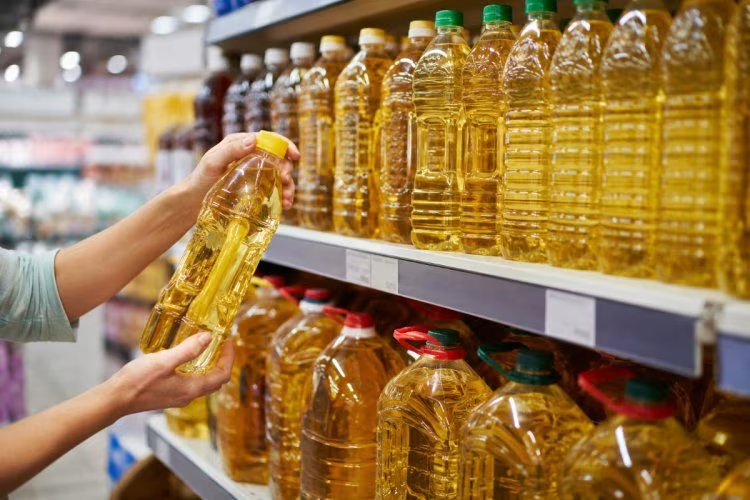
Duty-free imports of refined edible oils from Nepal into India have surged by 548% in 2025, prompting the Indian Vegetable Oil Producers’ Association (IVPA) to seek urgent government intervention. The industry body has warned that the sharp increase, enabled by preferential tariff access under the South Asian Free Trade Area (SAFTA) agreement and the India–Nepal Trade Treaty, is putting severe pressure on domestic refiners, depressing margins, hurting oilseed farmers, and leading to significant customs revenue losses for the government.
According to the IVPA, the rapid rise in imports reflects a structural shift rather than normal trade growth. The association has urged the Centre to review the current import framework, arguing that while regional trade agreements should be preserved, they should not undermine India’s domestic edible oil value chain or tariff policy.
Nepal’s Duty-Free Edible Oil Exports See Explosive Growth
Industry data shows imports have risen dramatically over the past three years.
Duty-Free Refined Edible Oil Imports from Nepal
| Year | Imports (Metric Tonnes) | Year-on-Year Growth |
|---|---|---|
| 2023 | 47,295 | — |
| 2024 | 124,056 | 162% |
| 2025 | 804,295 | 548% |
The 2025 import volume represents an increase of nearly 680,000 metric tonnes over the previous year and more than a 17-fold rise compared with 2023. Average monthly imports also climbed sharply, from about 3,941 metric tonnes in 2023 to 67,025 metric tonnes in 2025.
Why the Industry Is Concerned
The IVPA says refined soybean and palm oil imported from Nepal enter India at zero customs duty under existing trade agreements.
According to the association:
- Nepal enjoys duty-free access for refined edible oils.
- Crude edible oils imported into Nepal can be refined and exported to India.
- Refining typically adds only 5–7% in value.
- Duty-free treatment creates a significant cost advantage over Indian refiners importing crude oils while paying applicable duties.
Industry Concerns
| Issue | Potential Impact |
|---|---|
| Duty-free refined oil imports | Lower prices than domestic refiners |
| Margin pressure | Reduced profitability for Indian processors |
| Farmer impact | Lower demand for domestic oilseeds |
| Revenue loss | Reduced customs collections |
| Tariff distortion | Weakens India’s import policy objectives |
IVPA Seeks Urgent Policy Review
In a letter to Commerce and Industry Minister Piyush Goyal, the IVPA called for an immediate review of India’s edible oil import policy.
The association argues that policymakers should examine:
- The effectiveness of preferential tariff arrangements.
- Compliance with rules governing regional trade agreements.
- Impact on India’s refining industry.
- Consequences for oilseed farmers.
- Long-term edible oil security.
- Government customs revenue losses.
The IVPA emphasized that it supports regional economic cooperation under SAFTA but believes the current surge warrants closer scrutiny to ensure trade preferences are not creating unintended market distortions.
Impact on India’s Edible Oil Market
The association estimates that northern and eastern India together account for around 3.5 million metric tonnes of annual edible oil demand. Based on current trends, Nepal’s exports could approach 1 million metric tonnes annually, making it one of India’s largest suppliers of refined edible oils.
Potential Market Implications
| Area | Possible Effect |
|---|---|
| Domestic refiners | Increased competitive pressure |
| Oilseed farmers | Lower demand and weaker price realization |
| Consumers | Access to lower-priced edible oils |
| Government | Reduced customs duty collections |
| Trade policy | Pressure to reassess preferential import rules |
Broader Policy Debate
The issue comes at a time when India is balancing multiple objectives—containing food inflation through adequate edible oil supplies while encouraging domestic oilseed production under initiatives aimed at reducing import dependence.
Any changes to tariff structures or trade arrangements would need to consider:
- Consumer food prices.
- Domestic refining capacity.
- Farmer incomes.
- Commitments under regional trade agreements.
- India’s long-term edible oil self-sufficiency strategy.
Looking Ahead
The sharp rise in duty-free refined edible oil imports from Nepal has intensified calls for a review of India’s edible oil import framework. While preferential trade agreements have strengthened regional commerce, the IVPA argues that the current scale of imports is creating structural disadvantages for domestic refiners and oilseed growers.
The government’s response will be closely watched by edible oil producers, farmers, traders, and consumers alike. Any policy adjustments—whether through stricter enforcement of rules of origin, changes in tariff structures, or revisions to trade arrangements—could have significant implications for India’s edible oil industry, agricultural sector, and food inflation trajectory in the months ahead.
Get the day’s top stories in your inbox
One concise email. No spam, unsubscribe anytime.