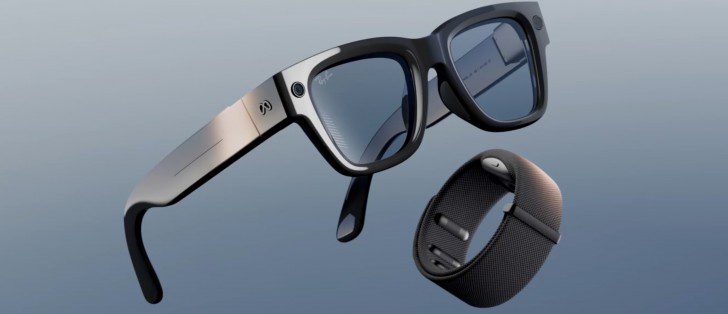
An internal product roadmap leak from Meta’s Reality Labs hardware division has revealed that the company is actively prototyping and testing “supersensing” AI smart glasses (codenamed “SSG”).
The hardware push marks a major pivot under Wearables VP Alex Himel. Meta is moving away from purely on-demand, user-triggered media capturing and transitioning toward always-on, proactive environmental awareness.
1. The Tech Leap: What is “Supersensing”?
Unlike Meta’s current smart glasses—which require you to manually click a button or say a voice command to snap a photo—the “supersensing” prototypes are architecturally optimized for passive, continuous spatial tracking:
- Extended Sensor Uptime: The core engineering focus centers on thermal management and battery efficiency, designed to keep the integrated cameras, microphones, and spatial sensors humming in the background for hours without overheating the frame.
- Continuous Environmental Memory: Because the glasses continuously observe the user’s surroundings, the embedded AI constructs a rolling spatial and contextual memory bank.
- Proactive Interventions: Instead of waiting for a prompt, the glasses will operate autonomously. For example, the model can recall exactly where you misplaced your keys, tracks daily habits to suggest tasks, or automatically flag relevant logistics (like a package delivery or an upcoming appointment) in real time.
2. Behind the Software: Hatch and Muse Spark
The leaked memo indicates that the “supersensing” hardware won’t rely on basic cloud APIs. Instead, it is being tightly integrated with Meta’s next-generation multimodal software stack:
- The “Hatch” AI Agent: Meta is developing a highly customized, ultra-low latency AI agent codenamed Hatch, built specifically to handle the continuous stream of vision and audio telemetry generated by the wearer’s daily life.
- Muse Spark Core: The heavy contextual reasoning and long-term memory retrieval processes will be offloaded to Muse Spark, Meta’s frontier reasoning LLM ecosystem, allowing the glasses to piece together multi-step context over days or weeks.
3. Commercial Aggression & Corporate Subscriptions
The development of the “supersensing” line is part of a broader, hyper-aggressive hardware push where Meta is targeting a massive baseline of 10 million wearable devices sold in the second half of 2026 alone:
Plaintext
       META'S TWO-PRONGED WEARABLES ROADMAP (2026-2027)

  [ RETAIL / CONSUMER LENS ]               [ ENTERPRISE / CORPORATE TIER ]
  • Expand EssilorLuxottica Pact           • "Wearables for Work" Subscription
  • Roll out 4 new styles (Fall 2026)      • Industry-specific specialized software
  • "SSG" (Supersensing Prototypes)        • Drive recurring software margins to
                                             offset Reality Labs' hardware losses
To soften the massive multi-billion dollar capital expenditure losses within its Reality Labs division, Meta is simultaneously building out “Wearables for Work.” This enterprise-focused subscription model will bundle specialized, continuous-sensing software suites for corporate clients who want hands-free AI diagnostics, live translation, and automated task-auditing for field technicians, medical personnel, and logistics workers.
4. The Looming Privacy Battleground
Unsurprisingly, the leak has reignited intense tech policy debates regarding public surveillance. While current smart glasses feature an external capture LED that blinks when actively recording a video, a consumer ecosystem built around “supersensing” frames that constantly map rooms and log text, objects, and faces in public spaces is expected to face heavy regulatory friction, especially across European compliance boards, before the prototypes are ever granted a green light for commercial retail.
Get the day’s top stories in your inbox
One concise email. No spam, unsubscribe anytime.