Influencer-led commerce in India continued its rapid expansion during the first half of 2026, with sales generated through influencers rising 28% year-on-year, according to a new report by creator monetisation platform Trendweave. The study highlights a major shift in the country’s creator economy, where influencers are increasingly becoming direct sales channels rather than just brand awareness partners. At the same time, creator earnings from product sales increased by more than 35%, reflecting the growing adoption of affiliate marketing, performance-based partnerships, and social commerce.
The report is based on an analysis of more than four million orders placed by consumers through influencer recommendations. It attributes the growth to India’s mobile-first digital ecosystem, increasing use of shopping features on platforms like Instagram, and the rising popularity of creator-led commerce, where influencers earn commissions based on actual product sales rather than fixed promotional fees.
Influencers Become Powerful Sales Channels
The report suggests that brands are increasingly measuring influencer success through actual sales rather than traditional engagement metrics such as likes, comments, or views.
Instead of paying only fixed campaign fees, many companies are adopting hybrid compensation models that combine upfront payments with affiliate commissions and performance-based incentives.
| Key Findings | H1 2026 |
|---|---|
| Growth in influencer-driven sales | 28% YoY |
| Growth in creator earnings from product sales | 35%+ |
| Orders analyzed | 4+ million |
| Creator partner growth | 15% |
According to Trendweave, this evolution is creating stronger alignment between brands and creators by rewarding measurable business outcomes.
Fashion Continues to Lead Sales
Fashion remained the largest contributor to influencer-generated product sales during the first half of the year, accounting for nearly one-third of creator earnings.
Other categories also delivered strong performance as consumers increasingly relied on influencer recommendations before making purchases.
| Category | Share of Creator Earnings |
|---|---|
| Fashion | 30% |
| Home goods | 13% |
| Electronics & appliances | 11% |
| Personal care & pharmacy | 10% |
| Sports goods | 7% |
| Online services | 5% |
| Children’s products | 5% |
| Airline tickets | 4% |
| Entertainment & event tickets | 4% |
| Financial products | 3% |
| Hotel bookings | 3% |
While fashion remained dominant, newer categories such as travel, financial services, and digital subscriptions gained momentum during the period.
Fastest-Growing Categories
The report found that several sectors outpaced fashion in terms of revenue growth.
| Fastest Growing Category | Growth |
|---|---|
| Airline ticket bookings | 42% |
| Online services | 40% |
| Financial products | 35% |
| Books | 25% |
| Fashion | 23% |
The results indicate that influencers are increasingly shaping purchasing decisions beyond traditional beauty and fashion products, expanding into financial services, education platforms, travel, and technology offerings.
Creator Preferences Are Changing
The study also points to a significant shift in the type of content creators are producing.
Rather than focusing exclusively on fashion and lifestyle, more influencers are moving toward specialized niches that offer stronger monetization opportunities and higher conversion rates.
| Creator Category | Trend |
|---|---|
| Fashion creators | Declined by nearly one-third |
| Online services creators | Up 20% |
| Books & stationery | Up 16% |
| Sports goods | Up 14% |
| Travel creators | Up 10% |
This reflects growing demand from brands seeking experts with highly engaged audiences instead of relying solely on broad-reach influencers.
Instagram Leads Social Commerce
Among all social platforms, Instagram generated the highest average purchase value from influencer recommendations.
According to the report, consumers spent:
- Over $31 per purchase on Instagram.
- Around $30 on Pinterest.
- Approximately $27 via messaging platforms.
- Around $21.8 on Facebook.
- About $18.7 on X.
- Roughly $15 on YouTube.
These figures highlight Instagram’s continued dominance as India’s leading platform for creator-led shopping and affiliate commerce.
Brands Shift Toward Performance Marketing
The findings reflect a broader transformation in influencer marketing.
Instead of measuring campaign success primarily through impressions and engagement, brands are increasingly tracking:
- Sales generated.
- Affiliate revenue.
- Conversion rates.
- Return on investment (ROI).
- Customer acquisition.
This data-driven approach enables companies to identify creators who consistently drive purchases and build long-term partnerships around measurable commercial outcomes.
Outlook for India’s Creator Economy
Trendweave expects the momentum to continue throughout 2026, forecasting that influencer-driven sales in India could grow by more than 30% for the full year, while creator earnings from product sales may increase by over 45%. The platform also noted that the number of influencer partners in India has already grown 15% this year, reflecting the rapid expansion of the country’s creator economy.
What It Means for Brands and Creators
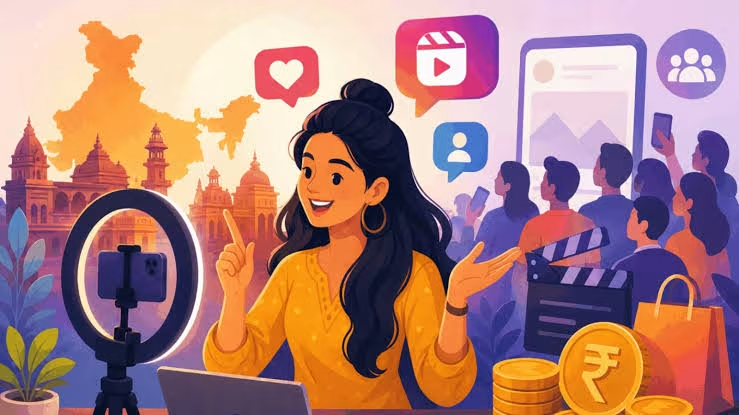
The 28% rise in influencer-driven sales underscores how India’s creator economy is evolving from an awareness-focused marketing channel into a measurable commerce engine. As affiliate marketing, social shopping, and performance-based partnerships become more sophisticated, influencers are increasingly acting as digital storefronts capable of directly influencing purchasing decisions.
For brands, the shift offers better visibility into marketing ROI and customer acquisition. For creators, it opens up new revenue opportunities beyond sponsored posts, enabling sustainable income through commissions, long-term brand collaborations, and creator-led commerce. With social media platforms continuing to integrate shopping features, influencer-driven sales are likely to become an even more important pillar of India’s digital retail ecosystem.
Get the day’s top stories in your inbox
One concise email. No spam, unsubscribe anytime.