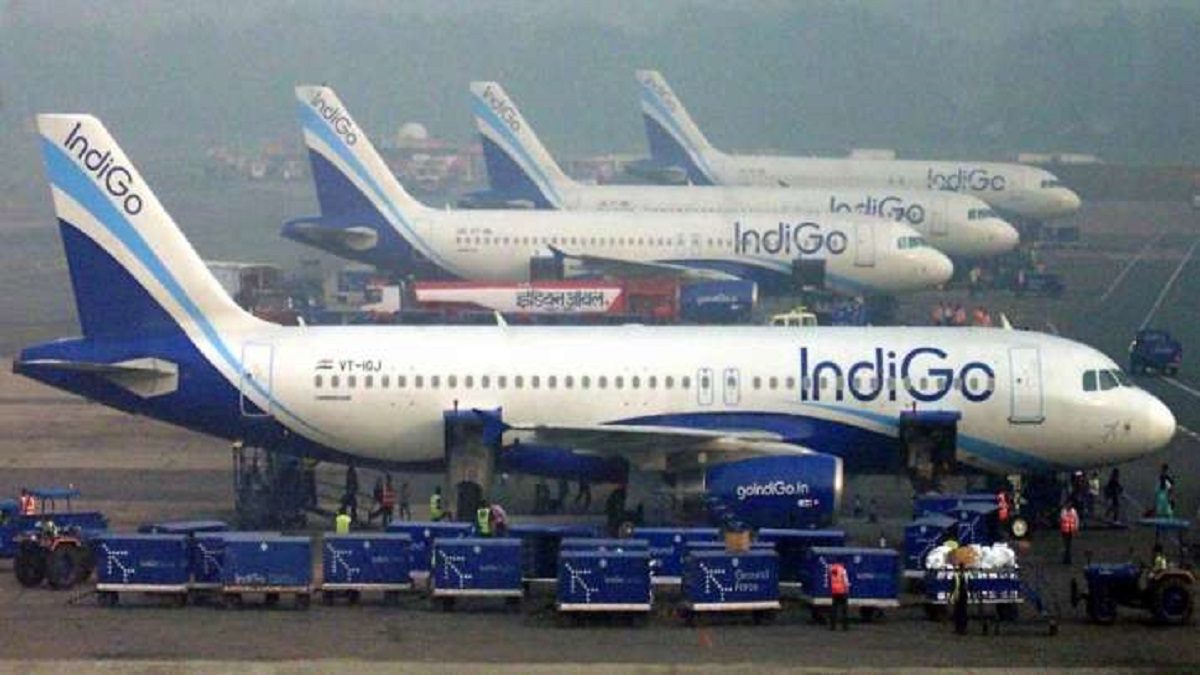
Solidifying its near-monopolistic grip over the Indian skies, country’s largest low-cost carrier, IndiGo, saw its domestic market share rise to a flat 65% in April.
According to the latest monthly traffic report released by the aviation watchdog, the Directorate General of Civil Aviation (DGCA), the budget carrier effectively carried nearly two out of every three domestic passengers in the country last month.
What makes IndiGo’s expansion significant is that it occurred during a period of structural contraction for the broader Indian aviation sector. While major rivals trimmed capacity or watched their planes fly with empty seats due to soaring aviation fuel overheads, IndiGo successfully gathered the lion’s share of residual passenger demand.
1. Flying High in a Easing Market
The domestic aviation ecosystem hit a distinct soft patch during the month, failing to see the traditional early summer travel spike due to rising operational bottlenecks and higher airfares:
- The Monthly Slump: Total domestic air passenger traffic across India declined by 4.2% month-on-month, falling to a little over 1.38 crore flyers in April compared to the 1.44 crore passengers recorded in March.
- The Annual Dip: Year-on-year, April’s passenger numbers registered a 3.47% contraction against the 1.43 crore baseline established in April last year.
- IndiGo’s Volume: Defying the industry-wide slowdown, IndiGo independently transported 89.7 lakh (8.97 million) passengers during the 30-day window.
2. Competitive Re-alignment: Air India Slips as Akasa Ticks Up
The rise in IndiGo’s market share directly coincided with a visible operational retreat from its primary full-service rival, alongside mixed results for smaller operators:
- Air India Group: The combined Tata-led airline entity (encompassing Air India, Air India Express, and Vistara) saw its aggregated market share slide down to 24.7% in April, dropping from the 26.2% command it maintained in March.
- Akasa Air: The young budget startup managed a steady performance, with its domestic market presence inching up to 5.8% from 5.4% the month prior.
- SpiceJet: Continues to face heavy headwind constraints as its structural share compressed down to 3.4% from 3.8% in March.
- Alliance Air: The state-owned regional feeder carrier experienced a drop, with its share halving from 0.6% to 0.3%.
3. The Operational Moat: On-Time Performance (OTP)
Beyond sheer fleet capacity and aggressive ticketing, IndiGo anchored its April performance on unmatched punctuality across the country’s most congested transit hubs.
Evaluating flight data across ten major domestic airports—including Delhi, Mumbai, Bengaluru, Hyderabad, and Chennai—the DGCA confirmed that IndiGo led the national pack with an exceptional On-Time Performance of 88.5%.
By comparison, SpiceJet’s punctuality crumbled to just 31.2%, meaning less than one in three of its scheduled flights departed or arrived within regulatory time buffers.
As the ratings agency ICRA maintains a cautious outlook on the domestic aviation landscape due to ongoing West Asian fuel shocks and a weakening Rupee, IndiGo’s operational agility and strong pricing control are helping the airline widen the competitive gap even further.
Get the day’s top stories in your inbox
One concise email. No spam, unsubscribe anytime.