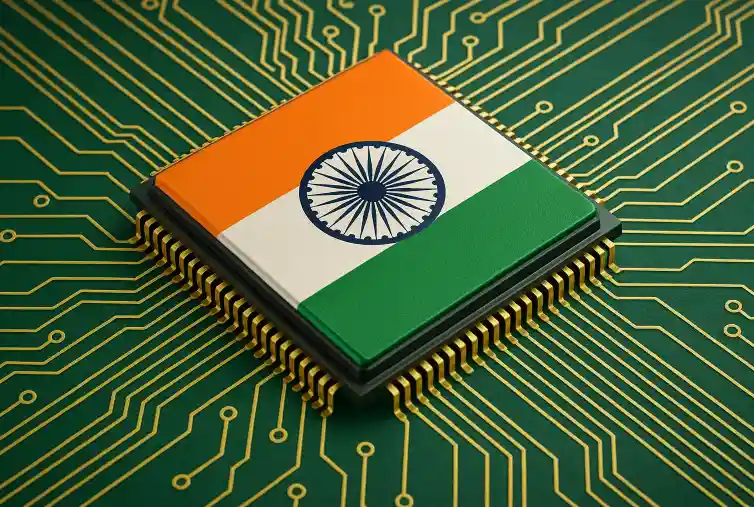
In a massive structural shift for the country’s technology ecosystem, Indian semiconductor startups have raised a combined $92 million in venture funding during the first five months of 2026.
According to data compiled by Venture Intelligence, the capital influx was deployed across 12 distinct deals between January and May. This represents a near-quadrupling of the total capital secured by the sector in all of 2025, when six transactions brought in a modest $25 million. The rapid acceleration signals that domestic and international investors are growing highly comfortable backing complex, hardware-heavy timelines that were previously considered too capital-intensive for the traditional Indian startup playbook.
1. Deal Architecture: Seed Capital Dominates the Pipeline
The funding activity reveals a healthy, early-stage foundation being built across the local ecosystem, with capital branching out across multiple financing tiers:
- The Seed Surge: Seed-stage investments accounted for $34 million across eight deals, demonstrating heavy interest in backing newly formed engineering squads.
- The 10-Million Club: The remaining capital flowed into Series A expansions. Prominent fabless and hardware designers—including Constelli, C2i Semiconductors, HrdWyr, and VerveSemi—each successfully raised rounds upwards of $10 million.
- Active Pipeline: Emerging players like Agrani Labs and Calligo Technologies were also confirmed to be in active fundraising cycles, extending the sector’s momentum past single high-value outliers.
2. Policy Interventions: The DLI Scheme as a Quality Filter
Startup founders and venture capitalists credit the central government’s Design-Linked Incentive (DLI) scheme—administered under the India Semiconductor Mission (ISM)—as a primary catalyst for crowding in private capital.
By underwriting early-stage risk and providing subsidies for expensive Electronic Design Automation (EDA) software tools, the policy significantly drops the entry barrier for deep-tech entrepreneurs. The Ministry of Electronics and Information Technology (MeitY) has so far cleared proposals for about two dozen DLI beneficiaries.
Crucially, a growing list of these state-approved firms have gone on to validate their tech by locking in institutional venture capital. Private-backed DLI successes now include Mindgrove Technologies, VerveSemi, InCore, BigEndian Semiconductors, Calligo Technologies, and MOSart Semi.
3. Specialized Niches and the Executive Exodus
Instead of trying to replicate massive, full-stack manufacturing foundries, Indian chip designers are building hyper-focused products tailored for the global artificial intelligence boom and domestic white goods markets:
- Targeted AI Hardware: Agrani Labs—founded by a team of former Intel and AMD executives—is specifically designing specialized AI inference chips.
- Infrastructure Support: C2i Semiconductors, spearheaded by Texas Instruments veterans, is building high-efficiency power management solutions optimized for AI data centers.
- Consumer Ecosystems: Venture firms note a massive, immediate opportunity to deploy indigenous chips inside white goods (household appliances) to capture high-volume domestic manufacturing chains.
4. The Path Forward: Taping Out and Scaling Real Software
The ecosystem is rapidly transitioning out of the academic planning phase and into tangible physical deployment. At least half a dozen local chip designers have successfully completed their “tape-outs”—meaning final structural blueprints have been delivered to elite global semiconductor foundries in Taiwan and South Korea for physical manufacturing. Companies like Mindgrove Technologies and Agnit Semiconductors are already scheduled to step into full-scale commercial production later this year.
Despite the spectacular five-month funding run, structural roadblocks remain visible. Local infrastructure for advanced testing and Outsourced Semiconductor Assembly and Test (OSAT) packaging is still highly nascent, keeping startups dependent on international partners.
Furthermore, ecosystem partners point out that while early-stage execution can be judged purely on local potential, incoming Series B rounds and beyond will force Indian firms to match the ruthless execution speeds and go-to-market playbooks used in Silicon Valley.
Get the day’s top stories in your inbox
One concise email. No spam, unsubscribe anytime.