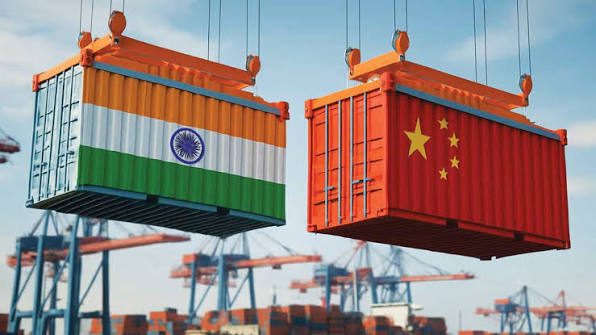
India’s imports from China reached a record high in the first half of 2026, underscoring the country’s continued dependence on Chinese manufacturing despite ongoing efforts to diversify supply chains and boost domestic production. The surge was driven by strong demand for electronics, machinery, chemicals, solar equipment, and industrial components, even as India continues to encourage local manufacturing under initiatives such as Make in India and the Production Linked Incentive (PLI) scheme.
The rise in imports comes amid a widening trade imbalance between the two Asian economies. While India’s exports have remained resilient in several sectors, imports from China continue to outpace exports, reflecting the deep integration of Chinese products into India’s manufacturing ecosystem and consumer markets.
India’s Imports From China Reach Record High
The first half of 2026 saw India import more goods from China than ever before.
| Trade Highlights | Details |
|---|---|
| Period | H1 2026 |
| Trend | Record-high imports from China |
| Major import categories | Electronics, machinery, chemicals, solar equipment |
| Key concern | Rising trade deficit |
The increase reflects strong domestic demand for industrial inputs and technology products.
What’s Driving the Import Surge?
Several sectors contributed to the sharp rise in imports.
Key drivers include:
- Electronic components and consumer electronics.
- Industrial machinery.
- Chemicals and specialty materials.
- Solar panels and renewable energy equipment.
- Telecom equipment.
- Manufacturing inputs.
Many Indian manufacturers continue to rely on Chinese suppliers because of their scale, pricing, and integrated supply chains.
Electronics Continue to Dominate
| Sector | Import Trend |
|---|---|
| Electronics | Strong growth |
| Machinery | Higher imports |
| Chemicals | Rising demand |
| Renewable energy equipment | Continued expansion |
Electronics remain one of the largest contributors to India’s imports from China, supporting both domestic consumption and local manufacturing.
Trade Deficit Widens
The increase in imports has contributed to a larger bilateral trade deficit.
Key factors include:
- Faster import growth than exports.
- Strong domestic demand.
- Dependence on intermediate goods.
- Expansion of manufacturing activity.
- Rising demand for technology products.
Reducing this trade imbalance remains a long-term policy objective for India.
Government Pushes Manufacturing
India has introduced several initiatives to reduce import dependence.
Major policy measures include:
- Production Linked Incentive (PLI) schemes.
- Make in India.
- Electronics manufacturing incentives.
- Semiconductor investments.
- Supply chain diversification.
These programs aim to increase domestic production while attracting global manufacturers to establish facilities in India.
Challenges Remain
Despite policy support, businesses continue to depend on Chinese imports for several reasons.
These include:
- Cost competitiveness.
- Established supplier networks.
- Large-scale manufacturing capacity.
- Availability of specialized components.
- Faster procurement for certain industries.
Building comparable domestic capabilities will require sustained investment over several years.
Impact on Indian Industry
The higher imports have mixed implications.
Potential benefits include:
- Reliable supply of industrial inputs.
- Support for manufacturing growth.
- Faster expansion of electronics production.
- Improved access to advanced components.
Potential concerns include:
- Larger trade deficit.
- Continued dependence on imported inputs.
- Exposure to geopolitical and supply chain risks.
Balancing industrial growth with greater domestic manufacturing remains a key policy challenge.
Outlook
India’s record imports from China during the first half of 2026 highlight the complex nature of the economic relationship between the two countries. While India continues to promote self-reliance and local manufacturing, Chinese products remain deeply embedded in sectors ranging from electronics and renewable energy to industrial machinery and chemicals.
Going forward, the pace of import growth will depend on domestic manufacturing capacity, global supply chain shifts, and the success of government initiatives aimed at boosting local production. Over the longer term, India is expected to continue reducing strategic dependencies while maintaining trade in sectors where Chinese manufacturing remains globally competitive.
What It Means for India’s Economy
The latest trade data underscores both the opportunities and challenges facing India’s manufacturing sector. Strong imports support industrial production and infrastructure development but also reinforce the need to expand domestic capabilities in critical industries such as electronics, semiconductors, clean energy equipment, and advanced manufacturing.
For policymakers, the focus is likely to remain on encouraging investment, strengthening supply chains, and improving export competitiveness. Achieving these goals could gradually narrow the trade imbalance while supporting India’s ambition to become a global manufacturing hub.
Get the day’s top stories in your inbox
One concise email. No spam, unsubscribe anytime.