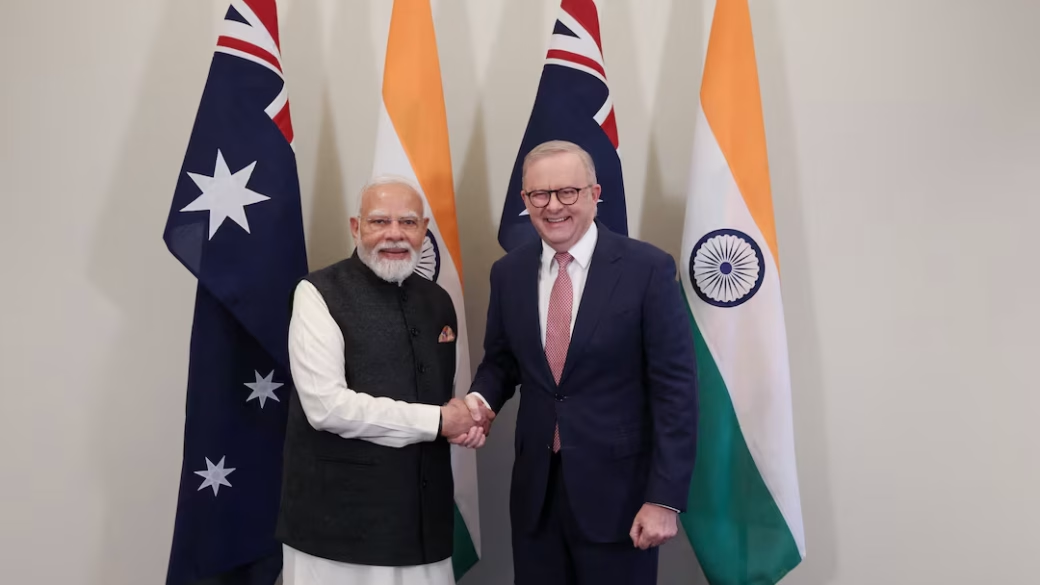
India and Australia have agreed to deepen cooperation across energy, defence, critical minerals, trade, and strategic technologies during Prime Minister Narendra Modi’s visit to Australia. The discussions reinforced the two countries’ growing Comprehensive Strategic Partnership, with both sides committing to strengthen economic ties, expand defence collaboration, and accelerate clean energy initiatives amid an evolving Indo-Pacific security landscape.
The visit also highlighted the importance of resilient supply chains, maritime security, and cooperation in emerging sectors such as renewable energy, critical minerals, and advanced technologies.
India and Australia Strengthen Strategic Partnership
During high-level bilateral talks, India and Australia reaffirmed their commitment to expanding cooperation across multiple strategic sectors.
Both leaders emphasized the importance of closer collaboration to promote economic growth, regional stability, and a free, open, and inclusive Indo-Pacific.
The meeting builds on the steadily expanding relationship between the two countries over the past few years.
Energy Cooperation Takes Centre Stage
Energy security emerged as one of the key priorities during the discussions.
The two countries agreed to strengthen collaboration in:
- Clean energy.
- Renewable energy.
- Critical minerals.
- Liquefied natural gas (LNG).
- Green hydrogen.
- Battery supply chains.
- Energy transition technologies.
Australia is expected to play an increasingly important role in supporting India’s growing demand for critical minerals used in electric vehicles, batteries, and clean energy infrastructure.
Defence and Security Ties Expand
India and Australia also pledged to deepen defence cooperation as both countries seek greater stability in the Indo-Pacific region.
Areas of collaboration include:
- Joint military exercises.
- Maritime security.
- Defence technology.
- Intelligence sharing.
- Cybersecurity.
- Defence industry partnerships.
The two nations continue to enhance interoperability between their armed forces while expanding strategic dialogue on regional security issues.
Trade and Investment Opportunities
The leaders discussed ways to increase bilateral trade and investment under the existing economic cooperation framework.
Priority areas include:
- Manufacturing.
- Digital economy.
- Infrastructure.
- Agriculture.
- Education.
- Innovation.
- Supply chain resilience.
Businesses from both countries are expected to benefit from closer economic integration and improved market access.
Focus on Critical Minerals
Critical minerals have become a major pillar of India-Australia cooperation.
Australia possesses significant reserves of minerals essential for advanced manufacturing, including lithium, cobalt, nickel, and rare earth elements.
Strengthening supply chain collaboration could help India reduce import dependence while supporting its ambitions in electric mobility, semiconductor manufacturing, and clean energy technologies.
Cooperation in Emerging Technologies
The two countries also agreed to expand partnerships in future-oriented sectors.
These include:
- Artificial intelligence.
- Quantum computing.
- Digital technologies.
- Space cooperation.
- Biotechnology.
- Research and innovation.
Technology collaboration is expected to support economic growth while improving resilience across critical industries.
Outlook
Prime Minister Narendra Modi’s visit marks another significant step in strengthening India-Australia relations, with both countries expanding cooperation across energy, defence, critical minerals, trade, and advanced technologies. As geopolitical and economic dynamics continue to evolve, the partnership is expected to play an increasingly important role in promoting regional security, resilient supply chains, and sustainable economic growth.
With shared strategic interests and complementary economic strengths, India and Australia are well-positioned to deepen collaboration across multiple sectors in the years ahead.
Get the day’s top stories in your inbox
One concise email. No spam, unsubscribe anytime.