Highlighting the deep vulnerabilities exposed by volatile energy trade corridors, the Ministry of Petroleum and Natural Gas has formally directed state-run oil marketing companies (OMCs) to formulate a plan to maintain a minimum 30-day reserve of liquefied petroleum gas (LPG).
The announcement was made by Petroleum Ministry Joint Secretary Sujata Sharma during an inter-ministerial briefing on Friday. The strategic mandate has been issued to the nation’s dominant public-sector fuel retailers: Indian Oil Corporation (IOC), Bharat Petroleum Corporation Limited (BPCL), and Hindustan Petroleum Corporation Limited (HPCL).
The directive aims to permanently scale up India’s emergency energy safeguards, ordering the OMCs to build out this massive infrastructural buffer over and above their routine commercial inventories.
1. The Fuel Catalyst: The Strait of Hormuz Supply Shock
The government’s aggressive pivot toward strategic LPG stockpiling is a direct response to a painful supply squeeze triggered by the ongoing three-month-long conflict in West Asia. The regional friction point has severely choked maritime transit through the critical Strait of Hormuz, a vital choke point governing the absolute majority of India’s daily hydrocarbon intake.
The macro exposure highlighting the need for these reserves rests on critical import dependencies:
- The Gulf Grip: Approximately 40% of India’s crude oil, 65% of its natural gas, and an overwhelming 90% of its total LPG supplies originate from Gulf nations.
- The Dynamic Hit: While the country successfully navigated alternative sourcing networks to keep crude oil and natural gas flowing normally, the targeted disruption in global LPG channels hit domestic availability significantly harder.
- Import Drop-off: Commercial tracking intelligence shows that India’s monthly LPG imports crashed heavily amid the height of the crisis, dropping from a steady fiscal average of 2 million tonnes a month down to 1.1 million tonnes in March, and collapsing further to 0.95 million tonnes in April.
2. Managing the Crunch: Commercial Rationing and Refinery Maximization
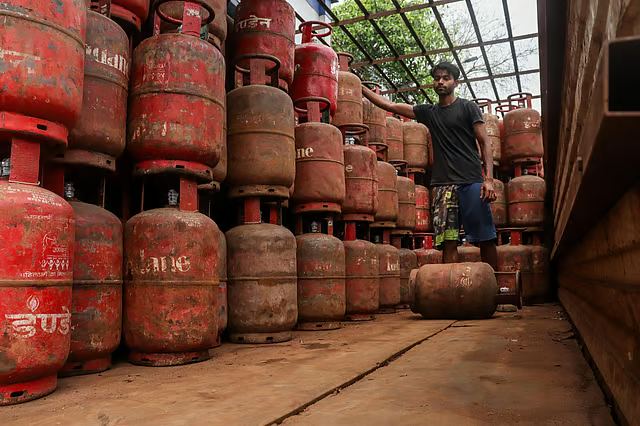
Unlike crude oil—where the Indian Strategic Petroleum Reserves Limited (ISPRL) maintains massive emergency underground caverns—India holds zero national strategic reserves for LPG or liquefied natural gas (LNG), relying completely on shifting corporate rolling stocks. To insulate more than 33 crore domestic cooking gas households from going dry, the ministry had to step in with aggressive short-term demand-management filters.
First, authorities were forced to temporarily ration and regulate LPG supplies shipped to industrial and commercial consumers. Second, the mandatory minimum time gap allowed between household cylinder refill bookings was deliberately lengthened to conserve local shelf stock.
To offset the massive drop-off in seafaring cargo arrivals, domestic refineries have been operating at full capacity to maximize in-house production. Domestic LPG production has climbed to an all-time high of 52,000 metric tonnes per day, successfully stretching to meet roughly 70% of the current calibrated daily national demand of 72,000 tonnes. The remaining 30% gap is being covered by a combination of alternative shipments from non-Gulf regions—including the US, Russia, and Australia—alongside a gradual clearing of backed-up tankers navigating out of the Persian Gulf.
3. Retail Distortions and Anti-Hoarding Crackdowns
While the ministry firmly repeated that current cooking gas availability remains strictly adequate, with zero “dry-out” stock shortages reported across any regional distribution networks, the parallel retail automotive fuel market is signaling severe stress.
Officials flagged “abnormal and unusual sales” running rampantly across local petrol pumps. More than 150 districts have recorded an unexpected 30% spike in petrol and diesel consumption, with multiple zones seeing localized sales double overnight.
This retail surge is being driven by a combination of seasonal agricultural demand and an aggressive migration of industrial bulk consumers over to standard retail pumps. Because state-owned OMCs have kept retail pump pricing tightly controlled, private fuel retailers have raised their prices much higher to cover losses. This wide price gap has caused private vendor diesel sales to collapse by 38%, pushing an unmanageable tsunami of corporate and industrial consumers to buy their fuel directly from public retail stations instead.
To stabilize distribution, the Petroleum Ministry has coordinated directly with state Chief Secretaries to establish specialized enforcement squads. Over a frantic four-day enforcement window, authorities launched over 6,500 raids targeting LPG storage sites and 900 targeted retail pump audits, resulting in multiple criminal FIRs and arrests to aggressively stamp out illegal industrial fuel diversion and panic-driven black market hoarding.
Get the day’s top stories in your inbox
One concise email. No spam, unsubscribe anytime.