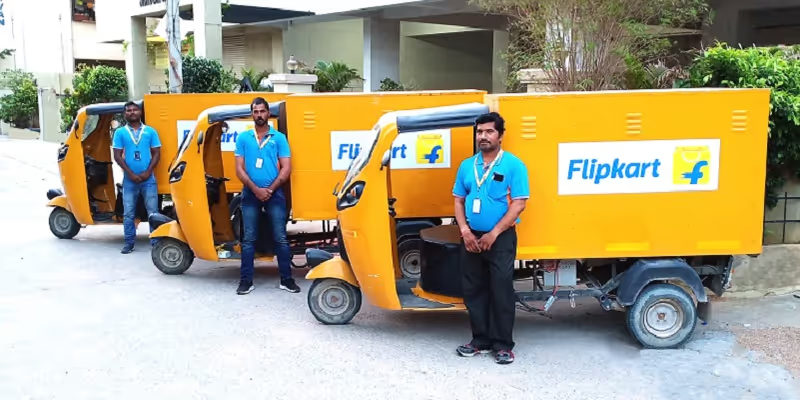
In a major move to lower the barriers to electric vehicle (EV) adoption for India’s gig economy, e-commerce giant Flipkart has officially launched EV Assist. The new digital marketplace is specifically designed to give last-mile delivery executives—known internally as “Wishmasters”—easy and affordable access to electric two-wheelers.
The platform has gone live across more than 20 major Indian cities, including Delhi-NCR, Bengaluru, and Patna. The initial rollout is tailored to support riders operating under the company’s quick-commerce arm, Flipkart Minutes.
Easing the Transition: How EV Assist Works
The launch of EV Assist directly addresses the core financial and operational bottlenecks that typically hold delivery riders back from abandoning petrol vehicles—such as high upfront vehicle costs, lack of credit history for financing, and worries about maintenance.
Instead of forcing riders into restrictive ownership contracts, EV Assist aggregates trusted, third-party EV fleet operators and rental providers into a centralized dashboard.
- Flexible Weekly Rental Plans: Riders can browse and filter available two-wheelers based on their city location and specific budget. Sourcing tiers are split into highly affordable weekly brackets, ranging from under ₹1,000 per week to over ₹2,000 per week.
- Frictionless Onboarding: Executives can register their interest directly inside the app using just their name and mobile number. The platform automatically matches them with local rental providers for immediate vehicle allocation.
- Zero Maintenance Burdens: All partner companies on the marketplace handle vehicle servicing, maintenance, and day-to-day operational support. This shifts the financial risk away from the delivery worker.
- Multilingual Interface: To support a diverse last-mile workforce across geographies, the interface is accessible in English, Hindi, Bengali, and Kannada.
Strong Intent vs. Structural Barriers
The marketplace’s design is heavily informed by an extensive internal study conducted by Flipkart among more than 6,000 delivery partners across India.
The survey revealed a powerful readiness for change: 46% of respondents explicitly expressed a willingness to transition to electric mobility. However, intent has historically failed to translate into real-world adoption, with 94.3% of riders still actively relying on traditional petrol-powered two-wheelers.
The Financial Incentive for Delivery Riders
The study found that nearly 90% of active delivery personnel shell out between ₹2,000 and ₹5,000 every single month on petrol alone. Transitioning to organized EV rental structures under EV Assist allows gig workers to significantly cut down these monthly operational costs, potentially boosting their take-home monthly earnings by up to 20%.
Smart Delivery Logistics Spec List
The electric vehicles aggregated on EV Assist aren’t standard consumer scooters; they are structurally optimized for intensive commercial delivery routing.
| Feature Category | Technological and Operational Integration |
| Operational Duty Cycle | Engineered specifically for high-frequency stop-and-start urban delivery routines. |
| Hardware Safety | Integrated regulatory speed compliance governors and reinforced payload safety gear. |
| Telematics & Anti-Theft | Built-in IoT modules, real-time GPS tracking, and geofencing capabilities for asset safety and monitoring. |
| Ecosystem Support | Complementary access to expanded charging solutions deployed across key Flipkart delivery hubs. |
Progressing Toward the Climate Group’s EV100 Goal
Flipkart was the first major e-commerce marketplace in India to commit to The Climate Group’s global EV100 initiative, which legally binds the company to transition 100% of its corporate and logistics fleet to electric mobility by the year 2030.
The corporate green mobility push has scaled dramatically over the last 12 months. Flipkart’s active electric fleet more than doubled over the past year, successfully surpassing 20,000 active EVs during the peak of the 2025 festive shopping season.
By building out EV Assist, the firm is moving beyond simply purchasing fleet assets toward establishing an open ground-level ecosystem that transforms clean energy from a corporate mandate into a practical choice for everyday gig workers.
Get the day’s top stories in your inbox
One concise email. No spam, unsubscribe anytime.