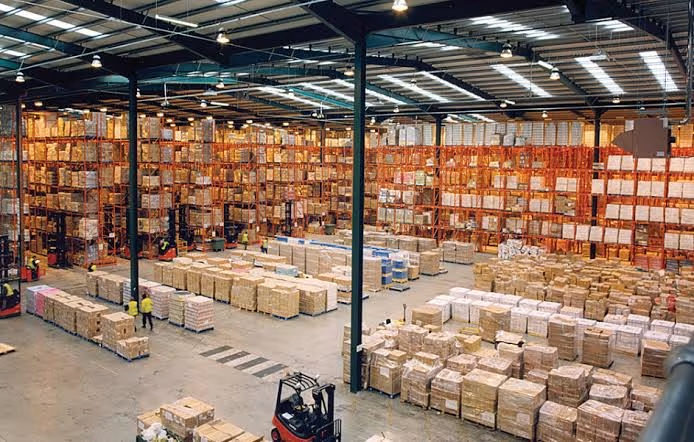
Delhi NCR and Chennai emerged as India’s largest warehousing markets in the first half of 2026, accounting for nearly 45% of total leasing activity, according to a new report by Colliers. Strong demand from third-party logistics (3PL), engineering, manufacturing, retail, and e-commerce companies helped the two cities dominate industrial and logistics real estate absorption during the January-June period, highlighting the continued expansion of India’s supply chain infrastructure.
The report indicates that India’s warehousing sector continues to benefit from rapid growth in manufacturing, rising domestic consumption, expansion of quick commerce, and sustained investments in logistics infrastructure. With occupiers increasingly seeking Grade A warehousing facilities, major logistics hubs such as Delhi NCR and Chennai are attracting significant leasing activity from both domestic and multinational companies.
Delhi NCR and Chennai Lead Warehousing Demand
The two metropolitan regions accounted for almost half of India’s industrial and warehousing leasing during the first six months of 2026.
| Key Highlights | Details |
|---|---|
| Report | Colliers |
| Period | H1 2026 (January-June) |
| Leading markets | Delhi NCR and Chennai |
| Combined share | Around 45% of total warehousing demand |
| Key occupiers | 3PL, manufacturing, engineering, retail, e-commerce |
| Market trend | Strong demand for Grade A warehouses |
The report reflects the growing importance of northern and southern India as logistics and distribution hubs.
What’s Driving Warehousing Demand?
Several structural trends continue to support industrial real estate growth.
Key demand drivers include:
- Expansion of e-commerce and quick commerce.
- Growth in third-party logistics (3PL).
- Manufacturing expansion under the Make in India initiative.
- Increasing demand for modern Grade A warehouses.
- Rising domestic consumption.
- Supply chain optimization by businesses.
- Improved highway and freight infrastructure.
Companies are increasingly leasing larger, technology-enabled warehouses to improve inventory management and delivery efficiency.
Sector-Wise Demand
Demand came from a wide range of industries during the first half of the year.
Major sectors included:
- Third-party logistics (3PL).
- Engineering and manufacturing.
- Retail.
- E-commerce.
- FMCG.
- Automotive.
- Consumer durables.
The diversification of occupiers indicates that warehousing demand is no longer driven solely by online retail but by broader economic growth.
Why Delhi NCR and Chennai Stand Out
| City | Key Advantages |
|---|---|
| Delhi NCR | Large consumer market, expressway connectivity, multimodal logistics network |
| Chennai | Major port access, strong manufacturing base, automotive and electronics ecosystem |
Both cities have benefited from continued investments in industrial corridors, freight connectivity, and modern logistics parks.
India’s Warehousing Market Outlook
The industrial and logistics real estate sector continues to attract strong investor interest.
Positive factors include:
- Expansion of Grade A warehouse supply.
- Rising institutional investments.
- Growth of organized logistics.
- Increasing automation in warehouses.
- Higher demand from global manufacturers.
- Supply chain diversification.
India’s logistics ecosystem is becoming increasingly sophisticated as businesses modernize storage and distribution operations.
Challenges Ahead
Despite strong momentum, the sector faces several challenges.
These include:
- Rising land acquisition costs.
- Higher construction expenses.
- Availability of skilled logistics workforce.
- Infrastructure bottlenecks in certain regions.
- Environmental sustainability requirements.
- Regulatory approvals for large industrial developments.
Addressing these issues will be essential to sustaining long-term growth in the warehousing sector.
Outlook
Delhi NCR and Chennai’s combined 45% share of warehousing demand in H1 2026 highlights the growing concentration of industrial and logistics activity around India’s largest consumption and manufacturing hubs. Continued expansion in e-commerce, manufacturing, and organized logistics is expected to keep demand for high-quality warehousing facilities robust over the coming years.
With infrastructure projects such as dedicated freight corridors, expressways, industrial parks, and multimodal logistics hubs progressing across the country, India’s warehousing market is well positioned for sustained growth. Institutional investments, technology adoption, and increasing demand for Grade A facilities are likely to further strengthen the sector’s long-term outlook.
What It Means for India’s Logistics Industry
The latest Colliers report underscores the structural transformation taking place in India’s logistics and industrial real estate sector. As companies seek faster delivery networks, resilient supply chains, and modern storage facilities, warehousing has become a strategic business investment rather than merely a real estate requirement.
For developers and investors, strong leasing activity reflects growing confidence in India’s consumption-driven economy and manufacturing expansion. For businesses, access to modern logistics infrastructure will play a crucial role in improving operational efficiency, reducing supply chain costs, and supporting future growth across both domestic and international markets.
Get the day’s top stories in your inbox
One concise email. No spam, unsubscribe anytime.