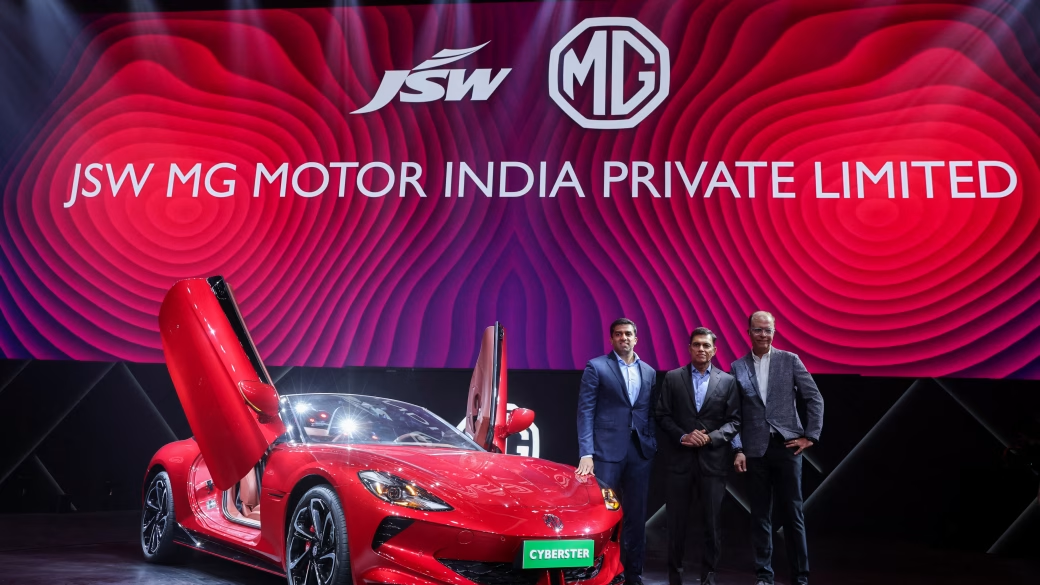
JSW MG Motor India plans to expand the production capacity of its Halol manufacturing facility in Gujarat to 1.6 lakh units annually by March 2027, as the automaker prepares for rising demand for electric and new energy vehicles (NEVs). Managing Director Anurag Mehrotra said the company also expects 70-80% of its total sales in 2026 to come from NEVs, reflecting the rapid shift in consumer preferences toward cleaner mobility solutions. The expansion is part of the company’s broader strategy to strengthen its presence in India’s fast-growing electric vehicle (EV) market.
The capacity enhancement follows strong demand for models such as the MG Windsor EV, Comet EV, and ZS EV, alongside the company’s growing portfolio of electrified vehicles. JSW MG Motor believes increasing production will help reduce waiting periods, improve supply, and support future product launches as India’s EV adoption accelerates.
JSW MG Motor to Expand Halol Plant Capacity
The automaker is significantly increasing manufacturing capacity to meet growing demand for new energy vehicles.
| Key Highlights | Details |
|---|---|
| Company | JSW MG Motor India |
| Plant | Halol, Gujarat |
| Planned annual capacity | 1.6 lakh units |
| Target completion | March 2027 |
| Expected NEV sales mix | 70-80% in 2026 |
| Focus | Electric and new energy vehicles |
The expansion highlights the company’s confidence in India’s long-term EV growth story.
Why JSW MG Motor Is Expanding Capacity
Several factors are driving the company’s manufacturing investment.
Key reasons include:
- Rising demand for electric vehicles.
- Strong sales of MG’s EV lineup.
- Upcoming new vehicle launches.
- Higher consumer acceptance of NEVs.
- Expansion of charging infrastructure.
- Long-term growth of India’s EV market.
The additional capacity will enable the company to better serve domestic demand while supporting future business expansion.
What Are New Energy Vehicles (NEVs)?
New Energy Vehicles include multiple types of environmentally friendly automobiles.
These include:
- Battery Electric Vehicles (BEVs).
- Plug-in Hybrid Electric Vehicles (PHEVs).
- Hybrid Electric Vehicles (HEVs).
- Fuel Cell Electric Vehicles (FCEVs).
For JSW MG Motor India, battery electric vehicles currently account for the majority of its NEV portfolio.
India’s EV Market Continues to Grow
| Segment | Market Trend |
|---|---|
| Passenger EVs | Strong double-digit growth |
| Charging infrastructure | Rapid nationwide expansion |
| Consumer demand | Increasing adoption of EVs |
| Government support | Incentives for EV manufacturing and adoption |
| Automakers | Expanding EV product portfolios |
India’s transition toward cleaner mobility is encouraging manufacturers to accelerate investments in production capacity and localized manufacturing.
Impact of the Halol Expansion
Increasing production capacity is expected to provide several benefits.
Potential advantages include:
- Shorter delivery times.
- Improved supply chain efficiency.
- Support for new product launches.
- Greater manufacturing flexibility.
- Enhanced economies of scale.
- Better ability to meet growing customer demand.
The expansion also reinforces Gujarat’s position as one of India’s major automotive manufacturing hubs.
Challenges Ahead
Despite positive growth prospects, the company faces several industry challenges.
These include:
- Rising competition from domestic and global EV manufacturers.
- Battery supply chain constraints.
- Fluctuating raw material prices.
- Expansion of charging infrastructure.
- Consumer affordability concerns.
- Evolving government policies and incentives.
Successfully navigating these challenges will be essential for sustaining long-term growth.
Outlook
JSW MG Motor India’s plan to increase the Halol plant’s production capacity to 1.6 lakh units annually by March 2027 reflects the company’s confidence in India’s rapidly expanding new energy vehicle market. With 70-80% of annual sales expected to come from NEVs, the automaker is positioning itself as one of the country’s leading electric mobility players.
As consumer demand for cleaner transportation continues to rise and the EV ecosystem matures, increased manufacturing capacity will allow JSW MG Motor to support future product launches, improve delivery timelines, and strengthen its competitive position in one of the world’s fastest-growing automotive markets.
What It Means for India’s Auto Industry
JSW MG Motor’s expansion signals the growing shift of India’s passenger vehicle market toward electrification. The company’s expectation that a large majority of its sales will come from new energy vehicles illustrates how quickly EV adoption is moving from an emerging trend to a core business strategy for automakers.
For the broader industry, continued investments in manufacturing capacity, localized production, and electric vehicle ecosystems are expected to accelerate competition, improve economies of scale, and support India’s long-term goal of becoming a global hub for sustainable automotive manufacturing.
Get the day’s top stories in your inbox
One concise email. No spam, unsubscribe anytime.