Brent oil price is the cost of the world’s best-known oil benchmark. It helps set fuel prices in many countries. Right now, the Brent oil price could jump above $120 a barrel if trouble in the Strait of Hormuz lasts. That matters because this narrow sea route carries a huge share of the world’s oil.
Key takeaways
- Goldman Sachs says the Brent oil price could move above $120 if Hormuz disruptions keep going.
- The Strait of Hormuz matters because about one-fifth of the world’s oil moves through it.
- Higher oil prices can lift petrol, diesel, shipping, and airline costs.
- India is exposed because it imports most of the crude oil it uses.
Why is the Brent oil price in focus now?
Goldman Sachs warned that oil could spike if shipping through the Strait of Hormuz stays disrupted. A disruption means normal movement gets blocked or delayed. The bank said Brent could rise above $120 a barrel in a severe case, which is far above recent levels near the mid-$70s.
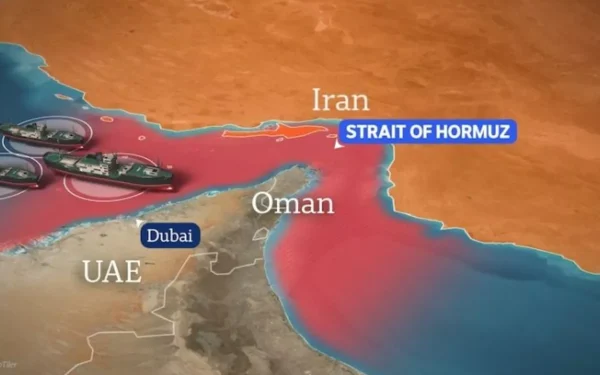
The Strait of Hormuz sits between Iran and Oman. It is only about 33 kilometres wide at its narrowest point, but it is one of the world’s most important trade lanes. Tankers carry crude oil and fuel through it every day, so even a short blockage can shake markets fast.
That fear is not new. We already explained how Strait of Hormuz traffic drops as ships avoid danger. This new angle is different because it focuses on how high the Brent oil price could go if the delays do not end soon.
Why does the Strait of Hormuz matter so much?
Think of the strait as a tiny bridge for a giant flow of energy. The U.S. Energy Information Administration says about 20 million barrels of oil moved through the waterway each day in 2024. That is close to 20% of global petroleum liquids consumption. Petroleum liquids is a broad term for crude oil and related fuels.
When so much supply passes through one chokepoint, traders get nervous. Traders are people and firms that buy and sell oil contracts. If ships slow down, insurance costs can rise, freight rates can jump, and buyers may bid up oil to lock in supply.
Goldman’s warning is really about risk, not a certain outcome. The bank is saying that if disruption lasts, the Brent oil price may shoot up because supply would look tighter. Tight supply means there is less oil available than buyers want.
Recent$120+20 mb/d$75$120Hormuz flow20 millionbarrels/dayKey numbers
What would a $120 Brent oil price mean for India?
India imports more than 85% of its crude oil needs, so global shocks travel here quickly. If the Brent oil price rises sharply, oil marketing firms may face more pressure on costs. Oil marketing firms are the companies that refine crude and sell fuels like petrol and diesel.
Higher crude often feeds into inflation. Inflation means prices in the wider economy rise over time. Transport becomes costlier, airlines pay more for jet fuel, and many goods become pricier because moving them costs more.
India’s import bill can also swell. An import bill is the total money a country spends on goods bought from abroad. We recently covered how crude oil imports hit $50 billion in India’s Q1, so a fresh oil spike would come on top of an already large energy tab.
There can be pressure on the rupee too, because India needs more dollars to buy oil. A weaker rupee makes imports even costlier. That is one reason the market also watches moves like the RBI swap facility, which can help manage dollar liquidity. Liquidity means how easily money is available in the financial system.
How big is the jump Goldman is talking about?
The move would be steep. If Brent climbed from about $75 to $120, that would be a rise of roughly 60%. A jump that large would not just affect oil companies. It would ripple through airlines, paint makers, chemical firms, truck fleets, and family budgets.
Here is a simple look at the numbers:
| Item | Figure | Why it matters |
|---|---|---|
| Recent Brent level | About $75 a barrel | Starting point for current market fears |
| Goldman risk scenario | Above $120 a barrel | Shows the possible spike if disruption lasts |
| Hormuz oil flow | About 20 million barrels a day | Shows how much supply is at risk |
| India oil imports | Over 85% of needs | Shows why India is sensitive to oil shocks |
Those figures explain why markets react so fast to headlines from the Gulf. The Gulf is the oil-rich region around the Persian Gulf. Even if actual supply loss stays small, fear alone can lift the Brent oil price for a while.
Could the Brent oil price really stay that high?
It could, but only if the problem drags on. Oil spikes often cool when supply routes reopen or when major producers increase output. Output means the amount of oil countries pump from the ground.
There are a few buffers. Saudi Arabia and the United Arab Emirates have some spare capacity. Spare capacity means oil they could produce if needed. Countries also keep emergency stockpiles, though those are usually used in serious supply shocks.
Still, markets do not wait for damage to become huge. They price in risk early. That is why the Brent oil price can rise before shortages show up at petrol pumps.
For wider energy context, readers can also see our report on core infrastructure growth hits 5% in June, since fuel costs can affect power, refinery activity, and transport-heavy sectors.
What should readers watch next?
First, watch ship traffic through the Strait of Hormuz. If tankers move normally again, oil may calm down. Primary source data from the U.S. Energy Information Administration helps show why this route matters so much.
Second, watch what big oil producers say about supply. If OPEC members raise output, that could ease some pressure. OPEC is a group of major oil-exporting countries. Market watchers also follow research notes from banks such as Goldman and official oil reports from the International Energy Agency.
Third, watch India’s fuel prices, inflation data, and the rupee. These are the places where a higher Brent oil price can hit everyday life. If oil stays high for weeks, the effect becomes harder to avoid.
If Strait of Hormuz disruptions persist, the Brent oil price could jump well above recent levels because a large share of global oil supply moves through that narrow route. For India, that would likely mean costlier fuel, a bigger import bill, and more inflation pressure.
FAQs
What is the Brent oil price?
The Brent oil price is a global benchmark for crude oil. It is a reference price many fuel deals use around the world.
Why does the Strait of Hormuz affect oil prices?
It carries about one-fifth of the world’s oil supply. So, any blockage or delay can make traders fear shortages and bid prices higher.
How could this affect people in India?
If oil stays expensive, fuel and transport can cost more. That can also push up prices for food, travel, and many everyday goods.
When would the risk fade?
The risk would ease if shipping normalises and supply keeps flowing. Clear signs of more output from producers could also cool the market.
Get the day’s top stories in your inbox
One concise email. No spam, unsubscribe anytime.