Key takeaways
- NCLAT has asked the Competition Commission of India, or CCI, to respond in a consumer appeal on airline cancellation charges.
- The case involves claims that some fees charged when flyers cancel tickets may be unfair.
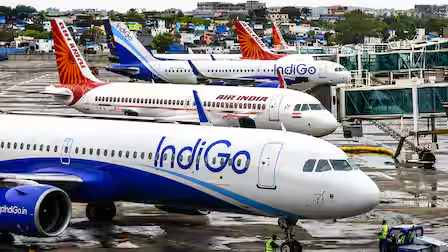
- IndiGo and Air India are part of the wider dispute, according to the reported proceedings.
- The order does not mean airlines have lost. It means the appeal will now move forward.
Airline cancellation charges are the fees an airline keeps or adds when you cancel a ticket. Right now, airline cancellation charges are under fresh legal review in India. NCLAT, which hears appeals in competition cases, has asked the CCI to file its response in a consumer appeal.
That matters because many travelers have felt stuck by high fees for years. If you cancel a low-cost ticket, sometimes the charge can eat up most of the fare. So this case could shape how clearly airlines explain fees and how fair those fees really are.
What happened in the airline cancellation charges case?
The National Company Law Appellate Tribunal, or NCLAT, has sought a response from the Competition Commission of India. NCLAT is an appeals court for some business and market cases. In simple words, it checks whether a lower authority got a case right.
The appeal comes from a consumer-side challenge tied to airline cancellation charges. The reported matter names IndiGo and Air India in the broader dispute. The CCI is India’s market watchdog. It looks at whether companies distort competition, which means they may act in a way that hurts fair choice.
At this stage, NCLAT has not given a final ruling. It has asked for the CCI’s side, so the case can be heard in more detail. That is a key point. A notice is not the same as a verdict.
Why do airline cancellation charges upset so many travelers?
Most people think a canceled trip should mean a simple refund after a fair deduction. But airline cancellation charges can feel confusing, especially when the final refund is tiny. For example, a passenger may pay a few thousand rupees, cancel early, and still get back very little.
Airlines say these charges help cover costs and manage last-minute seat changes. That can include admin work, payment processing, and lost chances to sell the seat again. Still, critics say the rules are often hard to compare across airlines.
There is also a difference between a base fare and taxes. The base fare is the ticket price before extra charges. Taxes are government-linked charges, and some of them may be refundable even when the fare is not.
How a ticket refund can shrinkIllustrative example, not a court findingTicket paid: ₹4,000Fee kept: ₹2,500Refund: ₹1,500Many flyers compare the refund, not just the posted fee.That is why airline cancellation charges draw so much attention.
What are NCLAT and CCI, and why are both involved?
The CCI is the Competition Commission of India. It examines anti-competitive conduct. That means behavior that may block fair competition, like unfair pricing patterns or rules that leave buyers with poor options.
NCLAT hears appeals against some CCI orders or decisions. So if someone believes the CCI did not handle a complaint properly, NCLAT can step in. It does not decide every consumer dispute in India, but it matters a lot in market cases.
This is why the present move is important. The appeal does not just ask if one passenger was unhappy. It raises a wider question about whether airline cancellation charges are a competition issue, a consumer issue, or both.
What could happen next for airlines and passengers?
First, the CCI will respond, and the appeal will continue. Then NCLAT will hear arguments from the sides involved. After that, the tribunal may uphold the earlier view, send the matter back, or ask for a fresh look.
That means change will not happen overnight. Legal cases move step by step. But even before a final order, the spotlight can push airlines to explain terms more clearly.
If the case leads to stricter scrutiny, airlines may need cleaner fee displays at the booking stage. That would help travelers compare tickets better. In fact, clearer fee tables may matter as much as lower fees.
| Issue | What it means | Why it matters |
|---|---|---|
| Cancellation fee | Money deducted when a flyer cancels | Can sharply reduce the refund |
| CCI response | The watchdog explains its position | Helps NCLAT decide next steps |
| NCLAT appeal | A challenge to an earlier decision | Can reopen review of airline cancellation charges |
How big is India’s airline market, and why does that matter?
India is one of the world’s fastest-growing air travel markets. Millions of people now book flights for work, school, weddings, and holidays. So even a small fee can affect a huge number of passengers.
IndiGo holds the biggest share of India’s domestic market, while Air India is expanding after a major overhaul. A market share is the slice of total sales or customers a company has. When large airlines follow similar fee structures, people naturally ask whether choice is really wide enough.
That does not prove wrongdoing. But it explains why airline cancellation charges get close attention from courts, regulators, and consumer groups. A practice that seems minor on one ticket can become a large public issue across millions of bookings.
What should travelers watch right now?
Check the fare rules before you pay. Look for the cancellation fee, date change fee, and whether taxes are refundable. Also check if a “convenience fee” is refundable. That is a booking charge added by the platform or airline.
It helps to compare the cheapest fare with the next fare up. Sometimes a slightly costlier ticket has better refund rules. So the cheaper-looking option may cost more if plans change.
For broader aviation context, readers can also see our report on the Singapore Airlines fund infusion and what it means for Air India and our piece on the IndiGo engine deal and why the CFM pact is a big bet. Those stories show how fast India’s airline business is changing.
If you want the primary legal and competition context, you can follow updates from the Competition Commission of India and case information from the NCLAT. Those are the official bodies in this dispute.
Here is the simple answer: airline cancellation charges are back under scrutiny because NCLAT has asked the CCI to respond in a consumer appeal, which keeps alive a bigger fight over whether these fees are fair, clear, and competitive.
Why this case could matter beyond one appeal
This dispute is about more than one booking gone wrong. It touches trust. People are more likely to book early if they believe the rules are fair.
It also tests how India handles digital consumer pain points. Many flight tickets are bought on apps in minutes, but the fine print can still be hard to understand. Since air travel keeps growing, the pressure for simple, honest fee rules will only rise.
For now, airline cancellation charges remain legal unless a regulator or court says otherwise in a specific way. But the new step at NCLAT means the issue is very much alive.
FAQs
What are airline cancellation charges?
They are fees deducted when you cancel a flight ticket. The airline may keep part of your money, and your refund can be much smaller.
Why did NCLAT ask CCI to respond?
NCLAT is hearing an appeal linked to airline cancellation charges. It wants the CCI’s official reply before moving ahead.
When will passengers know the final outcome?
Not yet. The case is still in process, so a final ruling may take time after responses and hearings.
Get the day’s top stories in your inbox
One concise email. No spam, unsubscribe anytime.