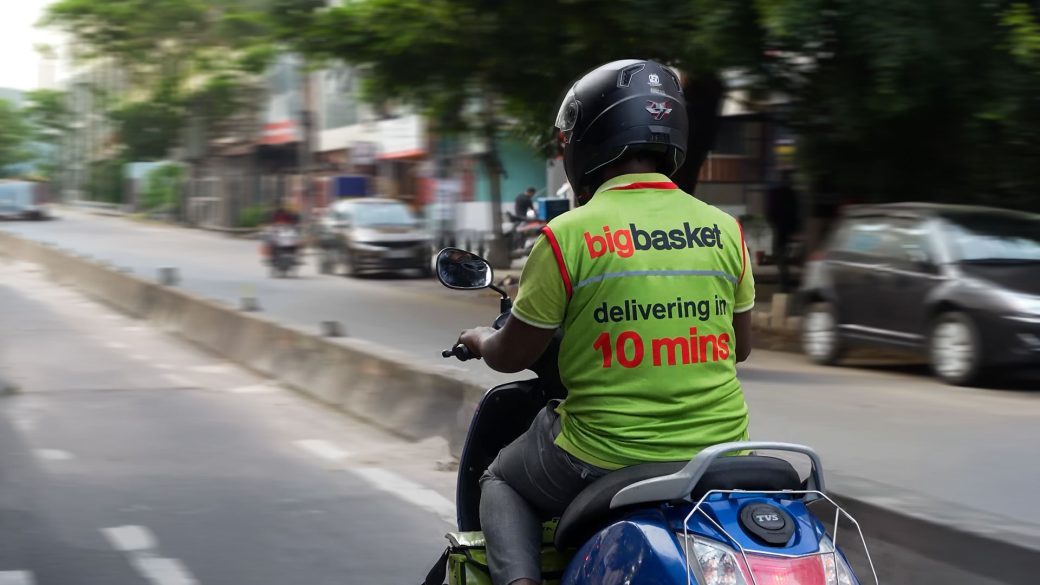
BigBasket, Tata Digital’s online grocery and quick commerce platform, is reportedly planning to reduce its operational footprint from 76 cities to around 40 profitable markets as part of a broader strategy to improve profitability amid intensifying competition in India’s quick commerce sector. The move comes as the company faces growing pressure from rivals such as Blinkit, Swiggy Instamart, Zepto, Amazon, and Flipkart, all of which are aggressively expanding their rapid delivery businesses.
According to the report, the restructuring is aimed at reducing cash burn and improving operational efficiency under BigBasket’s newly appointed leadership. Rather than pursuing rapid geographical expansion, the company is expected to focus on strengthening its presence in high-demand, profitable markets while optimizing pricing, assortment, and execution.
BigBasket Plans Major Geographic Consolidation
The reported strategy marks a significant shift in the company’s growth approach.
| Key Highlights | Details |
|---|---|
| Company | BigBasket (Tata Digital) |
| Current presence | 76 cities |
| Planned footprint | Around 40 profitable cities |
| Objective | Improve profitability and reduce cash burn |
| Industry | Quick commerce and online grocery |
The company has not officially confirmed the reported restructuring plan.
Why BigBasket Is Shrinking Its Footprint
Several factors are driving the reported decision.
Key reasons include:
- Rising competition in quick commerce.
- High operating costs in smaller markets.
- Pressure to improve profitability.
- Focus on operational efficiency.
- Better allocation of capital and resources.
The strategy reflects a broader industry shift from aggressive expansion toward sustainable growth.
India’s Quick Commerce Battle Intensifies
Competition in the sector has increased sharply over the past year.
Major players include:
- Blinkit.
- Swiggy Instamart.
- Zepto.
- Amazon.
- Flipkart.
- BigBasket.
Companies are investing heavily in dark stores, logistics networks, faster delivery, and customer acquisition to gain market share.
What BigBasket Is Expected to Focus On
| Priority | Objective |
|---|---|
| Profitable cities | Improve margins |
| Operational efficiency | Reduce cash burn |
| Pricing | Enhance competitiveness |
| Product assortment | Increase order value |
| Customer experience | Improve retention |
The emphasis is expected to shift toward maximizing profitability rather than expanding into new markets.
Industry Trend Toward Profitability
Quick commerce companies are increasingly prioritizing:
- Higher average order values.
- Better unit economics.
- Optimized delivery networks.
- Expansion in high-demand urban markets.
- Improved inventory management.
As investor focus shifts from growth to profitability, companies are reassessing expansion strategies.
Potential Impact
If implemented, the restructuring could:
- Improve operating margins.
- Reduce losses.
- Increase efficiency in core markets.
- Strengthen competitiveness against larger rivals.
- Slow expansion into smaller cities.
Customers in cities affected by the reported exit may lose access to BigBasket’s services unless alternative operating models are introduced.
Challenges Ahead
Despite the planned consolidation, BigBasket continues to face several challenges.
These include:
- Intense competition from established quick commerce players.
- Maintaining customer loyalty.
- Balancing growth with profitability.
- Managing delivery infrastructure costs.
- Responding to continued market expansion by rivals.
Execution will be critical as competitors continue investing aggressively in rapid grocery delivery.
Outlook
The reported decision to reduce BigBasket’s presence to around 40 profitable cities signals a strategic pivot toward financial sustainability in one of India’s most competitive consumer internet sectors. Rather than matching rivals city for city, the company appears to be prioritizing operational efficiency, stronger unit economics, and profitability in markets where it already has meaningful scale.
As the quick commerce market matures, companies are increasingly balancing growth ambitions with financial discipline. While rapid delivery remains a key competitive differentiator, long-term success is likely to depend on efficient logistics, customer retention, and sustainable margins rather than geographic expansion alone.
What It Means for India’s Quick Commerce Industry
BigBasket’s reported strategy highlights a broader evolution in India’s quick commerce market, where the focus is shifting from rapid expansion to profitable growth. As competition intensifies, companies are reassessing network size, dark store density, and market selection to improve returns on investment.
For the industry, the move suggests that scale alone may no longer be sufficient. Companies that can combine fast delivery with strong unit economics, operational efficiency, and disciplined capital allocation are likely to be better positioned for long-term success.
Get the day’s top stories in your inbox
One concise email. No spam, unsubscribe anytime.