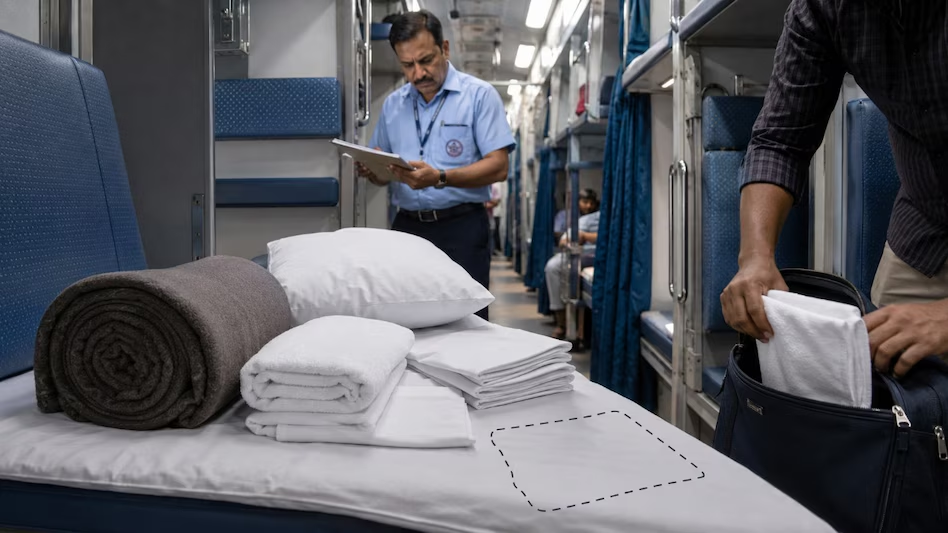
An estimated 1.27 crore bedroll items—including bedsheets, face towels, blankets, pillows, and pillow covers—were stolen from Indian Railways’ air-conditioned (AC) coaches between January 2022 and May 2026, resulting in losses of more than ₹104 crore. The findings emerged from an RTI-based investigation that analyzed responses from 54 railway divisions across 16 railway zones, highlighting a growing challenge for the rail network and the contractors responsible for supplying onboard linen.
The investigation found that linen theft has increased significantly since bedroll services resumed after the COVID-19 pandemic, with reported thefts rising 56% between 2022 and 2025. While the average loss amounts to roughly one stolen item for every 1,000 AC passengers, the cumulative financial impact has become substantial.
Linen Theft Tops 1.27 Crore Items
The RTI data revealed widespread theft of bedroll items supplied to passengers travelling in AC coaches.
| Linen Item | Number Reportedly Stolen |
|---|---|
| Face towels | 46.54 lakh |
| Bedsheets | 41.13 lakh |
| Pillow covers | 23.59 lakh |
| Blankets | 12.95 lakh |
| Pillows | 2.76 lakh |
| Total | 1.27 crore+ items |
Face towels emerged as the most frequently stolen item, followed by bedsheets and pillow covers. Pillows recorded the fewest thefts, likely due to their larger size.
Losses Exceed ₹104 Crore
The investigation estimates that missing linen resulted in losses of around ₹104.5 crore over the four-year period.
| Financial Impact | Details |
|---|---|
| Estimated loss | ₹104.5 crore |
| Time period | January 2022 – May 2026 |
| Who bears the cost? | Primarily bedroll contractors |
According to railway officials, contractors responsible for supplying and managing linen are generally required to replace missing items, with the associated costs often recovered from their payments.
Theft Has Increased Since 2022
The report indicates a significant rise in linen theft following the restoration of bedroll services after the pandemic.
Contributing factors may include:
- Large passenger volumes.
- Easy portability of linen items.
- Limited onboard monitoring.
- Operational challenges during collection.
Railway authorities have described the issue as a serious operational concern requiring stronger preventive measures.
Worst-Affected Railway Divisions
Several railway divisions recorded particularly high numbers of missing linen items.
Among the most affected were:
- Bikaner.
- Ranchi.
- Delhi.
- Mumbai.
- Jodhpur.
- Ahmedabad.
Bikaner reported the highest number of missing items, accounting for more than 25 lakh stolen bedroll articles during the period covered by the RTI responses.
Measures to Reduce Theft
Railway authorities have introduced and proposed several initiatives to curb linen theft.
These include:
- CCTV surveillance.
- Better inventory tracking.
- Monitoring through digital systems.
- Passenger awareness campaigns.
- Stronger accountability for contractors.
- Enhanced supervision of linen distribution.
Officials say these efforts aim to reduce losses while ensuring passengers continue receiving clean bedroll kits during overnight journeys.
Operational Challenges
The theft of bedroll items affects more than replacement costs.
Additional impacts include:
- Higher procurement expenses.
- Increased operational costs.
- More frequent inventory replenishment.
- Additional workload for contractors.
- Potential service disruptions.
Maintaining sufficient linen inventory remains critical, especially during peak travel seasons.
Outlook
Indian Railways is expected to continue strengthening inventory management and enforcement measures to reduce losses from linen theft. As passenger volumes continue to grow, improving accountability and monitoring will be essential to controlling costs while maintaining service quality in AC coaches.
What It Means for Indian Railways
The reported theft of more than 1.27 crore bedroll items highlights a significant operational and financial challenge for Indian Railways and its contractors. While the loss represents a small fraction of the millions of passengers travelling annually in AC coaches, the cumulative cost has exceeded ₹104 crore, placing additional pressure on service providers responsible for replacing missing linen.
The findings also underscore the importance of stronger inventory management, passenger awareness, and technology-driven monitoring systems. Addressing the issue could help reduce operational costs, improve efficiency, and ensure the continued availability of quality onboard amenities for rail passengers.
Get the day’s top stories in your inbox
One concise email. No spam, unsubscribe anytime.