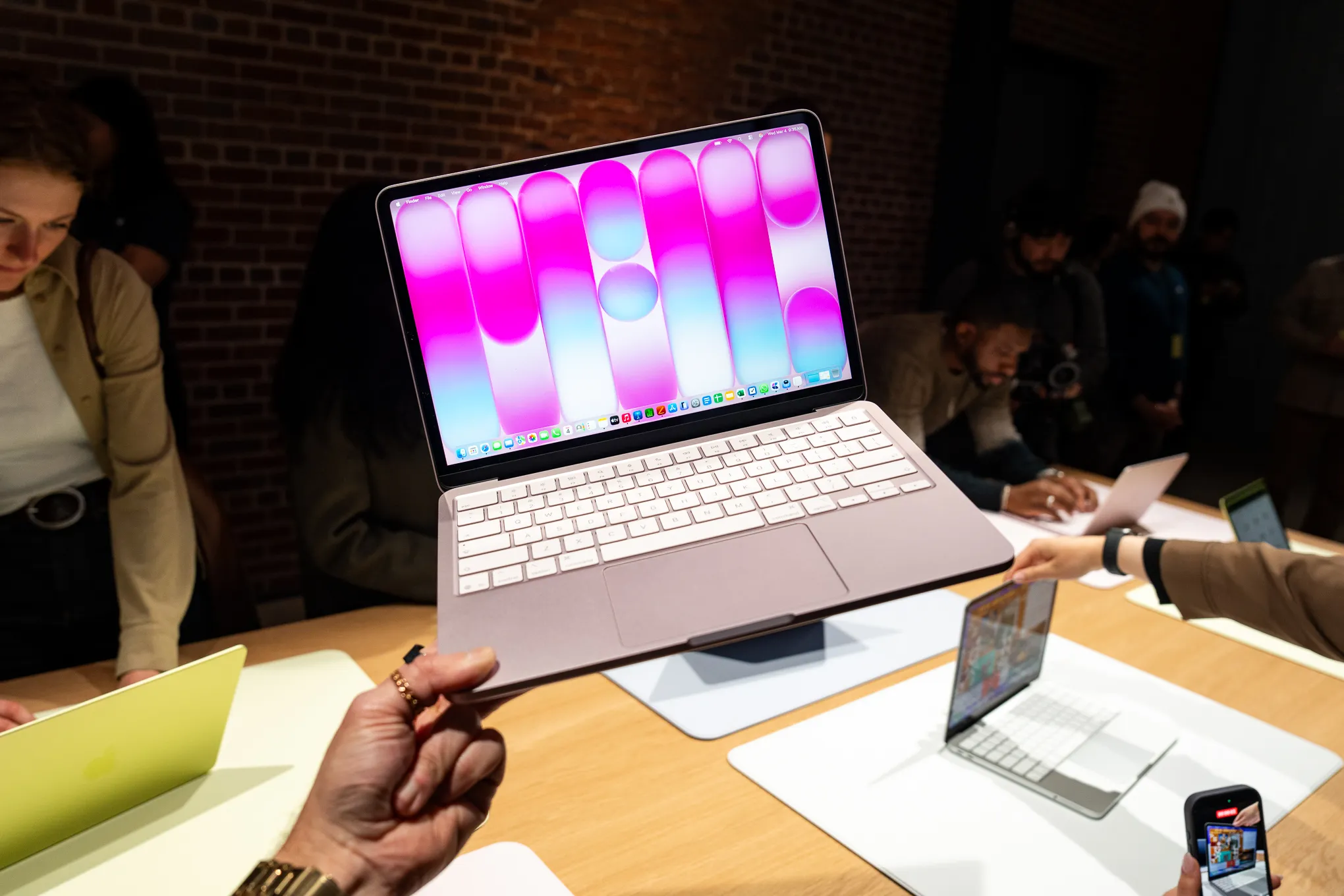
Proving that there is immense, untapped volume at the lower end of the premium laptop market, Apple’s all-new MacBook Neo has achieved a staggering 1.1 million shipments during its debut quarter.
According to market shipment data, the tech giant crossed the million-unit threshold despite the device being physically available for only three weeks of that initial tracking period. Released globally on March 11, 2026, the MacBook Neo has quickly disrupted traditional retail dynamics by aggressively targeting a mainstream price bracket previously dominated by high-end Windows ultrabooks and Chromebooks.
1. The Strategy: Disrupting the Budget Market
Positioned directly below the MacBook Air and MacBook Pro lineups, the MacBook Neo represents Apple’s most affordable laptop ever built. By introducing a luxury operating system experience at a hyper-competitive price point, Apple has fundamentally rewritten its hardware consumer strategy:
- The Pricing Playbook: The laptop launched at a breakthrough starting price of $599 (₹69,900 in India) for regular retail buyers.
- The Education Catalyst: To secure a dominant position in the academic sector, Apple introduced student and educator tier discounts that dropped the entry baseline down to an unprecedented $499 (₹59,900).
- New-User Acquisition: Market intelligence reports reveal that the $599 price tag is acting as a highly effective gateway, successfully pulling in a massive wave of first-time Mac buyers and students who previously viewed Apple’s ecosystem as cost-prohibitive.
2. Hardware Architecture: The First A-Series Mac
To achieve a sub-$600 price point without sacrificing the smooth performance expected of macOS, Apple executed a historic architectural pivot. The MacBook Neo is the first publicly available Mac laptop to completely bypass the traditional M-series processor.
Instead, it is powered by the Apple A18 Pro system-on-a-chip (SoC)—the exact same powerhouse silicon configuration originally introduced inside the flagship iPhone 16 Pro.
The integration of the A18 Pro chip has proven to be a masterstroke for everyday usability. Featuring a 6-core CPU and a 5-core GPU backed by 8GB of unified memory, the hardware manages standard school assignments, browser multitasking, and document processing with zero lag. Because the mobile chip operates with exceptional thermal efficiency, Apple was able to implement a completely passive, fanless cooling system. This allows the ultra-slim 12.7 mm aluminum frame to stay whisper-quiet while delivering up to 16 hours of real-world battery life.
3. Premium Touches and Pragmatic Trims
While the core user experience feels unmistakably premium, Apple managed its tight manufacturing margins by balancing high-end aesthetic choices with calculated feature trims:
What Made the Premium Cut:
- The Design Language: A beautiful, 1.23 kg aluminum body available in four vibrant colors: Indigo, Citrus, Silver, and Blush. To ensure a unified look, Apple included color-matched Magic Keyboards, distinct pre-installed wallpapers, and color-matched charging cables.
- The Notchless Screen: Breaking away from the aesthetic choices of the modern MacBook Air and Pro, the Neo features a completely notchless 13-inch display with uniform black bezels and an integrated 1080p FaceTime HD camera.
- AI Readiness: The 16-core Neural Engine baked into the A18 Pro provides native hardware support for on-device Apple Intelligence features, including advanced system-wide Writing Tools and Live Translation.
Where Costs Were Saved:
- The Biometric Division: To maintain the entry-level pricing structure, the base 256GB SSD model completely lacks Touch ID, utilizing a standard mechanical lock button instead. Buyers wanting biometric fingerprint convenience must upgrade to the premium 512GB variant (₹79,900).
- Port Restrictions: The IO setup is restricted to a 3.5mm audio jack and two USB-C ports. Crucially, only the left port supports faster data transfers and external display outputs, while the right-hand port is capped at basic USB 2.0 speeds. There is no native support for MagSafe charging or Thunderbolt data transfer speeds.
4. Market Inversion: Winning the US and Indian Bourses
The initial wave of 1.1 million shipments has been heavily anchored by explosive, parallel demand in two core global geographies: the United States and India.
In the Indian market, where premium computer buyers are highly price-sensitive, the ₹69,900 retail baseline has turned the device into an instant corporate and educational hit. Industry supply-chain analysts note that while initial component scarcities slightly bottlenecked fulfillment speeds during the March release window, manufacturing yields are steadily normalizing.
As production factories hit maximum capacity heading into the vital “Back to School” summer sales corridor, Apple is well-positioned to massively scale its laptop market share, posing a direct threat to the traditional mid-tier Windows ecosystem.
Get the day’s top stories in your inbox
One concise email. No spam, unsubscribe anytime.