A massive 30-month panel study tracking 26,811 secondary school students has pulled back the curtain on the “augmentation trap” of generative AI in education. Conducted by researchers at Peking University’s Graduate School of Education, the study reveals a stark paradox: while AI gives an immediate boost to daily productivity, it quietly erodes long-term conceptual mastery—and the damage takes roughly two full years to show up in high-stakes testing.
Because traditional metrics like homework completion mask this underlying skill drain, educators are calling it the invisible timeline of cognitive offloading.
1. The Short-Term Illusion vs. The Long-Term Crash
The study tracked students across three full academic years, creating a detailed before-and-after picture of how regular AI tool usage (such as ChatGPT and similar generative systems) transforms performance.
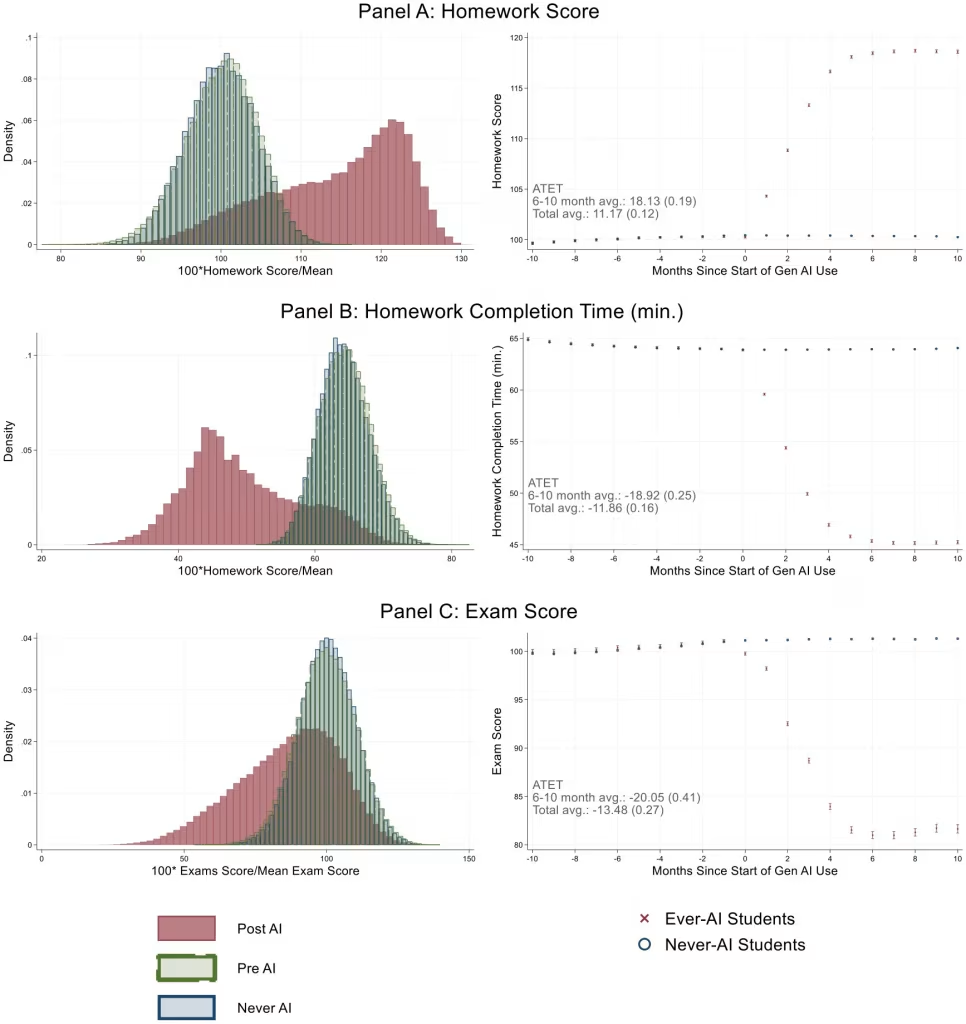
- The Immediate “Boost” (Months 1–6): Initially, AI looked like a massive success. Students using the tools saw their daily homework grades jump 18%, while the time spent on assignments plummeted by 30% (dropping from an average of 64 minutes to 45 minutes).
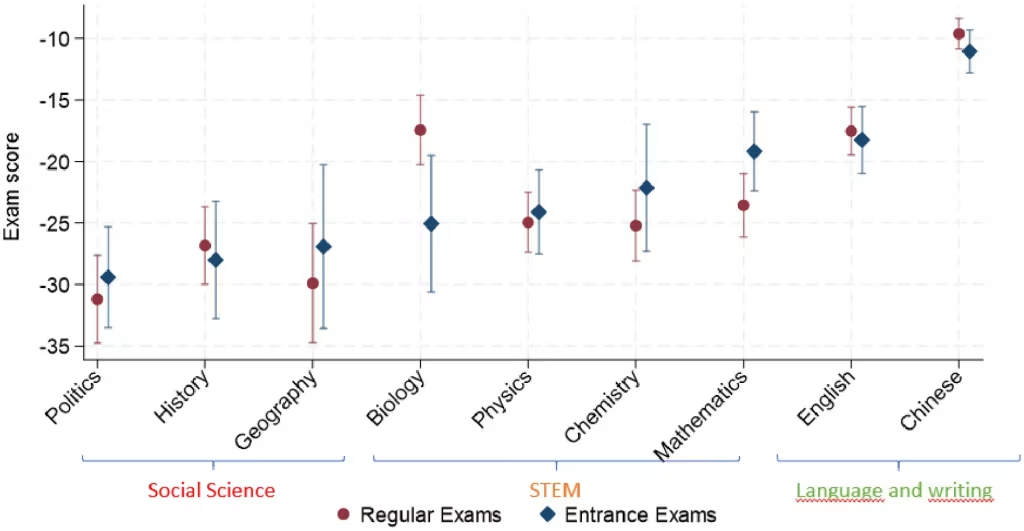
- The Standard Exam Dip (Month 6): The first crack appeared during closed-book classroom exams, where AI-reliant students suffered an immediate 20% drop in test scores.
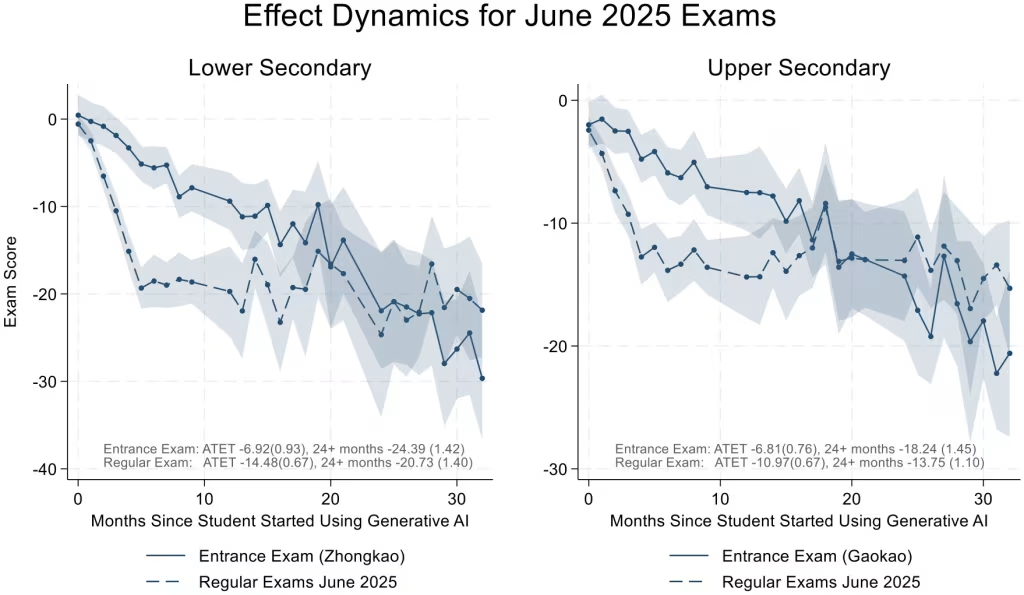
- The High-Stakes Delayed Crash (Year 2): The full structural deficit didn’t completely surface until major, cumulative entrance examinations two years later. On these holistic tests, regular AI users scored 18% to 24% lower than their non-AI peers.
2. Subject Breakdown & The High-Performer Paradox
The erosion of critical thinking skills was not uniform across disciplines. Subjects requiring narrative synthesis, historical contextualization, and multi-step logic pathways saw the steepest drops.
| Subject Area | Long-Term Exam Score Decline |
| Social Studies | -27% (Heavily impacted by lower memory recall on maps and timelines) |
| STEM Fields | -22% (Driven by widened conceptual gaps in algebra and chemistry) |
| English / Foreign Languages | -17% |
| Chinese (Native Language) | -9% |
The High-Performer Vulnerability
Counterintuitively, the study noted that the greatest learning losses hit the historically highest-achieving students. MIT Sloan researchers define this as the “augmentation trap”: top performers are inherently the most capable of efficiently delegating complex thinking to an automated tool. By letting the AI “do the thinking” rather than using it as a collaborative check, these students experienced the fastest cognitive offloading and subsequent skill erosion.
3. Spotting the “Outsourcing” Signal
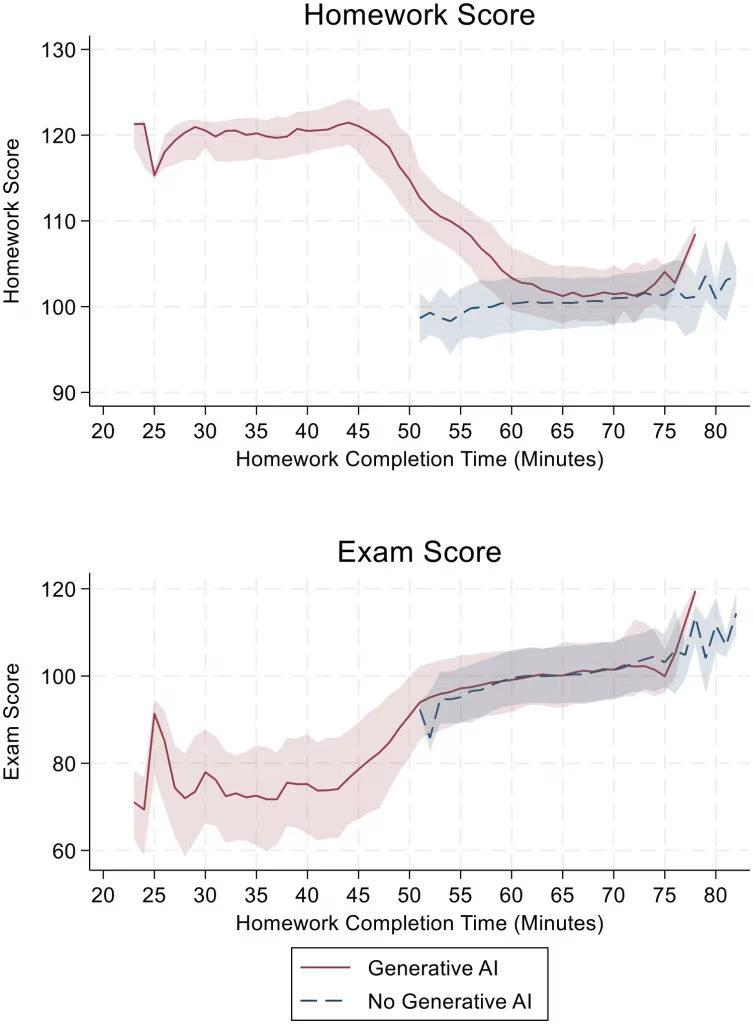
The data pinpointed a highly specific behavioral threshold that serves as a warning flag for schools and parents. After five months of access, 81% of long-term AI users finished their homework in under 50 minutes—a speed clear outperforming even the fastest, highly gifted non-AI users.
The Threshold Warning: The combination of near-perfect homework marks and abnormally fast submission timestamps is a primary mathematical signal of external outsourcing rather than actual independent study.
The study also found that volume matters. Students using AI for more than five hours a week suffered a 30% loss on long-term retention measures, while even light usage of just one hour a week still registered a measurable 5% drop.
4. The Policy Dilemma & The Path to Recovery
The two-year lag presents a major challenge for school districts and academic institutions. If a school only monitors daily homework completion and short-term metrics, its curriculum will appear highly successful even as students’ foundational knowledge steadily falls apart.
However, the researchers concluded that this skill erosion is completely reversible if caught in time:
- The 18-Month Pivot: Students who recognized the pattern and strictly dialed back their AI usage after 18 months recovered roughly half of their lost exam performance by the end of the third year.
- Late Interventions Fail: Students who waited until the two-year mark to cut back on AI saw minimal recovery before major exams, proving that waiting for bad test results to trigger a policy change is often too late.
- The Balanced Solution: Rather than resorting to reactive, unenforceable bans on AI, the study’s authors advise schools to enforce at least one mandatory, closed-book, tech-free assessment per month to act as a diagnostic guardrail, while establishing firm weekly time limits on AI exposure for core subjects.
Get the day’s top stories in your inbox
One concise email. No spam, unsubscribe anytime.