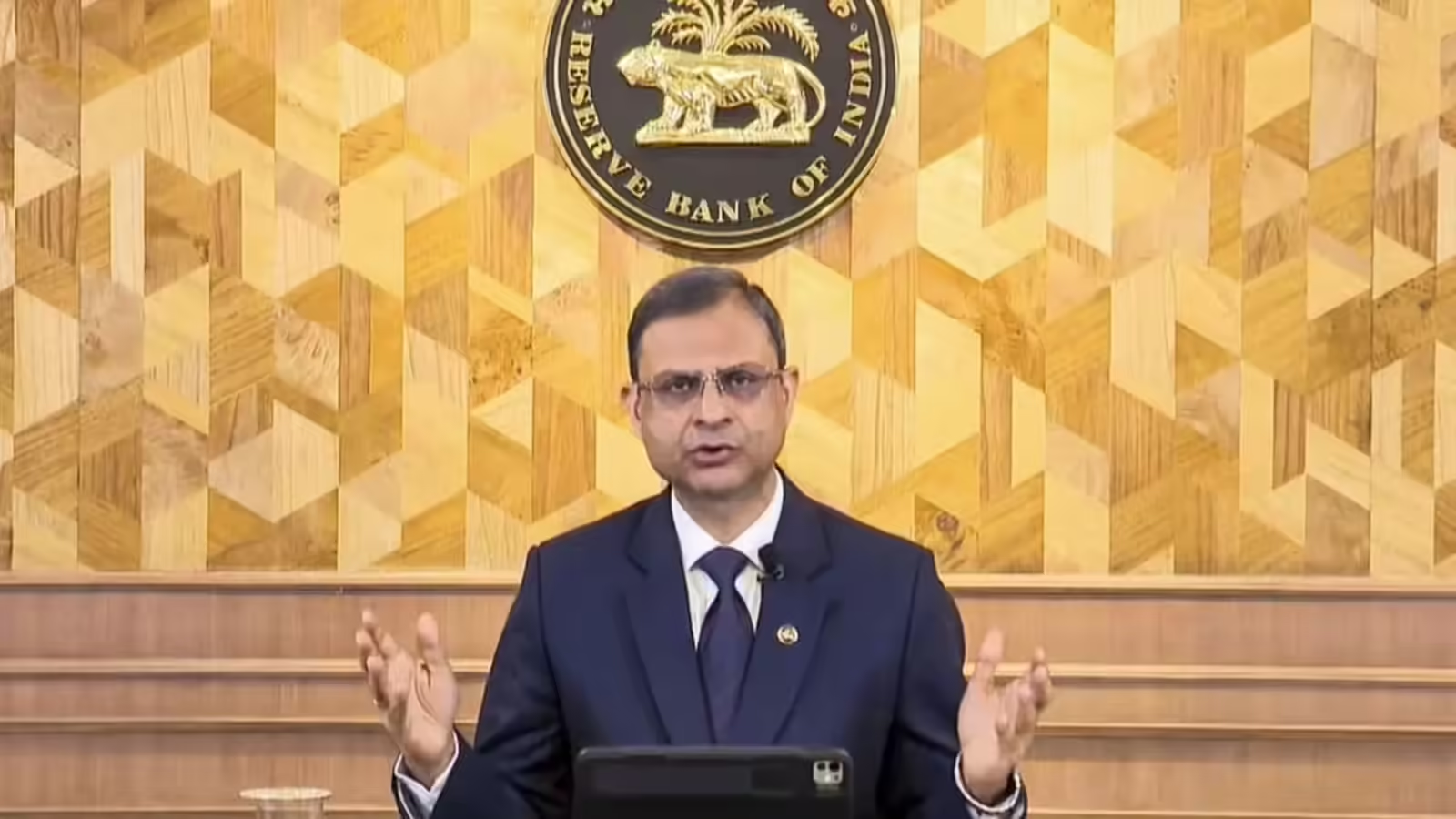
RBI intervention is when India’s central bank steps into the currency market to calm big swings. This time, RBI intervention came as the rupee moved close to a record low against the US dollar. The goal was simple: slow the fall, not force a huge bounce. That matters because a weaker rupee can make imports cost more.
Key takeaways
- The rupee came close to its weakest level ever against the US dollar.
- RBI intervention means the Reserve Bank of India buys or sells dollars to reduce sharp moves.
- Traders said the RBI likely sold dollars through state-run banks to support the rupee.
- A softer rupee can raise the cost of imported fuel, electronics, and other goods.
- The RBI usually aims to smooth volatility, not defend one exact exchange rate.
What happened with the rupee?
The rupee slipped near a record low in trading, which pushed dealers to watch the central bank closely. Traders told local media that the RBI stepped in as pressure built. In market talk, that is called RBI intervention.
The rupee-dollar rate shows how many rupees buy 1 US dollar. If that number rises, the rupee is weaker. For example, if the rate moves from 83 to 84, you need 1 more rupee to buy a dollar.
The source report said the RBI acted as the currency neared its weakest point on record. The central bank did not make a public live announcement during trading. But that is normal, because central banks often act quietly.
How does RBI intervention work?
RBI intervention usually works through the foreign exchange market. Foreign exchange means the market where currencies are bought and sold. The RBI can sell dollars from its reserves and take in rupees, so dollar supply rises for a while.
When more dollars are available, the rush to buy them can cool down. That can help the rupee stop sliding so fast. It does not always reverse the trend, but it can reduce panic.
India holds large forex reserves for times like this. Forex reserves are foreign currency assets kept by the central bank. According to RBI data, India’s reserves have often stayed above $600 billion in recent periods, which gives the bank room to act.
Here is a simple way to picture it:
Rupee pressure and RBI responseWeakStrongRBI interventionEarlierLaterRupee weakensMove steadies
Why is the rupee under pressure?
One big reason is the strong US dollar. When the dollar rises, many other currencies feel pressure too. Investors often move money into dollar assets when they want safety or higher returns.
Oil prices also matter a lot for India, because India imports most of its crude oil. If oil gets costlier, Indian buyers need more dollars. That can push the rupee lower.
Bond yields in the US can add to this pressure. A bond yield is the return investors earn from a bond. If US yields rise, some global money shifts there, so emerging market currencies can weaken.
This is not just an India story. Many Asian currencies react when the dollar gets strong. So RBI intervention is often about managing outside shocks, not just local problems.
Does RBI intervention mean the rupee is in danger?
Not by itself. A single day of RBI intervention does not mean a crisis has arrived. It usually means the RBI thinks the move is too fast or too one-sided.
Here is the clearest answer:
RBI intervention does not try to fix the rupee at one magic number. It mainly tries to stop sudden, messy swings that can hurt trade, prices, and confidence.
That matters because wild moves can unsettle importers, exporters, and investors. An importer buys goods from other countries. An exporter sells goods to other countries.
If the rupee drops very fast, importers may rush to buy dollars. Then pressure gets worse. The RBI steps in so the market stays orderly.
What does this mean for families and businesses?
A weaker rupee can slowly show up in daily life. Imported fuel can become more expensive, and that can affect transport costs. Then prices of some goods may rise too.
Phones, chips, and some medicines can also feel the impact, because India buys many parts from abroad. That does not mean everything jumps in price at once. But the pressure can build over time.
For businesses, currency swings make planning harder. A company that imports parts may not know its future costs. So many firms hedge their risk. Hedging means using contracts to reduce losses from price moves.
| Area | What a weaker rupee can do | Why it matters |
|---|---|---|
| Fuel | Raise import costs | Can lift transport and goods prices |
| Electronics | Increase part costs | May squeeze company margins |
| Exporters | Boost rupee earnings | Can help firms that sell abroad |
| Travel | Make foreign trips costlier | People need more rupees per dollar |
What should readers watch next?
Watch the rupee’s trading range over the next few sessions. If the currency stays calm, the market may believe the RBI has drawn a line against sharp moves. If pressure returns fast, traders may test that line again.
Also watch oil prices, US rate signals, and India’s reserve data. Those three clues often shape the next move. For broader context on currency and trade checks, you can read our report on RBI directions to banks on trade records.
Gold and the dollar often move attention across markets too. Our piece on gold prices slipping as oil jumps and Fed worries grow helps explain that link.
For official numbers, readers can track the Reserve Bank of India and India’s foreign exchange data releases. Market participants also watch currency reference rates from the Financial Benchmarks India Pvt. Ltd..
Why doesn’t the RBI stop every fall?
Because that would be costly and often pointless. Markets are huge, and no central bank wants to burn reserves fighting every small move. So RBI intervention tends to focus on speed and disorder, not every dip.
That approach gives the rupee some freedom to adjust. It also saves firepower for tougher days. In simple words, the RBI tries to act like a referee, not a magician.
FAQs
What is RBI intervention?
RBI intervention is when the Reserve Bank of India buys or sells foreign currency to calm sharp moves in the rupee.
Why is a weak rupee a problem?
A weak rupee can make imports cost more. That can raise prices for fuel, travel, electronics, and some other goods.
Who gains from a weaker rupee?
Some exporters can gain, because each dollar they earn converts into more rupees. But import-heavy firms may lose.
Get the day’s top stories in your inbox
One concise email. No spam, unsubscribe anytime.