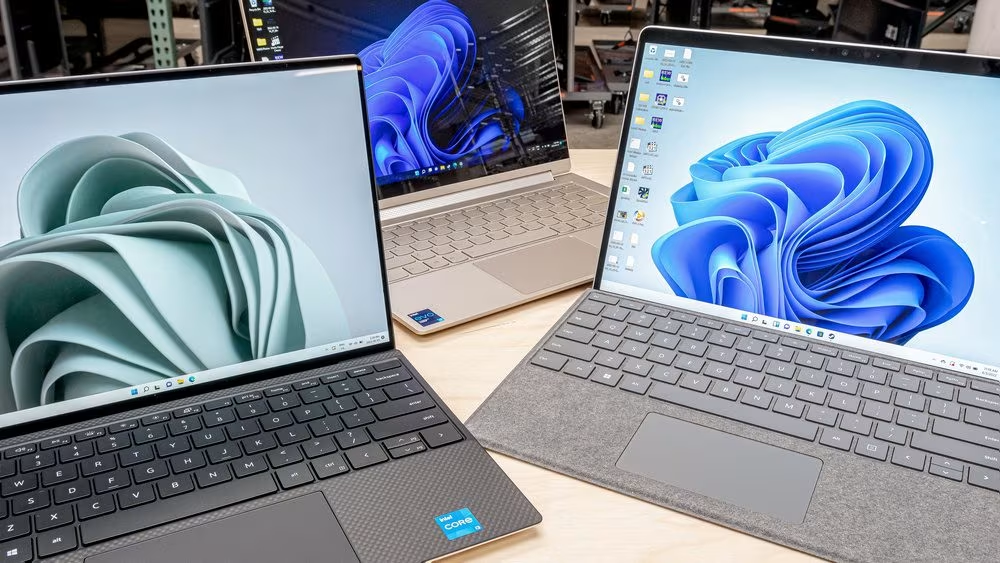
Microsoft’s Windows operating system has reportedly seen its global market share fall below 60% for the first time in years, reflecting growing competition from macOS, ChromeOS, and other computing platforms. The decline highlights changing consumer preferences, longer PC replacement cycles, and the increasing popularity of cloud-based computing and alternative operating systems.
Despite the drop, Windows remains the world’s most widely used desktop operating system, maintaining a significant lead over its competitors in enterprise and consumer markets.
Windows Market Share Falls Below 60%
According to recent market data, Windows’ global desktop operating system market share has slipped below the 60% mark, ending a long period during which it consistently held a higher share.
The decline reflects gradual shifts in the personal computing market rather than a sudden loss of users.
Windows continues to dominate business computing, but rival operating systems have steadily expanded their presence in recent years.
What’s Driving the Decline?
Several factors have contributed to Windows’ declining market share.
These include:
- Rising popularity of Apple Macs.
- Growth in ChromeOS devices.
- Longer PC upgrade cycles.
- Increased cloud computing adoption.
- Expansion of remote work.
- Consumer preference for premium laptops.
The changing mix of devices used for work, education, and entertainment has diversified the desktop operating system landscape.
Competition From macOS and ChromeOS
Both Apple’s macOS and Google’s ChromeOS have continued to gain users.
Their growth has been supported by:
- Strong demand for MacBooks.
- Improved performance with Apple Silicon chips.
- Growth in Chromebook adoption.
- Better battery life.
- Cloud-first computing.
- Education sector deployments.
These platforms have carved out strong positions in specific customer segments while continuing to expand their overall user base.
Windows Remains Enterprise Leader
Despite losing market share, Windows continues to dominate enterprise computing worldwide.
Businesses continue relying on Windows because of:
- Broad software compatibility.
- Extensive hardware support.
- Enterprise security features.
- Corporate IT management tools.
- Large developer ecosystem.
- Productivity software integration.
Its vast installed base remains one of Microsoft’s biggest competitive strengths.
AI PCs Could Support a Recovery
Microsoft and its hardware partners are betting that AI-powered PCs will encourage consumers and businesses to upgrade their devices.
Key AI PC features include:
- On-device AI processing.
- Dedicated neural processing units (NPUs).
- AI-powered productivity tools.
- Enhanced security.
- Improved battery efficiency.
- Intelligent workflow automation.
The rollout of AI-enabled Windows devices is expected to drive the next major PC refresh cycle.
Outlook
Windows’ market share falling below 60% marks a notable milestone in the evolution of the personal computing industry. While Microsoft continues to lead the desktop operating system market by a wide margin, increasing competition from macOS, ChromeOS, and cloud-based computing is gradually reshaping the landscape.
Looking ahead, Microsoft’s success will depend on accelerating AI-powered Windows experiences, encouraging hardware upgrades, and maintaining its leadership in enterprise computing as the global PC market continues to evolve.
Get the day’s top stories in your inbox
One concise email. No spam, unsubscribe anytime.