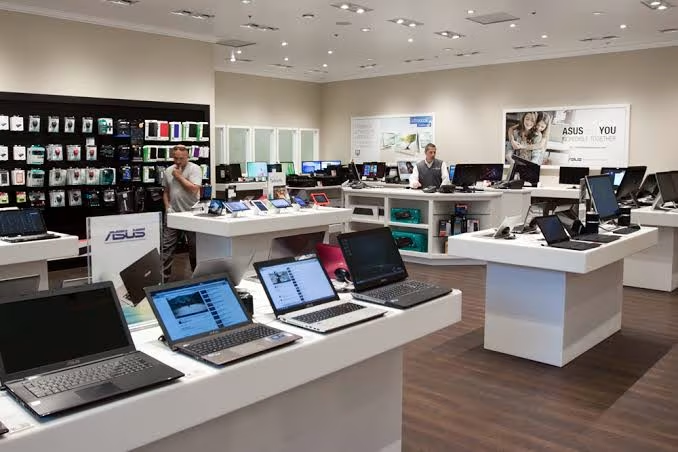
Global PC shipments declined after nine consecutive quarters of growth, as a worsening memory chip shortage and rising component costs disrupted the industry’s recovery. The slowdown reflects increasing pressure on manufacturers facing tighter supplies of DRAM and NAND memory, while businesses and consumers continue to navigate economic uncertainty and changing technology spending patterns.
The decline marks a temporary setback for the PC market, which had benefited from enterprise upgrades, AI-enabled devices, and improving consumer demand over the past two years.
Global PC Shipments Slip After Nine Quarters of Growth
The global PC industry recorded its first shipment decline after nine straight quarters of positive growth.
The downturn is largely attributed to tightening memory supplies, which have increased manufacturing costs and constrained production for laptop and desktop makers.
Despite the slowdown, analysts believe long-term demand for PCs remains supported by enterprise modernization and the growing adoption of AI-powered devices.
Memory Crunch Weighs on PC Manufacturers
A deepening shortage of memory components has emerged as one of the biggest challenges for the PC industry.
The supply constraints are affecting:
- DRAM availability.
- NAND flash supply.
- Component pricing.
- Manufacturing schedules.
- Device production.
- Product launches.
Higher memory prices have also put pressure on profit margins for PC manufacturers and hardware suppliers.
AI PCs Continue to Support Demand
While shipments declined overall, AI-enabled personal computers remain an important growth segment.
Manufacturers continue introducing devices featuring:
- On-device AI processing.
- Dedicated neural processing units (NPUs).
- Improved battery efficiency.
- Enhanced productivity features.
- AI-powered software experiences.
- Advanced security capabilities.
Many industry analysts expect AI PCs to drive the next major upgrade cycle over the coming years.
Enterprise Spending Remains Resilient
Corporate demand continues to provide support for the PC market despite broader industry challenges.
Businesses are investing in:
- Hardware refresh cycles.
- Hybrid work infrastructure.
- Cybersecurity upgrades.
- Cloud-enabled computing.
- AI-ready devices.
- Employee productivity tools.
Enterprise customers remain an important source of stable demand even as consumer purchases fluctuate.
Semiconductor Supply Chain Under Pressure
The memory shortage reflects broader changes across the semiconductor industry.
Current challenges include:
- Rising demand for AI infrastructure.
- Capacity constraints.
- Inventory adjustments.
- Higher production costs.
- Supply chain disruptions.
- Strong demand for advanced memory chips.
Manufacturers of AI servers are consuming increasing volumes of high-performance memory, tightening supply for other electronics segments.
Outlook
The decline in global PC shipments after nine consecutive quarters of growth highlights the growing impact of the memory chip shortage on the technology industry. While rising DRAM and NAND prices have temporarily slowed production and shipments, long-term demand fundamentals remain supported by enterprise upgrades, AI-enabled PCs, and ongoing digital transformation.
As semiconductor manufacturers expand production capacity and memory supplies gradually improve, the PC market is expected to regain momentum, particularly as artificial intelligence becomes a standard feature in next-generation personal computers.
Get the day’s top stories in your inbox
One concise email. No spam, unsubscribe anytime.