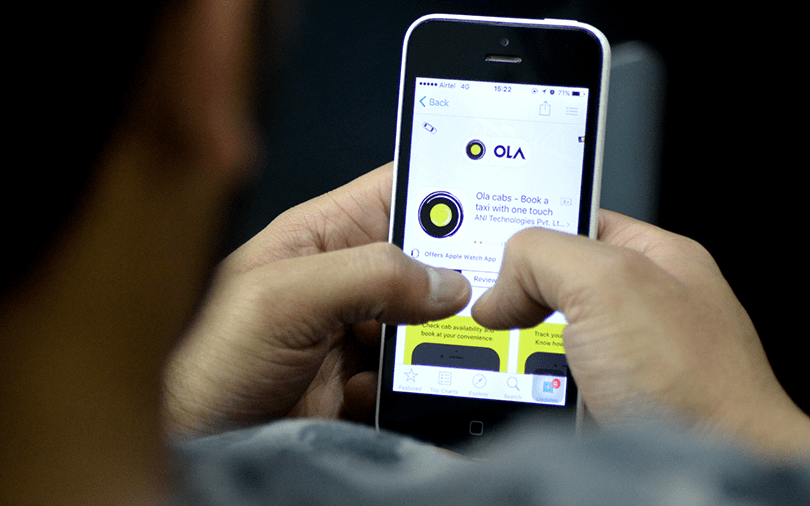
In a stunning repricing that highlights a near-total valuation wipeout, US investment giant Vanguard has slashed the implied fair value of ride-hailing pioneer Ola Consumer (ANI Technologies) to just $70.3 million.
According to regulatory filings submitted to the US Securities and Exchange Commission (SEC) for the period ending February 28, Vanguard reduced the carrying value of its internal Ola stake to roughly $728,000. This updated calculation drops the Bengaluru-based company’s implied worth nearly 99% below its historic peak valuation of $7.3 billion achieved during the late 2021 funding cycle.
1. The Math Behind the 99% Meltdown
The $70 million baseline reflects a dramatic re-evaluation of Ola’s equity value compared to Vanguard’s initial entrance price a decade ago:
- The Initial Investment: Vanguard first bought into ANI Technologies back in 2015, putting up $51.7 million when the ride-hailing startup was valued at a robust $5 billion.
- The Valuation Peak: In December 2021, a funding round led by Edelweiss PE injected $139 million, pushing the company’s valuation to an all-time high of $7.3 billion.
- The Long Slide Down: Rather than an overnight collapse, the correction represents a multi-year series of downgrades by Vanguard, which previously trimmed Ola’s fair value to $1.88 billion in early 2024 and down to $1.25 billion in May 2025. The latest adjustment marks a near-99% drop both from its 2021 peak and from Vanguard’s original 2015 buy-in baseline.
2. Market Squeeze and Financial Friction
The sharp markdown follows a period of heavy operational friction and intensifying market competition within India’s urban mobility sector:
Plunging Financial Metrics
According to internal financial numbers released recently, ANI Technologies’ operating revenue for the fiscal year ended March 2025 (FY25) declined by 42% to ₹1,171 crore, down from ₹2,012 crore in the prior fiscal year. Simultaneously, the firm’s consolidated net losses nearly doubled, widening to ₹662.4 crore from ₹328.7 crore over the same period.
The Competitive Squeeze
Ola has steadily ceded significant market share to key challengers, most notably WestBridge Capital-backed urban mobility startup Rapido. Highlighting the diverging fortunes of the two players, Rapido recently locked in a $3 billion valuation following a successful $240 million funding injection—meaning the upstart is now valued exponentially higher than the parent ride-hailing business of Ola.
3. The Subsidiary Paradox: Ola Electric Outvalues Parent
Vanguard’s latest private markdown highlights a highly unusual corporate paradox: Ola Consumer’s standalone ride-hailing entity is now internally valued at less than its equity holding in its listed sister company, Ola Electric
Ola Consumer holds a residual 3.6% stake in the listed electric two-wheeler manufacturer, Ola Electric Mobility. At current public exchange rates and market values, that minor 3.6% stake alone is worth approximately $73 million—meaning the physical value of Ola’s stock portfolio technically exceeds the value Vanguard assigns to the entire underlying ride-hailing business.
4. Operational Roadblocks Ahead of Proposed IPO
While Ola’s board has formally approved frameworks to pursue an Initial Public Offering (IPO), the steep reduction in institutional value complicates its public-market messaging.
The markdown arrives on the heels of a harsh warning from global credit agency Moody’s, which downgraded ANI Technologies’ rating to negative. Moody’s cautioned that while the mobility platform held roughly $90 million in cash reserves at the end of March 2025, its continuous operational cash burn and debt-servicing requirements could trigger severe liquidity shortages before December 2026.
While industry insiders note that mutual fund adjustments reflect internal assumptions and liquidity discounts rather than absolute transactional prices, the near-total wipeout introduces massive friction as founder Bhavish Aggarwal attempts to convince public markets of the platform’s long-term survival.
Get the day’s top stories in your inbox
One concise email. No spam, unsubscribe anytime.