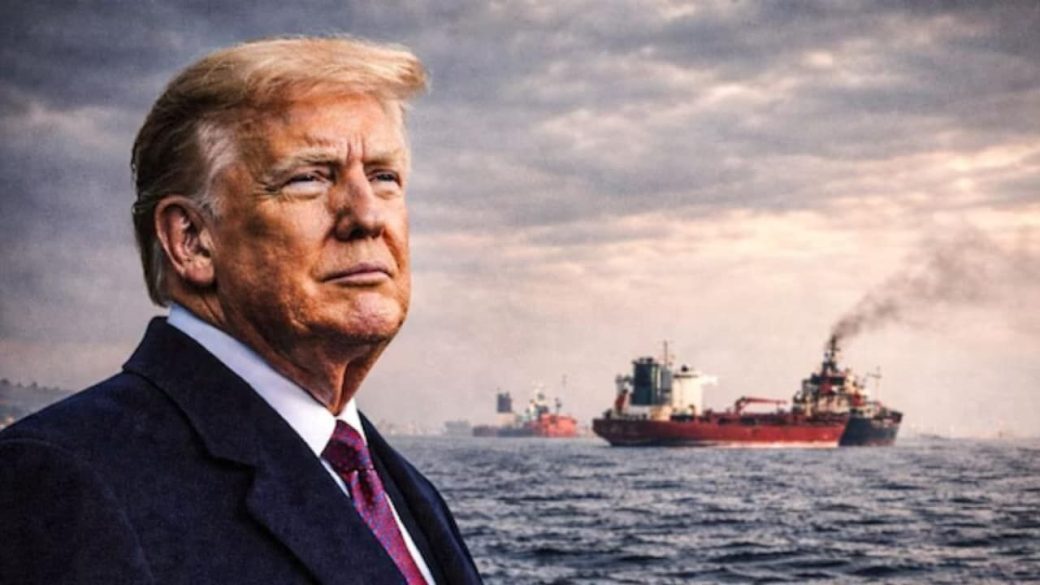
President Donald Trump’s proposal to impose a 20% “reimbursement” fee on cargo transiting the Strait of Hormuz could add around $30 million in costs for a fully loaded oil supertanker, dramatically increasing shipping expenses on one of the world’s most important energy trade routes. The estimate is based on the value of a typical supertanker cargo and highlights the potential financial impact if such a policy were implemented.
Trump said the proposed charge would compensate the United States for securing commercial shipping through the Strait of Hormuz amid escalating tensions with Iran. However, the administration has not released details on how the fee would be calculated, collected, or enforced, and legal experts have questioned whether such a levy could be imposed under international maritime law.
Proposed Hormuz Fee Could Reach $30 Million
The proposed charge could substantially increase shipping costs for oil exporters and importers.
| Proposal | Details |
|---|---|
| Proposed fee | 20% of cargo value |
| Estimated cost per full supertanker | Around $30 million |
| Route affected | Strait of Hormuz |
| Purpose | Fund U.S. maritime security operations |
The estimate assumes a fully loaded crude oil supertanker carrying cargo worth roughly $150 million.
Why the Strait of Hormuz Matters
The Strait of Hormuz remains one of the world’s most strategically important shipping lanes.
Its significance includes:
- Transit route for a large share of global seaborne crude oil.
- Major liquefied natural gas (LNG) exports.
- Critical link between Gulf producers and international markets.
- Essential energy supply route for Asia.
Any disruption or additional transit costs can quickly influence global oil prices and freight markets.
Impact on Oil Markets
Markets have already reacted to renewed geopolitical tensions.
Key developments include:
- Brent crude prices rising above $80 per barrel.
- Increased tanker insurance premiums.
- Higher freight costs.
- Greater volatility across energy markets.
Analysts warn that additional shipping charges could further increase the delivered cost of crude oil for importing countries.
Potential Impact on Oil Importers
If implemented, higher shipping costs could affect:
- India.
- China.
- Japan.
- South Korea.
- European energy importers.
These countries rely heavily on crude oil and LNG shipments passing through the Strait of Hormuz.
Shipping Industry Concerns
| Area | Potential Impact |
|---|---|
| Tanker operators | Higher voyage costs |
| Oil producers | Increased export expenses |
| Importers | Higher landed crude prices |
| Consumers | Potential rise in fuel prices |
Additional transit fees could also influence shipping routes, insurance costs, and long-term supply contracts.
Questions Over Implementation
Several uncertainties remain regarding the proposal.
Key issues include:
- Legal authority to impose the fee.
- Collection mechanism.
- International acceptance.
- Treatment of non-U.S. shipping companies.
- Compliance with maritime law.
No formal implementation framework has yet been announced.
Broader Economic Implications
A sustained increase in shipping costs could contribute to:
- Higher global inflation.
- Rising transportation costs.
- Increased energy prices.
- Pressure on manufacturing costs.
- Greater market volatility.
Energy-intensive industries would likely feel the impact first if additional costs are passed through the supply chain.
Outlook
Trump’s proposed 20% Hormuz cargo fee has added another layer of uncertainty to already volatile global energy markets. While the proposal reflects the administration’s position that countries benefiting from secure maritime trade should contribute to its protection, significant legal, diplomatic, and operational questions remain unresolved. Investors, shipping companies, and governments are expected to closely monitor whether the proposal develops into a formal policy.
What It Means for Global Energy Markets
If implemented, a 20% cargo fee on shipments through the Strait of Hormuz would represent one of the most significant changes to global energy trade in decades. Beyond the direct cost to tanker operators and oil traders, the measure could raise the delivered price of crude oil, increase freight and insurance costs, and add inflationary pressure across importing economies.
For major energy importers such as India, China, Japan, and South Korea, the proposal underscores the strategic importance of diversified energy supplies and alternative trade routes. It also highlights how geopolitical developments in the Gulf can rapidly influence commodity markets, shipping economics, and global economic sentiment.
Get the day’s top stories in your inbox
One concise email. No spam, unsubscribe anytime.