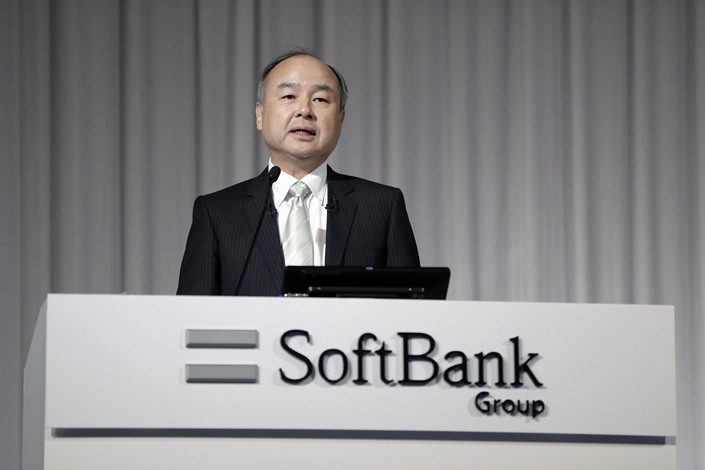
SoftBank Group founder and CEO Masayoshi Son believes nuclear fusion will become the ultimate energy source powering the next generation of artificial intelligence, arguing that AI’s rapidly growing electricity needs will eventually exceed the capabilities of today’s energy infrastructure. Speaking about the future of AI, Son said achieving artificial superintelligence will require an abundant, clean, and virtually limitless source of electricity, making fusion power a critical long-term technology.
His comments come as major technology companies are investing hundreds of billions of dollars in AI infrastructure, with hyperscale data centers consuming unprecedented amounts of electricity. The growing energy demand from AI has sparked renewed interest in nuclear power, renewable energy, and emerging technologies such as commercial nuclear fusion.
Masayoshi Son Sees Fusion as AI’s Future
Son believes the next phase of AI development will depend on breakthroughs in energy production.
| Key View | Details |
|---|---|
| Executive | Masayoshi Son |
| Company | SoftBank Group |
| Core prediction | Fusion power will enable future AI |
| Main concern | AI’s massive electricity demand |
According to Son, future AI systems will require computing infrastructure on a scale that existing energy sources may struggle to support.
Why AI Needs More Energy
Artificial intelligence workloads are becoming increasingly energy intensive.
Major drivers include:
- Training large language models.
- AI inference at global scale.
- Expansion of hyperscale data centers.
- Advanced robotics.
- Scientific computing.
- AI-powered cloud services.
As AI models become more capable, computing and electricity requirements continue to rise rapidly.
Why Fusion Power?
Fusion energy is viewed by many researchers as a potential long-term solution for clean, large-scale electricity generation.
Potential advantages include:
- Near-zero carbon emissions during operation.
- Extremely high energy output.
- Reliable baseload electricity.
- Abundant fuel sources.
- Reduced long-term energy constraints.
Although commercial fusion remains under development, governments and private companies continue investing billions of dollars in the technology.
AI Infrastructure Boom
Technology companies are dramatically increasing capital spending to support AI growth.
| Company Trend | Strategic Focus |
|---|---|
| AI data centers | Massive computing capacity |
| Custom AI chips | Faster model training |
| High-performance networking | AI scalability |
| Energy investments | Long-term power supply |
The AI industry increasingly views energy availability as a competitive advantage alongside semiconductor access.
SoftBank’s Long-Term AI Vision
SoftBank has been expanding its investments across the AI ecosystem.
Areas of focus include:
- AI infrastructure.
- Semiconductor design.
- Robotics.
- Data centers.
- AI startups.
- Advanced computing platforms.
Son has repeatedly described AI as the defining technological transformation of the coming decades.
Growing Interest in Alternative Energy
Major technology companies are exploring multiple energy sources to power AI infrastructure.
These include:
- Nuclear power.
- Solar energy.
- Wind energy.
- Battery storage.
- Small modular reactors (SMRs).
- Future fusion technology.
Reliable electricity supply is becoming a strategic priority as AI data centers continue expanding worldwide.
Challenges for Fusion
Despite its promise, commercial fusion still faces significant hurdles.
Key challenges include:
- High development costs.
- Engineering complexity.
- Commercial scalability.
- Long deployment timelines.
- Regulatory approvals.
Most experts expect commercial fusion power to take several more years before becoming widely available.
Outlook
Masayoshi Son’s comments highlight a growing recognition that the future of AI depends not only on better algorithms and faster chips but also on access to abundant electricity. As AI infrastructure expands globally, energy supply is emerging as one of the industry’s most important strategic challenges.
While fusion power remains a long-term ambition, continued investment in both AI and advanced energy technologies is expected to accelerate as governments and technology companies seek sustainable ways to meet the enormous computing demands of future AI systems.
What It Means for the AI Industry
Son’s vision underscores a fundamental shift in how the technology industry views artificial intelligence. The limiting factor for future AI may no longer be computing architecture alone but also the availability of reliable, affordable, and clean energy.
As hyperscale AI data centers multiply, companies are increasingly investing not only in chips and software but also in power generation and grid infrastructure. Whether through nuclear, renewables, or eventually fusion, access to energy is becoming a strategic differentiator that could shape the next era of AI development and global technological leadership.
Get the day’s top stories in your inbox
One concise email. No spam, unsubscribe anytime.