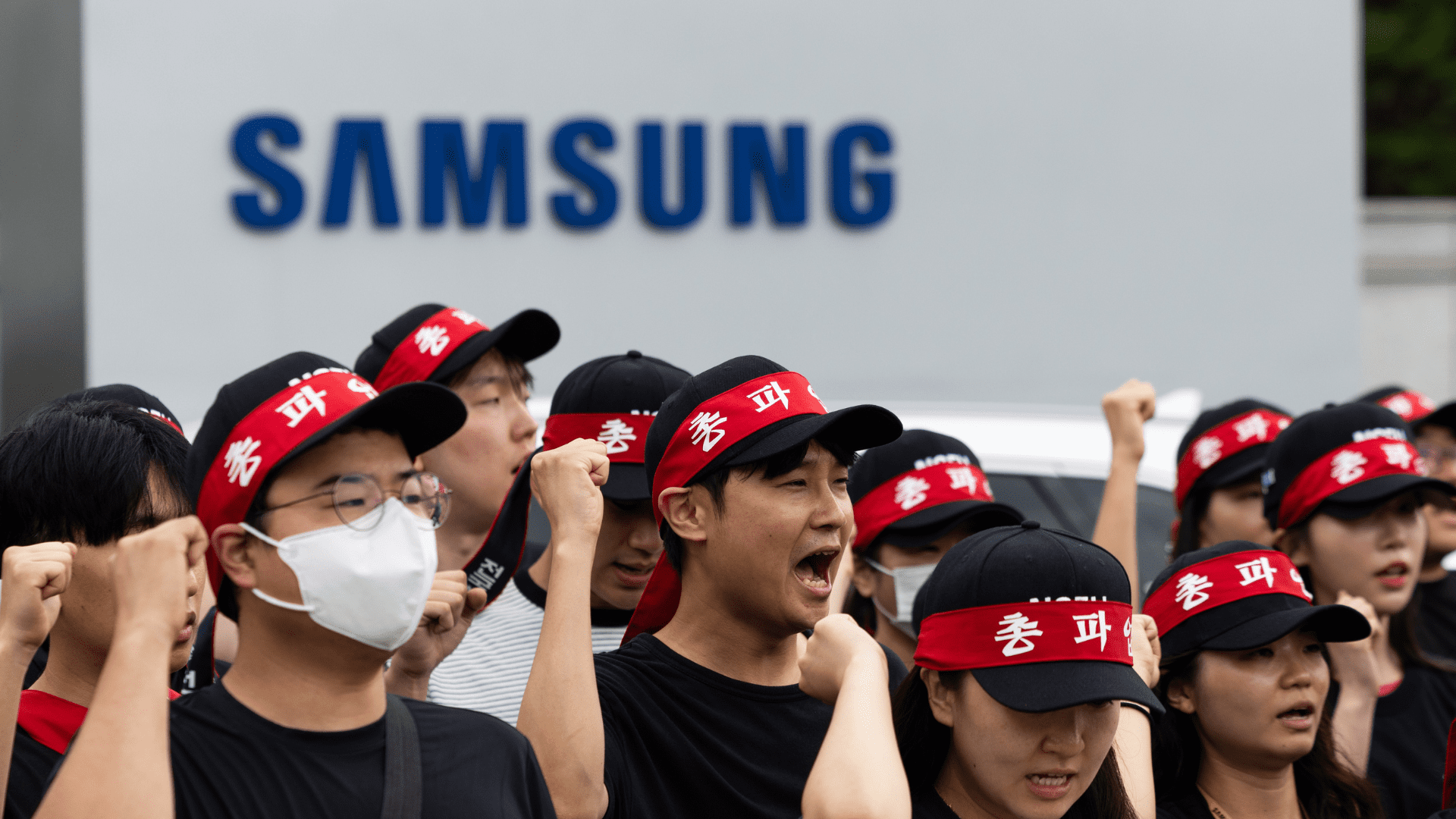
Samsung Electronics and its labor union reached a historic, last-minute tentative agreement on Wednesday, May 20, 2026, completely reshaping employee compensation to avert a catastrophic walkout.
By tying worker pay directly to the massive global AI hardware boom, the deal lines up Samsung’s 78,000 semiconductor division workers for an eye-watering average bonus of 513 million won (~$340,000) per person.
The agreement successfully suspended what would have been a historic 18-day general strike by the National Samsung Electronics Union (NSEU)—a strike that economists warned could have crippled global High-Bandwidth Memory (HBM) supply chains and cost the South Korean economy up to 1 trillion won ($670 million) daily.
1. Breaking Down the 40 Trillion Won Payday
The total bonus pool is estimated to top a staggering 40 trillion won ($26.6 billion), fueled entirely by skyrocketing demand for Samsung’s advanced AI memory architecture (including its HBM3E and HBM4 lines) feeding into Nvidia and major hyperscalers.
| Metric / Term | Detail | Strategic Impact |
| Average Estimated Payout | 513 Million Won (~$340,000) | Replaces a previous corporate cap that historically limited bonuses to 50% of base salary. |
| The Payout Split | 10.5% Stock + 1.5% Cash | Minimizes immediate corporate cash-flow drain while aligning workers with long-term equity value. |
| The Vesting Structure | 1/3 liquid immediately; remainder over 2 years | Acts as a golden handcuff to retain elite semiconductor talent amidst intense poaching by rivals. |
| First Disbursal Date | Early 2027 | Contingent on a union ratification vote running from May 22 to May 27, 2026. |
2. The Internal Memory vs. Logic Disparity
While the $340,000 figure is the mathematically blended average across the entire chip division, leaked internal transcripts from the intense negotiations reveal that the wealth will not be distributed equally:
- The Memory Windfall: Engineers and line workers on the red-hot Memory unit are projected to take home up to 607% of their base salary (yielding upwards of $416,000 to $477,000 for senior staff) due to high margins on AI data-center infrastructure.
- The Foundry Pressure: Conversely, workers in the Logic/Foundry division—which manufactures non-memory processors—are slated to receive as low as a 50% bonus. This lower tier reflects the division’s ongoing structural margin pressures as it fights to catch up to TSMC’s manufacturing dominance.
3. A 10-Year Framework with Strings Attached
To protect itself from the historically cyclical nature of the semiconductor industry, Samsung corporate leadership successfully negotiated a strict 10-year runtime framework for this profit-sharing model. Payouts are entirely conditional on the chip division hitting massive, high-bar financial targets:
- The division must log a yearly operating profit of 200 trillion won or more between 2026 and 2028.
- It must maintain a baseline annual operating profit of 100 trillion won or more through 2035.
4. The Shareholder Backlash
While the union suspended its strike, the sheer scale of the $26.6 billion employee allocation has ignited a secondary war with retail and institutional investors.
On May 21, activist group Korea Shareholder Action Headquarters staged a public rally outside the residence of Samsung Electronics Chairman Lee Jae-yong. The group has vowed to deploy “all legal means available” to block the funds, arguing that diverting 12% of operating profits to worker bonuses bypasses commercial laws requiring formal shareholder resolutions and directly dilutes investor value.
Get the day’s top stories in your inbox
One concise email. No spam, unsubscribe anytime.