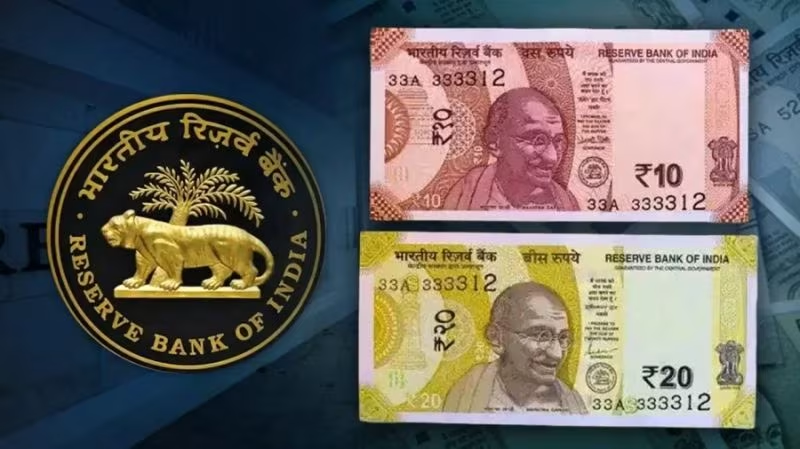
The Reserve Bank of India (RBI) is moving closer to introducing polymer (plastic) currency notes, with a pilot project expected to begin next year using ₹10 and ₹20 denominations. The initiative marks the revival of a long-discussed plan to modernize India’s currency by replacing traditional cotton-based paper notes with more durable polymer banknotes that offer longer life and enhanced security features.
According to reports, the RBI’s currency printing arm has invited global Expressions of Interest (EoIs) from manufacturers capable of supplying security-grade polymer substrate sheets embedded with advanced security features. The procurement process is seen as a key step before launching the pilot programme.
RBI Plans Pilot with ₹10 and ₹20 Notes
The initial rollout is expected to focus on ₹10 and ₹20 banknotes, which are among the most frequently used denominations in India and therefore wear out quickly. Testing polymer notes in these denominations will allow the RBI to evaluate their durability, public acceptance, and operational performance before considering a wider rollout.
Proposed Pilot Overview
| Item | Details |
|---|---|
| Pilot denominations | ₹10 and ₹20 |
| Material | Polymer (plastic) substrate |
| Expected timeline | Pilot likely next year |
| Current status | Global supplier EoIs invited |
| Objective | Improve durability and security |
Why the RBI Wants Polymer Notes
Polymer banknotes have gained popularity worldwide because they last significantly longer than traditional paper notes and are more resistant to damage caused by moisture, dirt, and repeated handling.
The RBI is evaluating polymer notes to:
- Extend the lifespan of frequently circulated currency.
- Reduce printing and replacement costs over time.
- Introduce stronger anti-counterfeiting security features.
- Improve resistance to water, dirt, and tearing.
- Modernize India’s currency management system.
Paper vs. Polymer Banknotes
| Feature | Paper Notes | Polymer Notes |
|---|---|---|
| Lifespan | Lower | Up to 2.5 times longer |
| Water resistance | Limited | High |
| Tear resistance | Moderate | High |
| Security features | Advanced | More advanced and harder to counterfeit |
| Replacement frequency | Higher | Lower |
Global Adoption of Polymer Currency
More than 50 countries, including Australia, Canada, the United Kingdom, New Zealand and Singapore, have adopted polymer banknotes either fully or partially. These countries cite longer durability, lower lifecycle costs and enhanced counterfeit resistance as major advantages.
India also experimented with polymer notes over a decade ago, but the initiative did not progress beyond limited trials. The latest procurement process indicates the RBI is taking concrete steps toward revisiting the technology.
What Happens to Existing Paper Notes?
The proposed pilot does not mean existing paper currency will be withdrawn. If introduced, polymer ₹10 and ₹20 notes are expected to circulate alongside current paper notes initially. The RBI has not announced any demonetisation or replacement timeline for existing banknotes. Any broader rollout would depend on the results of the pilot programme.
Potential Benefits and Challenges
Expected Benefits
| Benefit | Impact |
|---|---|
| Longer note life | Lower replacement costs |
| Better durability | Fewer damaged notes in circulation |
| Enhanced security | Stronger protection against counterfeiting |
| Improved cleanliness | More resistant to moisture and dirt |
Possible Challenges
| Challenge | Consideration |
|---|---|
| Higher initial production cost | Offset by longer lifespan |
| Printing infrastructure | Requires new polymer substrate supply chain |
| Public adaptation | Users and cash-handling systems may need time to adjust |
Looking Ahead
The RBI’s planned pilot for polymer ₹10 and ₹20 notes represents an important step in modernizing India’s currency ecosystem. By inviting global suppliers for security-grade polymer substrates, the central bank has moved beyond the proposal stage toward implementation.
If the pilot proves successful, polymer banknotes could gradually become a larger part of India’s currency circulation, offering longer-lasting notes, lower replacement costs and improved protection against counterfeiting. However, any nationwide rollout is likely to be phased and will depend on the outcome of the pilot and subsequent policy decisions.
Get the day’s top stories in your inbox
One concise email. No spam, unsubscribe anytime.