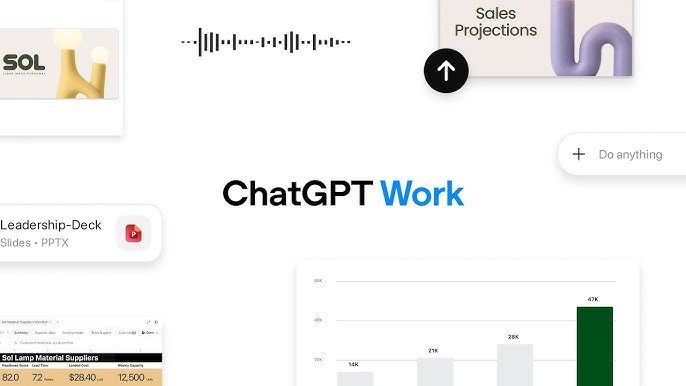
OpenAI has integrated Codex directly into the main ChatGPT application and introduced ChatGPT Work Mode, a new productivity-focused experience designed to combine AI coding, document creation, web research, automation, and collaboration in a single workspace. The move signals OpenAI’s strategy to make ChatGPT the central hub for professional AI workflows rather than offering separate standalone products.
Alongside the integration, the company is retiring the standalone Codex interface, bringing its software engineering capabilities directly into ChatGPT so users can seamlessly switch between coding, writing, research, and task automation.
Codex Becomes Part of ChatGPT
OpenAI has folded Codex into the main ChatGPT app, eliminating the need for a separate coding interface.
Users can now:
- Write and edit code.
- Debug applications.
- Review pull requests.
- Generate documentation.
- Explain codebases.
- Build software projects.
The integration enables developers to access coding tools alongside ChatGPT’s existing capabilities without changing applications.
Introducing ChatGPT Work Mode
OpenAI also unveiled ChatGPT Work Mode, a dedicated workspace aimed at professionals and enterprise users.
Key features include:
- AI-powered coding assistance.
- Document drafting and editing.
- Web research.
- Task automation.
- Project organization.
- Team collaboration.
The new mode is designed to help users complete multi-step workflows within a single AI-powered environment.
Unified AI Productivity Platform
Rather than maintaining separate products for different tasks, OpenAI is consolidating its tools into one platform.
ChatGPT now combines capabilities across:
- Software development.
- Writing.
- Data analysis.
- AI agents.
- Research.
- Productivity workflows.
This unified approach reduces context switching while allowing AI to maintain continuity across different types of work.
Focus on Enterprise Users
The launch reflects OpenAI’s growing emphasis on enterprise productivity.
Work Mode is expected to benefit:
- Software developers.
- Product managers.
- Researchers.
- Business analysts.
- Marketing teams.
- Enterprise organizations.
By centralizing AI tools in one application, OpenAI aims to improve collaboration and workflow efficiency for professional users.
Competing in the AI Workspace Market
The move strengthens OpenAI’s position against rivals offering integrated AI productivity suites.
Competition continues to intensify across areas such as:
- AI coding assistants.
- Enterprise AI platforms.
- Productivity software.
- AI-powered search.
- Document automation.
- Intelligent workflow management.
As businesses increasingly adopt AI across daily operations, integrated workspaces are becoming a key battleground for technology companies.
Outlook
By integrating Codex into the main ChatGPT application and launching ChatGPT Work Mode, OpenAI is expanding ChatGPT from a conversational AI assistant into a comprehensive productivity platform. The unified experience enables users to code, write, research, and automate tasks from a single interface, reflecting the industry’s shift toward AI-powered workspaces.
As enterprise demand for intelligent workflow tools continues to grow, OpenAI’s strategy of consolidating its AI capabilities into ChatGPT could strengthen its position in the rapidly evolving market for AI productivity software.
Get the day’s top stories in your inbox
One concise email. No spam, unsubscribe anytime.