
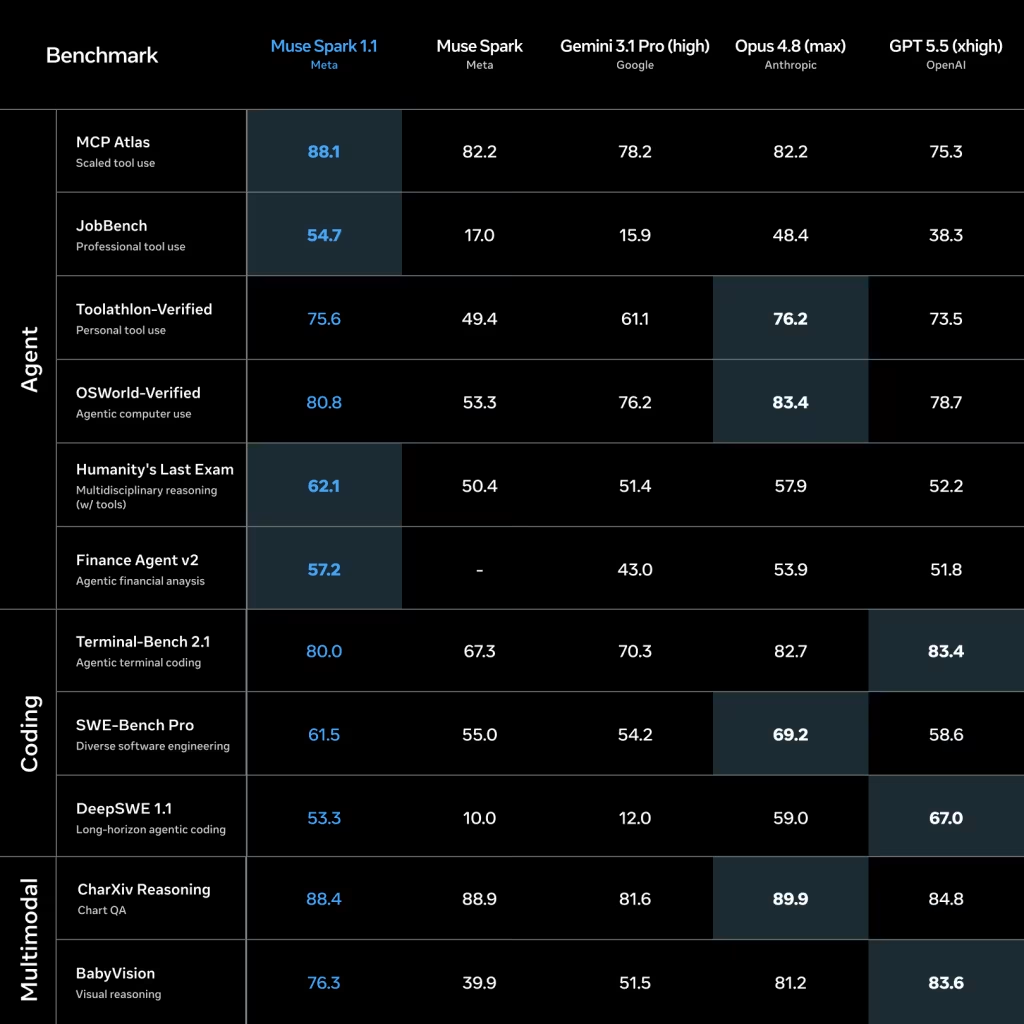
Meta has officially launched Muse Spark 1.1, the latest multimodal reasoning model from Meta Superintelligence Labs (MSL), introducing major improvements in agentic AI, coding, computer use, and multimodal understanding. Alongside the model, Meta has also unveiled a public preview of the Meta Model API, allowing developers to build AI applications using Muse Spark 1.1 for the first time.
The launch marks a significant milestone in Meta’s AI strategy as it expands beyond open-weight models into commercial AI services, positioning Muse Spark 1.1 as a direct competitor to frontier models from OpenAI, Anthropic, and Google.
Meta Launches Muse Spark 1.1
Muse Spark 1.1 is a major upgrade over the original Muse Spark model, with enhanced capabilities for complex reasoning and enterprise AI workflows.
Key improvements include:
- Advanced multimodal reasoning.
- Better coding performance.
- Improved computer-use capabilities.
- Stronger tool usage.
- Enhanced agentic task execution.
- Support for long-context workflows.
The model is available in Thinking Mode through the Meta AI app and on Meta AI’s website, while developers can access it through the new Meta Model API.
Built for Agentic AI
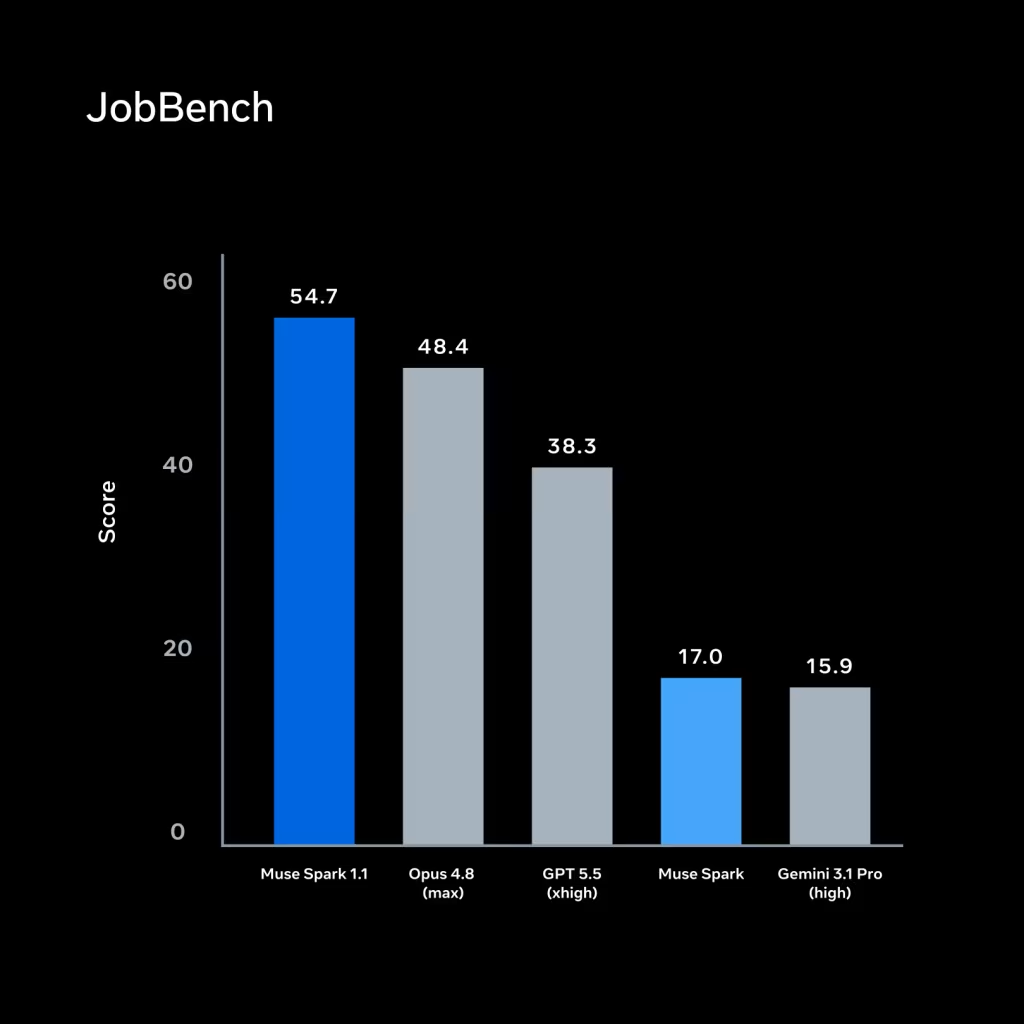
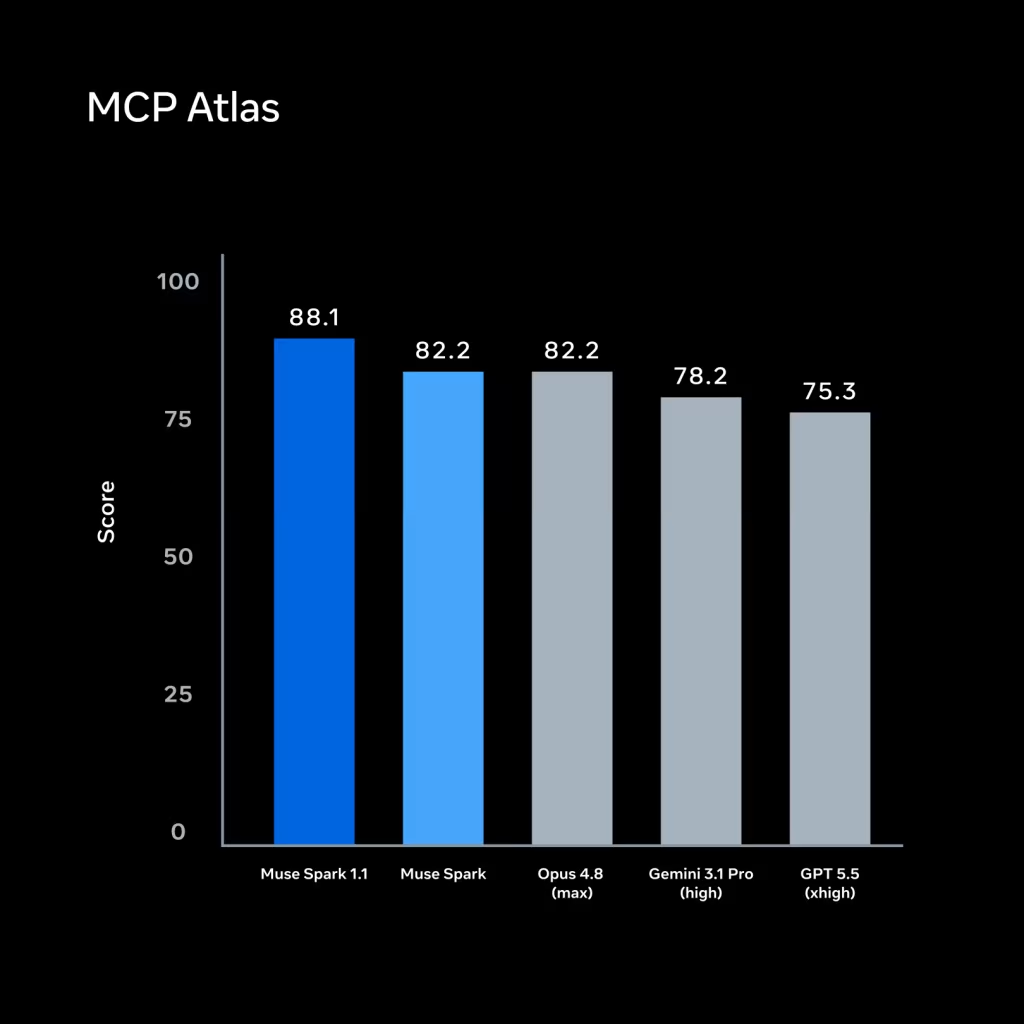
Meta says Muse Spark 1.1 is designed for AI agents capable of completing complex, multi-step tasks with minimal human intervention.
Its agentic capabilities include:
- Managing million-token contexts.
- Planning long-running tasks.
- Using external tools.
- Automating computer workflows.
- Adapting to changing objectives.
- Maintaining context across extended sessions.
The company demonstrated the model performing software development, workflow automation, and computer navigation with limited user guidance.
Major Coding Improvements
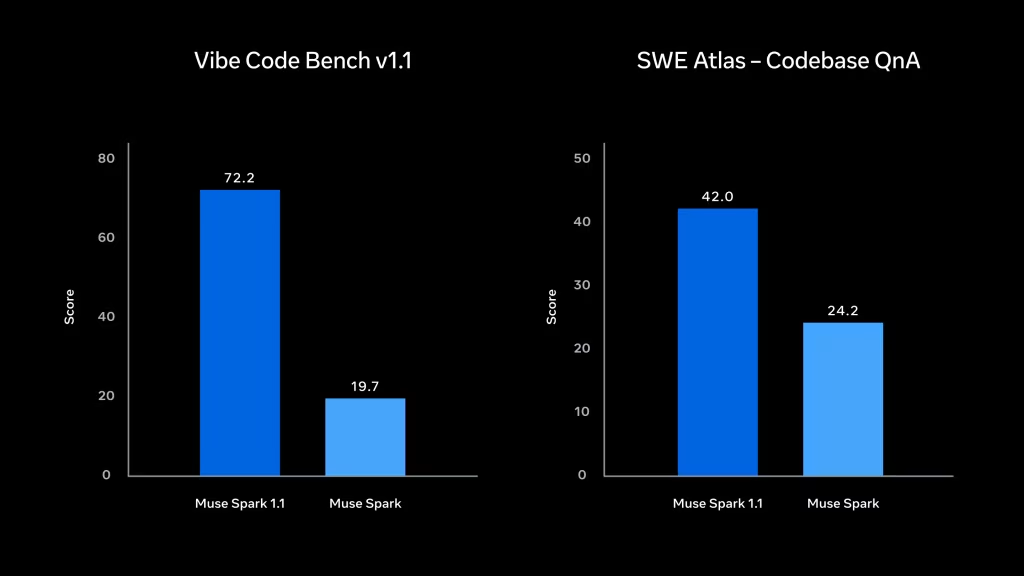
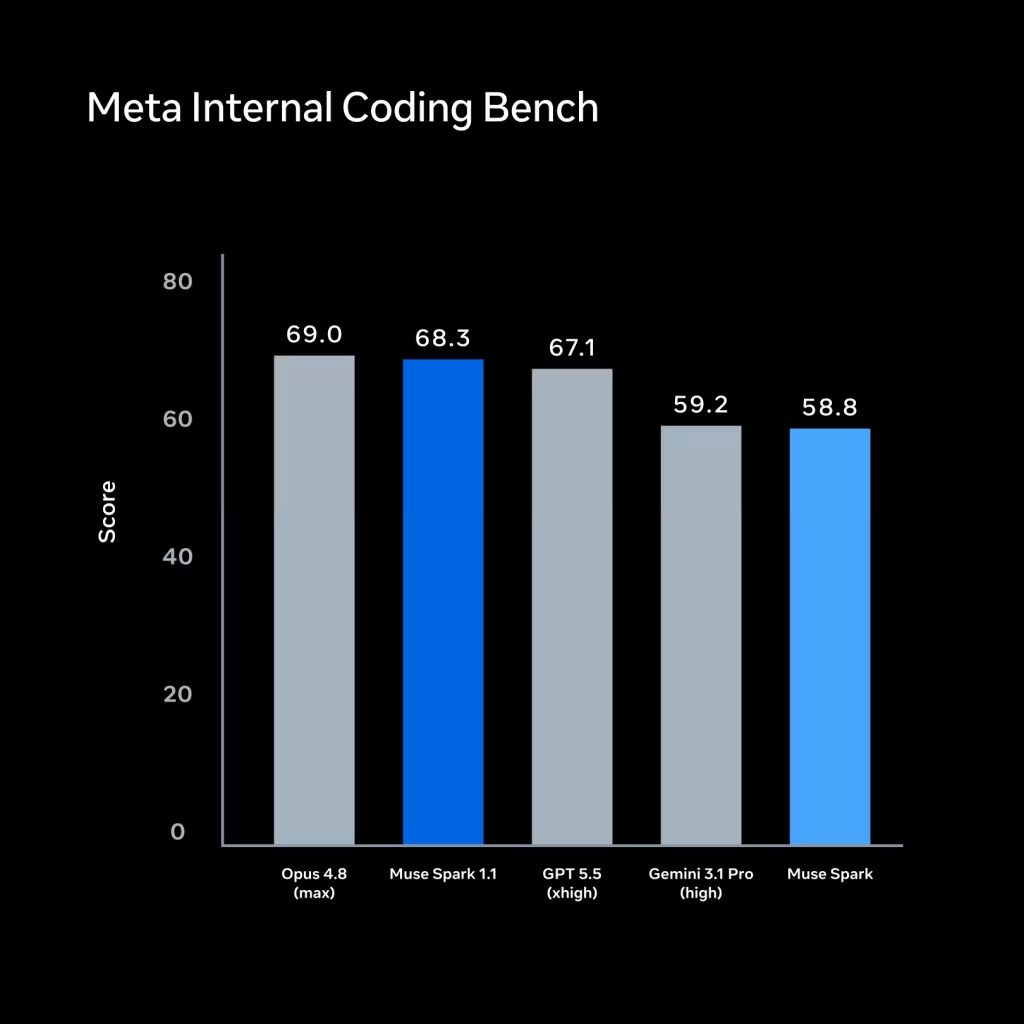
Meta has positioned Muse Spark 1.1 as one of its strongest coding models to date.
The model can assist with:
- Large-scale code generation.
- Complex debugging.
- Enterprise software development.
- Code migration.
- Automated testing.
- Full-stack application development.
Meta says internal evaluations show significant gains over the previous Muse Spark model, particularly on large codebases and agentic coding tasks.
Meta Opens the Model API
Alongside the launch, Meta introduced a public preview of the Meta Model API, enabling developers to integrate Muse Spark 1.1 into their applications.
The API offers:
- OpenAI-compatible endpoints.
- Tool calling.
- Structured outputs.
- Multimodal inputs.
- Usage-based pricing.
- Developer credits for new users.
This represents Meta’s first major commercial API offering for its frontier AI models.
Competing in the Enterprise AI Market
Muse Spark 1.1 signals Meta’s push into the enterprise AI market, where OpenAI, Anthropic, Google, and Microsoft are rapidly expanding their offerings.
Meta’s strategy focuses on:
- Competitive API pricing.
- Enterprise AI adoption.
- AI agent development.
- Coding assistants.
- Productivity automation.
- Large-scale developer access.
The company aims to make advanced multimodal AI more accessible while expanding monetization opportunities beyond its consumer products.
Outlook
The launch of Muse Spark 1.1 marks one of Meta’s biggest AI announcements of the year. By combining stronger reasoning, multimodal understanding, advanced coding capabilities, and agentic task execution with a new commercial API, Meta is positioning itself as a stronger competitor in the frontier AI market.
As enterprise demand for AI agents and developer tools continues to grow, Muse Spark 1.1 could play a central role in Meta’s strategy to expand its presence in both consumer and business AI applications.
Get the day’s top stories in your inbox
One concise email. No spam, unsubscribe anytime.