Ethanol procurement has crossed ₹1.72 lakh crore in three years, the government said. Ethanol procurement means state-run oil companies buying ethanol, a type of alcohol fuel, to mix with petrol. India uses this blend to cut oil imports and help farmers. The money shows how fast that push has grown.
Key takeaways
- PSU oil marketing companies spent over ₹1.72 lakh crore on ethanol across three ethanol supply years.
- An ethanol supply year runs from November to October. It is the government’s tracking period for ethanol buying.
- India blends ethanol with petrol to lower crude oil use and support sugar and grain producers.
- The spending jump shows ethanol is now a big part of India’s fuel plan.
What did the government say about ethanol procurement?
The Ministry of Petroleum and Natural Gas shared the figure in Parliament. It said public sector oil marketing companies, or OMCs, spent more than ₹1.72 lakh crore on ethanol across three ethanol supply years. OMCs are fuel retailers like Indian Oil, Bharat Petroleum, and Hindustan Petroleum.
That number matters because it shows real buying, not just a target on paper. India has talked for years about cleaner fuel and less dependence on imported crude. In fact, this spending suggests the policy is now large, steady, and expensive enough to shape both farming and fuel markets.
The three ethanol supply years covered the recent phase of India’s blending push. A supply year is not the same as a calendar year. It usually runs from November to October, so officials can match procurement with the sugar season and crop cycle.
Why is ethanol procurement rising so fast?
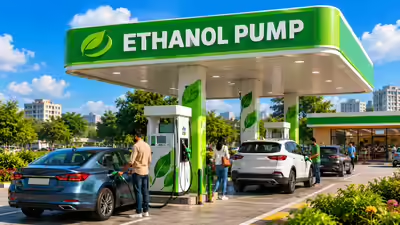
The short answer is blending. India mixes ethanol into petrol, so every rise in the blending rate needs more ethanol. Blending means combining two fuels into one usable mix. Drivers still buy petrol, but a small share of it comes from ethanol.
The government has pushed this plan for two big reasons. First, India imports most of its crude oil, and that costs a lot of money. Second, ethanol gives sugar mills and grain suppliers another buyer, so rural incomes can get support.
India has already moved far from where it started. A few years ago, the blending level was in low single digits. Now it is around 20% in many periods, which is a huge shift for a country this large.
India ethanol procurement: key numbers₹1.72 lakh cr+3 ESYs spend3supply years20%blending goal area
Who buys it, and where does the money go?
The buyers are the big PSU fuel sellers. PSU means public sector undertaking, or a company owned by the government. The main OMCs are Indian Oil, BPCL, and HPCL, and they buy ethanol through tenders from sugar mills and distilleries.
A tender is a formal buying process. Companies submit offers, and the buyer picks based on price and rules. That matters because ethanol procurement is not one giant order. It is a repeated, managed system that runs across states and seasons.
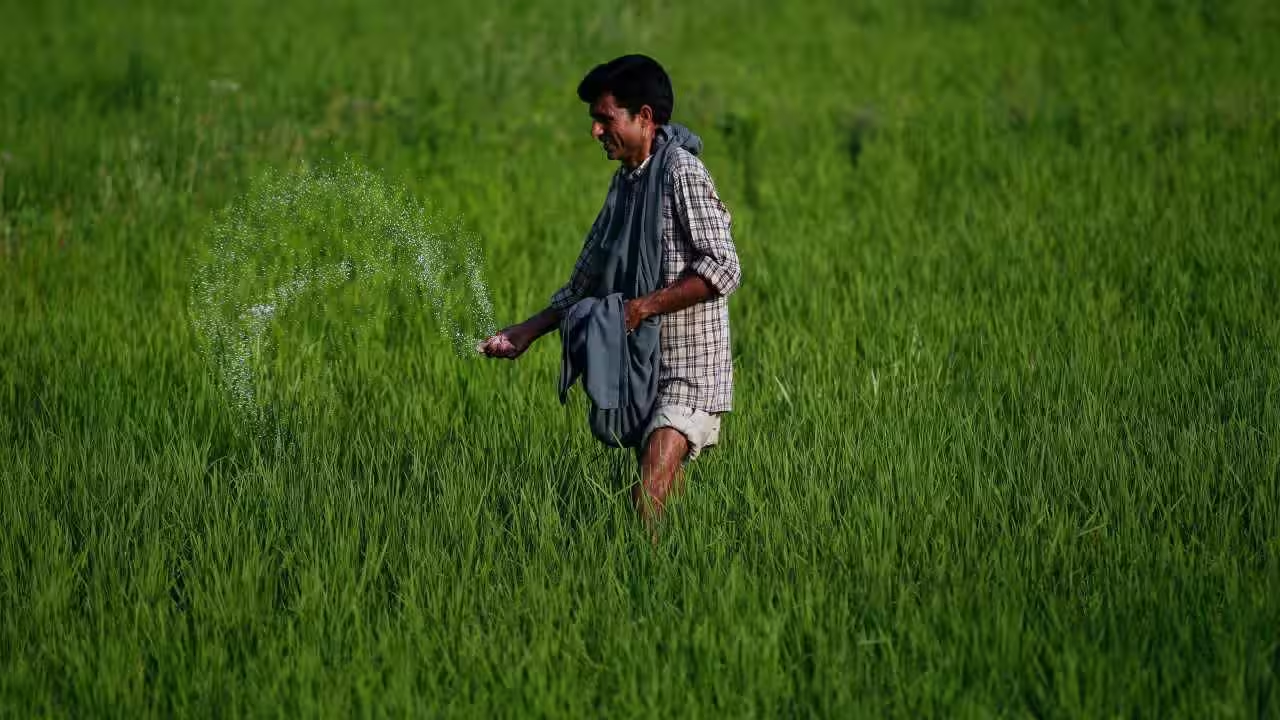
Much of the money flows to firms that make ethanol from sugarcane juice, molasses, and grains. Molasses is a thick, dark syrup left after making sugar. Grain-based ethanol comes from crops like maize and damaged food grains, depending on policy and supply.
What does this mean for petrol prices and India’s oil bill?
Ethanol procurement does not mean petrol will suddenly become cheap. Petrol prices depend on crude oil, taxes, refining, and distribution too. But ethanol can help reduce some imported fuel demand, so it may soften pressure on India’s oil bill over time.
That matters even more when global oil prices jump. India’s crude import burden is already heavy. Our earlier report on crude oil imports hitting $50 billion in India’s Q1 showed how quickly the bill can rise.
There is also an energy security angle. Energy security means having reliable fuel without depending too much on outside supply. If more fuel comes from local sources, India gets a bit more protection when world markets turn shaky.
Are there any concerns behind ethanol procurement growth?
Yes, and they are worth watching. More ethanol demand can create a tug-of-war between fuel use and food use, especially when grain supplies tighten. That does not mean the plan fails, but it does mean policymakers must balance farm output, prices, and water use.
Water is a real issue because sugarcane needs a lot of it. Grain-based supply can help spread the load, but grain markets have their own pressures. So ethanol procurement may keep growing, while the mix of feedstocks changes with weather, prices, and policy.
Another concern is cost. ₹1.72 lakh crore is a large sum by any measure. It is bigger than the annual budget of many states, so taxpayers and consumers will want to know how much benefit this spending brings over the long run.
| Item | What it means | Why it matters |
|---|---|---|
| ₹1.72 lakh crore+ | OMC spending on ethanol in 3 ESYs | Shows the scale of India’s buying program |
| 3 ESYs | Three ethanol supply years | Tracks procurement over crop-linked periods |
| 20% | India’s key blending level target area | Higher blending needs more ethanol |
How does this fit into India’s bigger policy shift?
India has been trying to build more local energy options for years. That includes biofuels, electric vehicles, and new industrial plans. Biofuels are fuels made from plant material. Ethanol is one of the main biofuels used in transport today.
The policy also links farms, factories, and fuel pumps. Sugar mills invest in distilleries because they see a stable buyer. Distilleries are plants that make ethanol. Oil firms buy the output because the blending program gives them a clear target.
You can see the same policy style in other sectors too. For example, the government is also reworking trade and tax systems, such as in our report on a single central GST authority for multi state businesses. Different sector, same idea: make large systems run with fewer breaks.
For readers who want the source data, the government statement in Parliament is the key primary record, and oil ministry updates add context. You can track official energy policy on the Ministry of Petroleum and Natural Gas website and ethanol blending progress through PPAC, the government’s petroleum data body.
What happens next for ethanol procurement?
The next big question is not whether ethanol procurement continues. It almost certainly will. The real question is how fast it grows, and whether supply can keep up without causing stress in food, water, or farm markets.
Here is the clearest way to put it:
Ethanol procurement is now a major part of India’s fuel system, not a side project. The ₹1.72 lakh crore spend shows the country is paying real money to replace a slice of imported petrol with home-grown fuel.
If blending levels hold near 20%, demand should stay firm. If crop conditions weaken, the feedstock mix may shift. Either way, this is no longer a small experiment. It is a large national market, and its choices will affect drivers, farmers, and the import bill.
FAQs
What is ethanol procurement?
Ethanol procurement is when oil companies buy ethanol to mix with petrol. Ethanol is a fuel alcohol made from sugar or grains.
Why does India blend ethanol with petrol?
India does it to cut crude oil imports and support local producers. It can also lower some tailpipe emissions compared with pure petrol.
Who spends this money on ethanol?
Mostly state-run oil marketing companies spend it. The main ones are Indian Oil, BPCL, and HPCL.
How much was spent on ethanol procurement?
The government said PSU OMCs spent over ₹1.72 lakh crore across three ethanol supply years.
Get the day’s top stories in your inbox
One concise email. No spam, unsubscribe anytime.