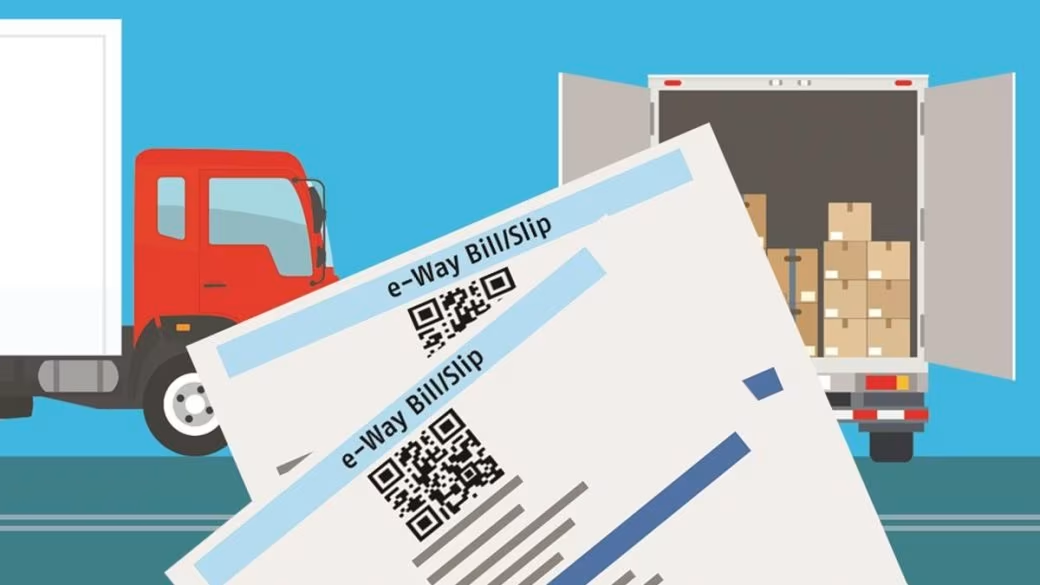
E-way bill generation under India’s Goods and Services Tax (GST) regime rose to 136.77 million in June 2026. This represents a 14.5% year-on-year increase from the 119.46 million bills generated in June 2025.
The June volume marks the fourth-highest monthly level since the inception of the GST framework, signaling robust domestic trade and logistics momentum as the new fiscal year gets underway.
1. Key Metrics & Growth Trajectory
The performance highlights steady domestic trade activity across both sequential and yearly parameters:
- Sequential Increase: On a month-on-month basis, June’s generation marginally climbed 0.5% over the 136.08 million e-way bills recorded in May 2026.
- The Baseline Rule: E-way bills remain a critical high-frequency economic indicator, mandated for moving any consignment of goods valued above ₹50,000.
- Broader Trend: The high volume points to a structural resilience in domestic consumption, reinforcing predictions that private consumption will stay a primary driver for India’s economic growth in FY27.
2. Market Impact & Economic Formalization
Tax and industry experts view the sustained near-record high volumes as a twin indicator of economic health:
- Broadening Tax Base: The rising transaction counts reflect the successful formalization of the economy. Government measures to lower compliance barriers and streamline indirect tax structures are progressively drawing more businesses into the formal net.
- Insulation from Global Friction: The consistent expansion in logistical volume serves as a bellwether showcasing that Indian domestic consumption remains insulated from lingering global geopolitical headwinds.
3. Strict New Compliance Overhauls
The high volume in June coincided with the rollout of strict new system overhauls designed to tighten enforcement and reduce data gaps:
Plaintext
               BEFORE JUNE 15, 2026                             AFTER JUNE 15, 2026
┌──────────────────────────────────────────────┐ ┌──────────────────────────────────────────────┐
│ • "Ship To" GSTIN field was optional         │ │ • Mandatory "Ship To" GSTIN input            │
│ • Prone to invoice/delivery mismatches        │ │ • Rejects generation if left blank           │
│ • No delivery confirmation mechanism         │ │ • Dedicated "E-Way Bill Closure" live        │
└──────────────────────────────────────────────┘ └──────────────────────────────────────────────┘
- Mandatory “Ship To” GSTIN: Effective June 15, 2026, businesses executing “Bill-To/Ship-To” transactions can no longer leave the delivery recipient’s GSTIN blank. The portal will completely block and reject e-way bill generation if the field is empty, halting the movement of goods unless unregistered parties are explicitly tagged as “URP” (Unregistered Person).
- New E-Way Bill Closure Facility: The system permanently deployed a production-level voluntary closure API. This allows suppliers, transporters, or drivers to formally mark a bill as “delivered” rather than simply letting it expire, creating a sharper audit trail and reducing future GSTR-1 reconciliation friction.
Get the day’s top stories in your inbox
One concise email. No spam, unsubscribe anytime.