
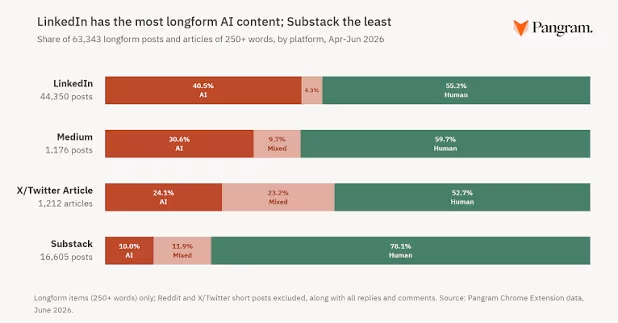
Artificial intelligence is rapidly reshaping online content creation, with one in every four social media posts longer than 250 words now being AI-generated, according to a new analysis by Pangram, an AI detection and evaluation platform. The study suggests that generative AI tools are becoming deeply embedded in how individuals, creators, marketers, and businesses produce long-form content across major social media platforms.
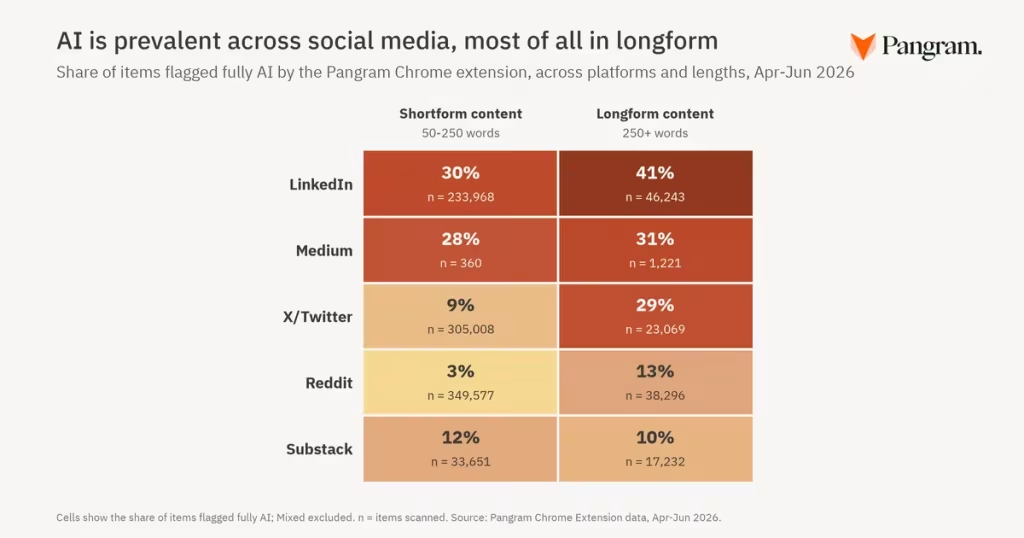
The findings highlight the accelerating adoption of AI writing assistants such as ChatGPT, Claude, Gemini, and other large language models. While AI is helping users create content faster and at lower cost, the report also raises questions about authenticity, originality, and how audiences distinguish between human- and AI-written posts.
AI Content Becomes Increasingly Common
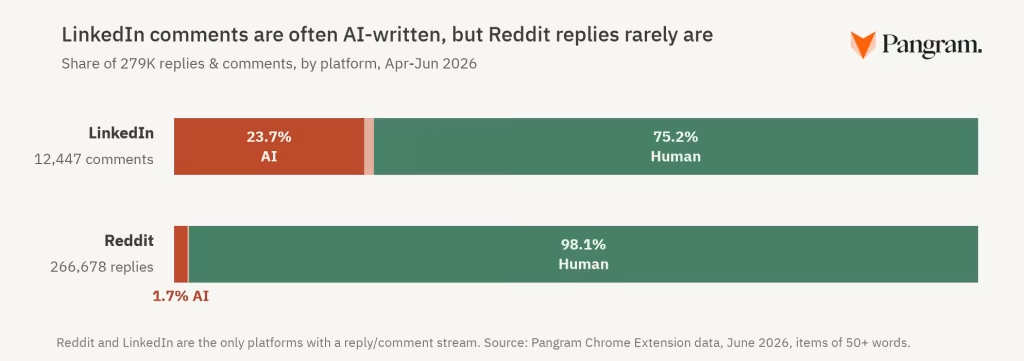
According to Pangram’s analysis, AI-generated content is now a significant portion of longer social media posts.
| Key Finding | Details |
|---|---|
| AI-generated posts | 25% of posts longer than 250 words |
| Content analyzed | Long-form social media posts |
| Research organization | Pangram |
| Trend | Rapid AI adoption in online publishing |
The report indicates that AI usage increases as post length grows, suggesting creators increasingly rely on AI assistants for more detailed writing.
Why Longer Posts Are More Likely to Use AI
Long-form content generally requires:
- More research.
- Better organization.
- Consistent tone.
- Greater writing effort.
- More editing.
Generative AI tools significantly reduce the time required to produce these longer posts, making them attractive to creators and businesses.
Businesses Are Driving Adoption
AI-generated content is increasingly used across industries for:
- Marketing campaigns.
- Product announcements.
- Thought leadership.
- Customer education.
- Social media management.
- Brand storytelling.
Organizations are using AI not only to draft content but also to brainstorm ideas, improve grammar, optimize SEO, and personalize messaging.
Creators Are Changing Their Workflows
Many content creators now use AI as a collaborative writing assistant rather than a complete replacement for human writing.
Common AI-assisted tasks include:
- Draft generation.
- Headline creation.
- Editing.
- Summarization.
- Translation.
- Content repurposing.
Industry experts note that many published posts combine AI-generated drafts with substantial human editing.
Authenticity Remains a Key Concern
The growing volume of AI-written content has intensified discussions around:
- Transparency.
- Originality.
- Trust.
- Attribution.
- Content quality.
- Reader expectations.
While AI can improve productivity, many platforms and publishers continue encouraging creators to disclose AI usage when appropriate and ensure factual accuracy.
AI Tools Continue Improving
The rapid adoption of AI-generated content has been fueled by advances in large language models.
Popular tools include:
- ChatGPT.
- Claude.
- Gemini.
- Microsoft Copilot.
- Perplexity AI.
These systems increasingly produce writing that is difficult for readers—and sometimes AI detectors—to distinguish from human-authored content.
Social Platforms Face New Challenges
As AI-generated posts become more common, social media platforms are confronting new issues, including:
- Spam prevention.
- Misinformation.
- Content authenticity.
- Algorithmic ranking.
- Detection accuracy.
Platforms continue experimenting with AI-generated content labels and other transparency measures, though policies vary widely.
AI Is Reshaping Digital Marketing
The report underscores how generative AI has become a mainstream tool in digital publishing.
| Traditional Workflow | AI-Assisted Workflow |
|---|---|
| Manual drafting | AI-generated first draft |
| Human editing | Human refinement and fact-checking |
| Longer production time | Faster publishing |
| Limited output | Higher content volume |
Rather than replacing writers entirely, AI is increasingly serving as a productivity tool that accelerates content creation.
Outlook
Industry analysts expect AI-generated content to continue growing as language models become more capable and accessible. Future developments are likely to focus on improving factual accuracy, reducing hallucinations, enabling greater personalization, and increasing transparency around AI-assisted writing.
At the same time, demand for authentic, original, and trustworthy content is expected to remain strong, encouraging creators to combine AI efficiency with human expertise and editorial oversight.
What It Means for the Creator Economy
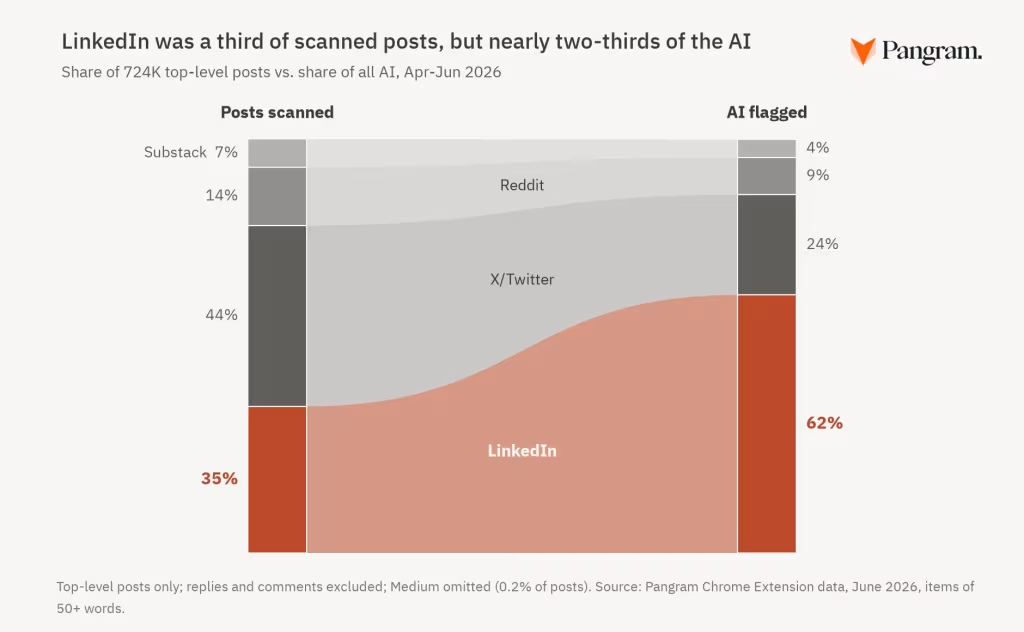
Pangram’s finding that 25% of social media posts longer than 250 words are AI-generated illustrates how generative AI has moved beyond experimentation to become a mainstream content creation tool. Businesses, marketers, and individual creators are increasingly using AI to accelerate writing, improve productivity, and publish content at greater scale.
For the broader creator economy, the challenge is no longer whether AI will be used, but how it will be used responsibly. As audiences become more aware of AI-generated content, trust, originality, fact-checking, and transparency are likely to become even more important differentiators than the speed at which content can be produced.
Get the day’s top stories in your inbox
One concise email. No spam, unsubscribe anytime.