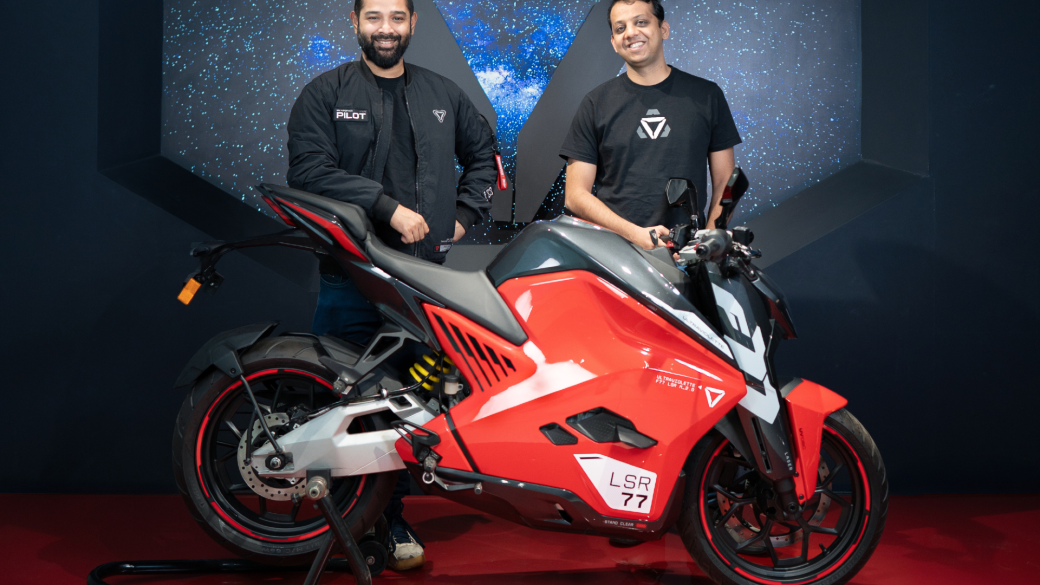
Ultraviolette sales target is the company’s goal for how many bikes it wants to sell. Right now, the Ultraviolette sales target is 1,000 motorcycles a month by the end of this year. The Bengaluru electric bike maker also plans to raise factory capacity to 1.5 lakh units, which means how many vehicles it can build in a year.
Key takeaways
- Ultraviolette wants to reach 1,000 monthly bike sales by year-end.
- The company plans manufacturing capacity of 1.5 lakh units.
- It is expanding retail stores, test rides, and service reach.
- The move shows confidence in premium electric motorcycles in India.
Why is the Ultraviolette sales target a big deal?
Ultraviolette is still a young company, but it has picked a hard market. It sells premium electric motorcycles, which are bikes that cost more and aim at enthusiasts. That makes this Ultraviolette sales target worth watching, because expensive EVs do not sell as easily as budget scooters.
In simple terms, the company is saying demand could rise fast. It wants to go from its current run rate to 1,000 units each month. That would mean 12,000 bikes a year if it keeps that pace. For a niche brand, that’s a meaningful jump.
The bigger number is 1.5 lakh units of planned capacity. Capacity means the most a factory can make over time. Companies often build capacity before demand fully arrives, so they don’t get stuck later. That also tells us Ultraviolette is thinking beyond one model and one city.
What exactly is Ultraviolette planning?
The company says it aims to scale production sharply over the next phase. It wants enough room to build up to 150,000 vehicles a year. That is much higher than the 12,000 annual pace implied by the near-term Ultraviolette sales target.
That gap matters. It suggests Ultraviolette is preparing for more products, more markets, or both. Startups do this when they expect faster adoption later. They may also use shared parts and bigger supplier orders to lower costs per bike.
Here is the core idea in one line:
Ultraviolette is betting that premium electric motorcycles in India will move from a small club of early buyers to a much wider market, and it wants factory capacity ready before that demand hits.
The company has already built attention around performance. Performance means speed, power, and range together. Its bikes stand out because they are marketed more like sporty machines than simple city commuters.
How big are the numbers?
Let’s put the plan side by side. A monthly sales goal of 1,000 equals 12,000 a year. Planned capacity of 1.5 lakh units equals 150,000 a year. So planned capacity is 12.5 times the annualised sales goal.
Ultraviolette key numbers12,000/yr150,000/yrSales paceCapacity
Those numbers show ambition, but also risk. A factory only helps if buyers show up. If demand grows slowly, unused capacity can cost money. Fixed costs are bills a company pays even when output is low.
| Metric | Figure | What it means |
|---|---|---|
| Monthly sales goal | 1,000 bikes | Target by year-end |
| Annualised sales pace | 12,000 bikes | 1,000 x 12 months |
| Planned capacity | 1,50,000 units | Maximum yearly production goal |
| Capacity vs sales pace | 12.5x | Factory room far above near-term sales |
Why would demand rise now?
Several things may help. More riders now understand electric vehicles better, because scooters have become common in many cities. Charging networks are also improving, though not evenly. A charging network is the set of places where EV users can plug in.
Premium buyers often care about design and tech, not just running cost. That helps a brand like Ultraviolette. If the bike feels exciting and reliable, some riders may pay more upfront. Upfront means the money paid at the time of purchase.
Still, the market is not easy. Electric motorcycles have grown slower than electric scooters in India. Scooters suit short city trips better, while bikes must convince riders on range, comfort, and performance all at once.
What challenges could hit the Ultraviolette sales target?
The first challenge is price. Premium electric motorcycles cost much more than basic petrol bikes. Many Indian buyers compare monthly loan payments, so even a good product can feel expensive. A loan is borrowed money paid back over time.
The second challenge is scale. Selling 1,000 bikes a month needs stores, test rides, spare parts, and service teams. Service means repairs and maintenance after the sale. If any one part is weak, buyers may hesitate.
The third challenge is competition. Big brands and startups both want a place in the EV market. Some focus on low prices, while others focus on speed and style. That means Ultraviolette must keep standing out.
Battery supply and policy shifts can also matter. Government incentives can change, and raw material prices can swing. Incentives are benefits like subsidies that lower costs. You can see how policy shapes finance in our piece on the FCNR scheme could draw $70-80 billion from NRIs, though that story is about banking, not EVs.
How does this fit the wider India business story?
India’s startup and manufacturing story is getting more serious. Companies are no longer talking only about prototypes. They are talking about factories, sales channels, and repeat customers. That shift matters because real scale needs all three.
You can see the same investor focus on execution in other sectors too. For example, public market stories like India biggest IPO draws $31 billion in bids show that markets reward companies that can prove demand. In telecom and retail, scale also remains key, as seen in Jio Q1FY27 Results and Reliance Retail Q1FY27 results.
Ultraviolette is much smaller than those giants, of course. But the lesson is similar. Growth stories sound exciting, yet numbers matter most. Sales, capacity use, store reach, and customer trust decide what happens next.
What should readers watch next?
First, watch actual monthly dispatches or registrations. Dispatches are vehicles sent from the company to dealers or customers. Registrations are the official count of vehicles recorded by transport authorities. Registrations usually show real road demand more clearly.
Second, watch product launches and city expansion. If Ultraviolette opens more touchpoints, the Ultraviolette sales target becomes easier to reach. A touchpoint is any place where a customer can see, test, buy, or service a bike.
Third, watch funding and factory execution. Raising capacity to 1.5 lakh units needs money, planning, and reliable suppliers. Readers can track the company’s public updates and official announcements at Ultraviolette. For corporate filings and broader company records, the Ministry of Corporate Affairs is a useful primary source.
Right now, the Ultraviolette sales target is less about one number and more about proof. Can a premium Indian EV bike brand win enough buyers to scale? By year-end, we should have a much clearer answer.
FAQs
What is the Ultraviolette sales target?
The Ultraviolette sales target is 1,000 motorcycles sold per month by the end of the year.
Why is 1.5 lakh units important?
It shows planned factory capacity. In simple words, that is the maximum number of vehicles the company wants the ability to build each year.
Who buys Ultraviolette bikes?
Mostly riders looking for premium electric motorcycles. They usually care about style, speed, tech, and brand appeal, not only low running cost.
Get the day’s top stories in your inbox
One concise email. No spam, unsubscribe anytime.