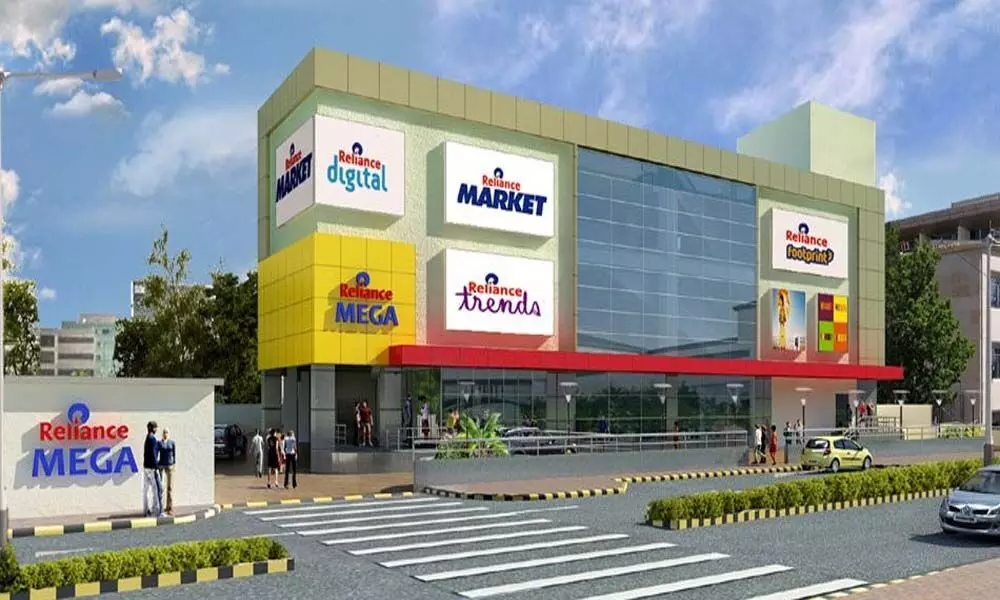
Showcasing how aggressive capital restructuring can unlock immense balance-sheet value, Reliance Retail Ventures Limited (RRVL)—the retail arm of Reliance Industries—has reported a consolidated net profit of ₹13,476 crore for the fiscal year ended March 31, 2026.
The financial performance, disclosed alongside the publication of parent entity Reliance Industries’ integrated annual report on Thursday, highlights a well-rounded operational year. Gross revenue for the retail major breached a key milestone, climbing 12% year-on-year to finish at ₹3,71,085 crore (up from ₹3,30,000 crore in FY25).
Crucially, the sharp bottom-line conversion was heavily insulated from macro headwinds through a massive internal debt-to-equity swap that successfully optimized the company’s capital structure and drove down its interest liabilities.
1. The Financial Catalyst: The Debt Swap Alignment
Over the past three fiscal cycles, Reliance Retail pursued an unprecedented physical footprint expansion, building out a network that now commands 20,160 active stores across India. However, the front-loaded capital expenditure required to fund this real estate acquisition, paired with inventory deployment, had saddled the subsidiary with high internal debt obligations, exposing its profit margins to rising finance costs.
To mitigate this interest drag, the company executed a sweeping internal financial realignment:
- The Mechanism: A massive block of outstanding short-term inter-corporate debt owed by the retail subsidiary back to the parent entity (RIL) was systematically converted into premium equity shares.
- The Operational Impact: By swapping out interest-bearing debt for permanent equity capital, RRVL effectively wiped out hundreds of crores in recurring interest overheads.
- The Net Result: This capital reduction allowed the company’s operating profit (EBITDA)—which grew 7.7% to settle at a robust ₹27,034 crore—to flow cleanly down to the final Net Profit (PAT) baseline, protecting the firm’s bottom line from the margin pressures currently squeezing global brick-and-mortar operators.
2. Segment Performance: Luxury Resurgence and Wholesale Adjustments
The broader retail portfolio presented a diverse operational landscape, with premium urban consumption comfortably outpacing mass market entries:
Luxury and Premium Footprint
Reliance Brands Limited (RBL)—the premium division managing iconic global labels like Sephora, Burberry, and Hamleys—staged an aggressive recovery. The luxury vertical clocked a blistering 45% year-on-year surge in sales to hit ₹3,494 crore, successfully cutting its net losses in half to just ₹137 crore through disciplined store rationalization.
B2B Wholesale Channels
Metro Cash & Carry India, the cash-and-carry wholesale ecosystem acquired by Reliance, reported a stable 13% expansion in top-line revenue to reach ₹12,094 crore. However, aggressive price matching and high integration costs dragged the wholesale unit into a nominal net loss of ₹39 crore, contrasting with a net profit of a similar scale in the previous fiscal year.
3. The Core Consumer Flywheel
The full-year results cement a major structural transition for the broader Reliance Industries group. For the first time in the history of the Indian corporate landscape, consumer-facing digital, retail, and media ecosystems collectively contributed more than 55% of Reliance’s consolidated EBITDA.
This structural shift effectively completes Mukesh Ambani’s decade-long blueprint to transform RIL from a pure-play, cyclical energy and petrochemical company into a diversified consumer technology powerhouse. Supported by a strengthened, de-leveraged balance sheet and backed by an international sovereign-debt ceiling rating upgrade to A- from S&P Global, Reliance Retail is entering the latter half of 2026 with an optimized capital layout, ready to fund its next major growth cycle across quick commerce, hyper-local grocery distribution, and digital commerce pipelines.
Get the day’s top stories in your inbox
One concise email. No spam, unsubscribe anytime.