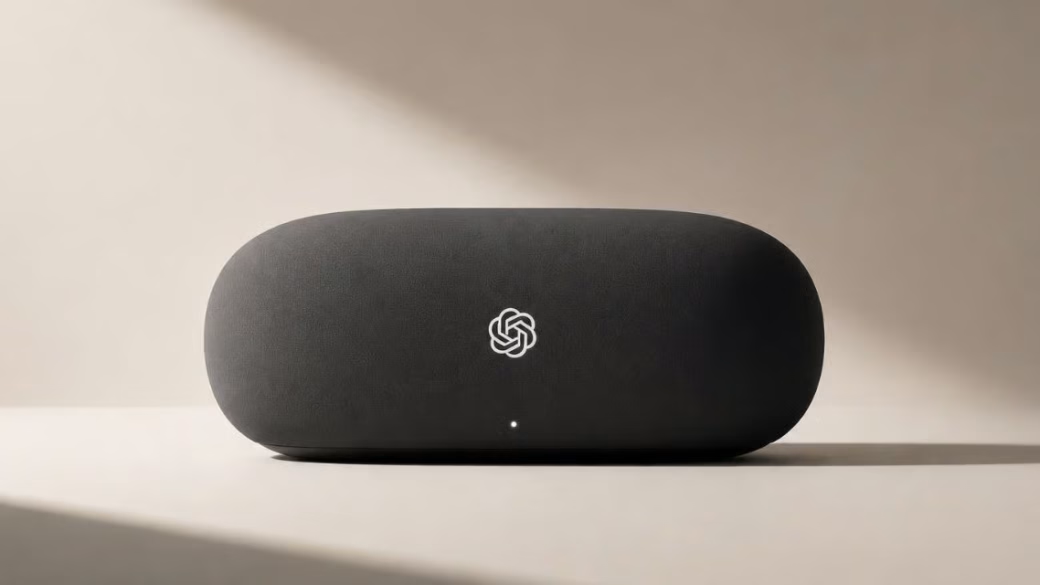
OpenAI’s first consumer hardware device is reportedly shaping up to be a portable, screenless smart speaker that can physically move and interact with users in a more lifelike manner. According to reports, the device is being designed as a human-like AI companion for the home rather than a traditional smart speaker or smartphone. It is expected to integrate ChatGPT, cameras, sensors, and advanced voice capabilities to understand its surroundings and respond more naturally to users.
The product is being developed following OpenAI’s $6.5 billion acquisition of io, the AI hardware startup founded by former Apple design chief Jony Ive. OpenAI’s hardware team, which includes several former Apple executives and designers, reportedly plans to unveil the device later this year, with commercial availability targeted for 2027. The company has not officially confirmed the reports.
OpenAI’s First Hardware Device Takes Shape
Rather than launching a smartphone, OpenAI is reportedly entering the hardware market with an AI-first home companion.
| Key Highlights | Details |
|---|---|
| Company | OpenAI |
| Device type | Portable screenless AI speaker |
| Display | None |
| AI assistant | ChatGPT with GPT-Live voice capabilities |
| Expected launch | Reveal in 2026, release targeted for 2027 (reported) |
The device is intended to function as a new type of AI-powered home computer centered around natural voice interaction rather than a touchscreen.
What Makes the Device Different?
Unlike existing smart speakers, the reported device focuses on creating a more personal AI experience.
Expected features include:
- Screen-free design.
- Portable with a rechargeable battery.
- Built-in cameras and environmental sensors.
- ChatGPT-powered conversations.
- Smart home control.
- Music playback.
- Messaging support.
- Ability to physically move using mechanical components.
According to reports, the moving hardware is designed to make interactions feel more natural and give the device a stronger sense of presence.
Built as an AI Companion
The reported goal extends beyond answering questions.
OpenAI is said to envision a device that can:
- Understand its surroundings.
- Learn user preferences over time.
- Offer proactive assistance.
- Maintain natural conversations.
- Serve as a central AI interface within the home.
The product has reportedly been described internally as a “human-like AI companion” rather than simply another smart speaker.
Jony Ive’s Influence
| Development Area | Details |
|---|---|
| Hardware partner | io (acquired by OpenAI) |
| Design leadership | Jony Ive’s LoveFrom |
| Engineering | Former Apple hardware executives |
| Focus | New AI-native consumer devices |
The project represents OpenAI’s first major push into consumer hardware following its acquisition of io and recruitment of experienced Apple designers and engineers.
Why Skip the Screen?
Reports suggest OpenAI wants to rethink how people interact with AI.
Potential advantages include:
- More conversational interactions.
- Reduced screen dependence.
- Hands-free operation.
- Greater emphasis on voice.
- Continuous contextual awareness.
The approach differs from smartphones by making AI the primary interface rather than an app running on a display.
Competitive Landscape
If launched, the device would compete with several AI-powered home products.
Potential rivals include:
- Apple HomePod.
- Amazon Echo.
- Google Nest speakers.
- Future Apple AI home devices.
However, OpenAI reportedly believes its product occupies a distinct category focused on AI companionship rather than conventional smart-home control.
Challenges Ahead
Several hurdles remain before commercialization.
These include:
- Privacy concerns around cameras and sensors.
- User acceptance of always-on AI devices.
- Manufacturing at scale.
- Hardware reliability.
- Regulatory scrutiny.
- Competition from established consumer electronics brands.
The company also faces ongoing legal disputes with Apple over alleged trade-secret issues related to its hardware efforts, which OpenAI denies.
Outlook
If the reports prove accurate, OpenAI’s first hardware product would represent a significant departure from today’s smart speakers. By combining advanced voice AI, contextual awareness, and physical movement in a screenless device, the company appears to be pursuing a new category of AI-native computing centered on natural interaction rather than traditional displays.
The device also signals OpenAI’s broader ambition to extend beyond software into consumer electronics. With Jony Ive’s design expertise and OpenAI’s rapidly advancing AI models, the company is positioning itself to compete not only with AI developers but also with major hardware companies such as Apple, Amazon, and Google. Whether consumers embrace an AI companion designed to live in the home will likely shape the next phase of AI-powered consumer technology.
What It Means for the AI Hardware Industry
OpenAI’s reported strategy reflects a broader shift toward AI-native devices that rely primarily on conversation and contextual understanding rather than screens. As generative AI becomes more capable, technology companies are increasingly exploring new hardware form factors that make interacting with AI feel more natural.
If successful, the device could accelerate competition across the consumer electronics industry, encouraging rivals to rethink smart speakers, home assistants, and personal computing devices. The next generation of AI hardware may focus less on displays and more on continuous, context-aware assistance powered by increasingly capable multimodal AI models.
Get the day’s top stories in your inbox
One concise email. No spam, unsubscribe anytime.