Moonshot AI has achieved a major milestone in the global artificial intelligence race, with its latest Kimi K3 model climbing to the top of Arena’s Frontend Code leaderboard. The Chinese AI startup’s flagship model overtook leading proprietary systems, including Anthropic’s Claude Fable 5, highlighting the rapid progress of open-weight AI models in software development and coding tasks.
The achievement is particularly significant because Kimi K3 is positioned as an open-weight frontier model, allowing developers greater flexibility than closed proprietary systems. The model has also attracted attention for offering significantly lower API pricing than many competing frontier AI models, potentially reshaping the economics of AI-assisted software development.
Kimi K3 Claims the Top Spot
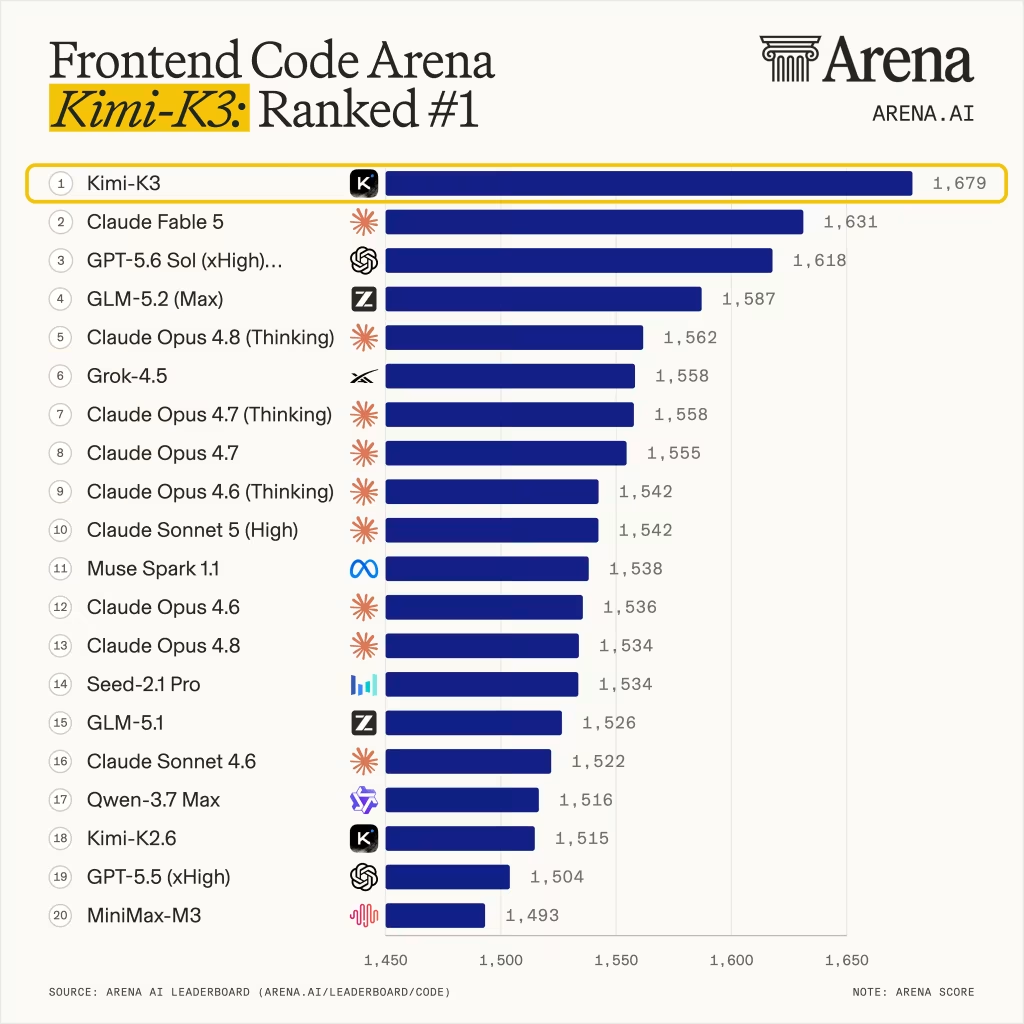
Arena’s Frontend Code leaderboard, which evaluates AI models on real-world web development tasks through human preference testing, now ranks Kimi K3 as the highest-performing model.
According to Arena’s latest rankings:
- Kimi K3 ranked No. 1 on the Frontend Code leaderboard.
- It achieved a preliminary score of 1,679.
- The model surpassed Claude Fable 5, which previously held the top position.
- Kimi K3 recorded one of the biggest jumps ever seen on the leaderboard, moving up 17 places from its predecessor.
Frontend Code Arena Rankings
| Rank | AI Model | Developer |
|---|---|---|
| 1 | Kimi K3 | Moonshot AI |
| 2 | Claude Fable 5 | Anthropic |
| Others | GPT-5.6 Sol, Grok 4.5 and others | OpenAI, xAI and others |
What Makes Kimi K3 Stand Out?
Kimi K3 is the latest large language model from Beijing-based Moonshot AI, one of China’s leading AI startups backed by major investors including Alibaba. The model combines frontier-level coding performance with an open-weight approach, allowing enterprises and researchers to deploy and customize it more easily than closed-source alternatives.
Key highlights include:
- Open-weight architecture for greater developer flexibility.
- Approximately 2.8 trillion parameters, making it one of the largest open-weight AI models released.
- Strong performance across web development and coding tasks.
- Competitive API pricing aimed at accelerating adoption.
Kimi K3 Highlights
| Feature | Details |
|---|---|
| Developer | Moonshot AI |
| Model type | Open-weight frontier AI model |
| Approximate parameters | 2.8 trillion |
| Primary strength | Coding and frontend development |
| Leaderboard status | No. 1 on Arena Frontend Code |
Lower Pricing Could Disrupt the AI Market
Beyond benchmark performance, Kimi K3 has generated industry attention for its pricing strategy.
Reports indicate that the model costs substantially less to use via API than several leading proprietary competitors, making advanced coding assistance more accessible for startups, enterprises, and independent developers. Lower inference costs could encourage wider adoption while increasing competitive pressure on established AI providers.
Competitive Advantages
| Area | Kimi K3 |
|---|---|
| Coding performance | Industry-leading on Frontend Code Arena |
| Accessibility | Open-weight model |
| Cost | Lower than several proprietary rivals |
| Target users | Developers, enterprises, researchers |
A Boost for China’s AI Ambitions
Kimi K3’s success underscores the growing competitiveness of Chinese AI developers in frontier model research.
Chinese companies have increasingly embraced open-weight releases, contrasting with the predominantly closed approach adopted by many U.S. AI labs. Analysts say Kimi K3’s performance demonstrates that Chinese AI firms are narrowing the gap with leading Western models, particularly in specialized domains such as coding and agentic software development.
The result also intensifies competition among AI developers as coding assistants become one of the fastest-growing commercial applications of generative AI.
Why the Leaderboard Matters
Arena’s Frontend Code leaderboard evaluates AI models using real-world web development tasks and human preference voting rather than relying solely on academic benchmarks.
Strong performance on the leaderboard suggests that developers prefer a model’s code quality, usability, and problem-solving ability during practical frontend programming workflows. While leaderboard rankings are only one measure of capability, they are closely watched by AI researchers and software developers because they reflect real-world coding performance.
Looking Ahead
Moonshot AI’s Kimi K3 reaching the top of Arena’s Frontend Code leaderboard marks another milestone in the rapidly evolving AI landscape. By combining frontier-level coding capabilities with an open-weight architecture and aggressive pricing, the model has emerged as a serious challenger to proprietary systems from Anthropic, OpenAI, and other leading AI developers.
As enterprises increasingly adopt AI-powered software development tools, competition is likely to shift beyond benchmark scores toward deployment costs, customization, and real-world productivity. Kimi K3’s early success suggests that open-weight models could play a much larger role in shaping the next generation of AI coding assistants.
Get the day’s top stories in your inbox
One concise email. No spam, unsubscribe anytime.