Temple, the brain-monitoring wearable backed by Deepinder Goyal, could be priced at around ₹72,000, according to media reports, positioning it among the most expensive consumer-focused health wearables in India. Although the company has not officially confirmed the pricing or launch timeline, the reported figure suggests Temple will target premium users interested in neuroscience, longevity research, and high-performance health monitoring rather than the mass consumer market.
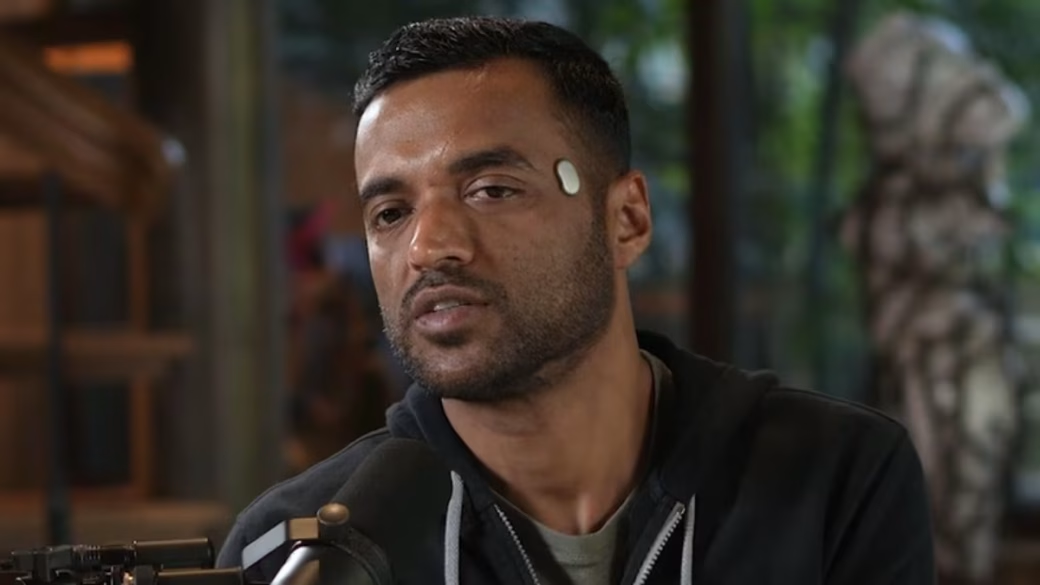
The device has attracted significant attention since Goyal was spotted wearing it during public appearances. Unlike conventional smartwatches and fitness bands that monitor heart rate, sleep, and physical activity, Temple is designed to continuously track cerebral blood flow, making it one of the most ambitious wearable technology projects currently under development in India.
Premium Pricing Signals Niche Positioning
If the reported ₹72,000 price tag proves accurate, Temple will compete in the premium wearable segment alongside high-end smartwatches and specialized health-monitoring devices.
| Product | Reported/Typical Price |
|---|---|
| Temple (reported) | ₹72,000 |
| Target audience | Health enthusiasts, researchers, elite athletes |
| Market segment | Premium experimental wearable |
Rather than competing directly with mainstream fitness trackers, Temple appears to be targeting users seeking deeper insights into brain health and cognitive performance.
What Makes Temple Different?
Temple is being developed by Continue Research, an independent research initiative funded by Deepinder Goyal. The wearable attaches to the side of the forehead near the temple and is designed to measure brain blood flow continuously.
Unlike existing consumer wearables that primarily monitor cardiovascular activity, Temple aims to provide data about cerebral circulation, which researchers consider an important biomarker for brain health, cognitive performance, and aging.
| Feature | Purpose |
|---|---|
| Cerebral blood flow monitoring | Track blood circulation in the brain |
| Continuous measurement | Monitor changes throughout the day |
| Brain health insights | Study cognitive performance and aging |
| Wearable design | Everyday monitoring outside laboratory settings |
The company believes continuous monitoring could provide insights that are difficult to obtain through traditional medical imaging, although the technology remains under development.
Built Around Long-Term Brain Health Research
Temple is closely linked to Deepinder Goyal’s broader research efforts focused on longevity and neuroscience.
Reports indicate that Goyal has personally invested around $25 million (approximately ₹225 crore) into Continue Research, which is studying aging, brain health, and related scientific questions. Temple is one of the first commercial products to emerge from those efforts.
The project is also associated with Goyal’s Gravity Aging Hypothesis, which explores whether long-term changes in blood circulation influenced by gravity could contribute to the aging process. However, the hypothesis has not been scientifically established, and experts have cautioned that further research is needed before drawing conclusions.
Still an Experimental Device
Despite growing public interest, Temple is not yet a commercially available medical device.
| Current Status | Details |
|---|---|
| Pricing | Reportedly around ₹72,000 |
| Manufacturing | Expected to begin soon |
| Launch | Not officially announced |
| Regulatory status | Not publicly disclosed |
| Commercial availability | Yet to be confirmed |
Several important details—including battery life, supported features, companion software, and regulatory approvals—remain unknown. The company has also not confirmed whether the device will initially target consumers, researchers, or enterprise customers.
Growing Interest in Brain Wearables
The wearable technology market has expanded rapidly over the past decade, with devices evolving from simple fitness trackers to sophisticated health-monitoring platforms.
Most consumer wearables today focus on metrics such as heart rate, blood oxygen, sleep quality, and physical activity. Temple represents an attempt to introduce brain-focused health monitoring into the consumer wearable market, an area that remains largely confined to research laboratories and clinical studies.
If successful, the device could open a new category of neurotechnology wearables aimed at improving cognitive performance, monitoring stress, and supporting longevity research.
What It Means for India’s Wearable Industry
Temple’s reported pricing reflects its positioning as a premium, research-driven product rather than a mass-market gadget. While ₹72,000 places it beyond the reach of most consumers, the device could appeal to early adopters, athletes, researchers, and health enthusiasts interested in cutting-edge brain monitoring technologies.
The project also highlights India’s growing ambitions in deep-tech innovation beyond software, with startups increasingly exploring advanced fields such as neuroscience, wearable medical technology, and artificial intelligence. Whether Temple succeeds commercially will ultimately depend on its scientific validation, regulatory approvals, and ability to demonstrate meaningful health insights beyond those offered by today’s smartwatches and fitness trackers.
Get the day’s top stories in your inbox
One concise email. No spam, unsubscribe anytime.