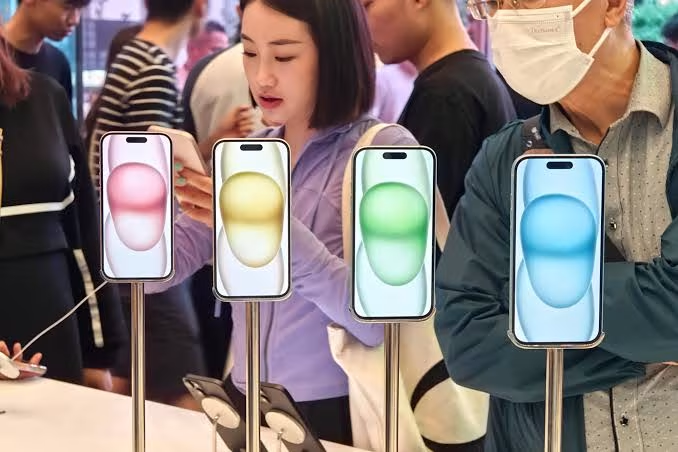
Data from Counterpoint Research shows that smartphone sales in China fell 13% year-on-year during the highly anticipated 618 shopping festival (running from May 26 to June 21).
The mid-year festival, typically an e-commerce barometer for consumer tech demand, suffered heavily because handset makers were forced to scale back aggressive discounts and raise prices to offset skyrocketing global manufacturing costs.
1. The Global AI Ripple Effect on Handset Budgets
The underlying issue trace straight back to a global hardware squeeze. A massive, continuous build-out of artificial intelligence infrastructure and enterprise data centers has hoarded production lines, driving up the price of memory components (DRAM and NAND flash memory).
Because smartphone vendors are paying significantly more to equip their devices with high-capacity storage and RAM, their profit margins were too thin to sustain the massive price cuts typically seen during the 618 window. According to Counterpoint, several newer and older Chinese handset models were actually priced higher than their direct equivalents from a year prior.
2. Brand-by-Brand Impact: A Broad Market Retreat
Aside from a single outlier, virtually every major smartphone brand operating in China absorbed steep, double-digit drops in volume during the month-long campaign:
Plaintext
[ 618 FESTIVAL BRAND SALES GROWTH/DECLINE ]

  Huawei ─────────────────────────────► +19% (Gained 21% total market share)
  Apple  ──────► -9%  (Climbed to No. 2 despite decline)
  Xiaomi ───────────────────► -24%
  Honor  ─────────────────────────────► -33% (Sharpest retreat in the market)
- Honor (-33%) & Xiaomi (-24%): Domestic brands highly reliant on thin-margin, value-focused internet promotions suffered the sharpest consumer pull-backs due to the less aggressive size and range of their price cuts.
- Apple (-9%): Despite the net sales drop, Apple successfully climbed to the No. 2 market position. The tech giant kicked off its promotional campaigns an entire month ahead of June 18, utilizing a mix of official price slashes, platform subsidies, and trade-in deals to offer savings of up to 2,000 yuan (~$295) on the iPhone 17 Pro series. However, total volumes lagged behind last year because its 2025 discounts for the iPhone 16 series had been far more aggressive.
3. The Lone Outlier: Huawei Dominates the Top Spot
Defying the broader market slowdown, Huawei Technologies led the entire festival with a 21% market share, printing a stellar 19% year-on-year sales increase.
The company’s localized growth momentum was anchored heavily by strong organic demand for its Enjoy 90 Pro Max and its flagship Mate 80 series, both of which were heavily supported by targeted regional promotions.
4. The Fatigue of Shopping Festivals
Market analysts warn that the 13% plunge highlights a deeper problem: China’s massive online shopping events are steadily losing their historic buzz. Weak consumer sentiment combined with extended, month-long discount periods across the year has caused “promotional fatigue,” with shoppers increasingly viewing these events with skepticism and pulling back on non-essential hardware upgrades.
While the 618 push did help smartphone volumes bounce back slightly compared to a sluggish May, Counterpoint expects the market to enter a prolonged seasonal slowdown through the remainder of the year.
Get the day’s top stories in your inbox
One concise email. No spam, unsubscribe anytime.