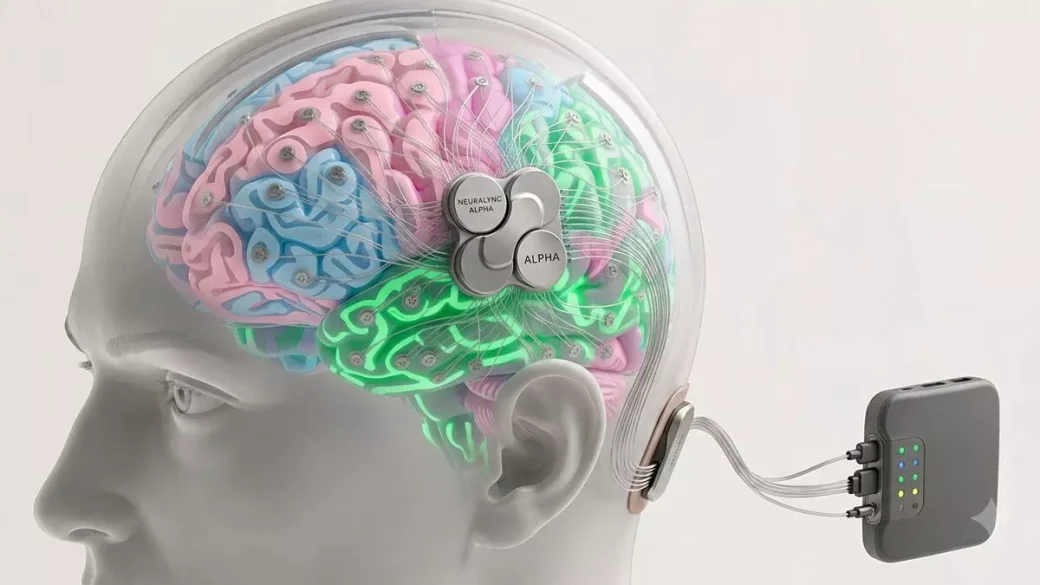
China has announced what it describes as the world’s first commercial brain-computer interface (BCI) chip implant, marking a significant milestone in the race to develop next-generation neurotechnology. The implant, developed by Chinese researchers and industry partners, has reportedly been approved for commercial clinical use, positioning China ahead of rivals such as Neuralink in bringing an implantable brain chip to the commercial stage.
The breakthrough highlights China’s growing ambitions in advanced medical technology, artificial intelligence, and semiconductor innovation. Brain-computer interfaces are designed to translate neural signals into digital commands, enabling people with severe neurological conditions to communicate, control computers, or operate prosthetic devices using their thoughts.
China Announces Commercial Brain Chip Implant
The development represents a major step toward the commercialization of brain-computer interface technology.
| Key Highlights | Details |
|---|---|
| Country | China |
| Technology | Brain-computer interface (BCI) chip |
| Milestone | Claimed first commercial brain chip implant |
| Primary purpose | Decode brain signals into digital commands |
| Potential users | Patients with neurological disorders |
| Industry | Neurotechnology and AI |
The announcement underscores China’s increasing investment in cutting-edge healthcare and semiconductor technologies.
What Is a Brain-Computer Interface?
A brain-computer interface creates a direct communication pathway between the human brain and external devices.
The technology can enable users to:
- Control computers using brain signals.
- Operate robotic limbs.
- Restore communication for people with paralysis.
- Assist patients with neurological disorders.
- Improve rehabilitation after injury.
- Advance neuroscience research.
Modern BCIs combine implanted electrodes, signal-processing hardware, and AI algorithms to interpret neural activity in real time.
How It Compares With Neuralink
China’s announcement intensifies competition in the global BCI industry.
| Feature | China’s Commercial BCI | Neuralink |
|---|---|---|
| Status | Reported commercial clinical deployment | Human clinical trials underway |
| Focus | Medical applications | Medical applications with long-term expansion goals |
| Technology | Implantable brain chip | Implantable brain implant with robotic surgical system |
| Primary objective | Neural signal decoding | Neural signal decoding and computer interaction |
While both approaches aim to restore communication and movement for patients with neurological disorders, they remain at different stages of commercialization and regulatory approval in their respective markets.
Potential Applications
Brain-computer interface technology could transform several fields.
Potential use cases include:
- Paralysis treatment.
- Stroke rehabilitation.
- Prosthetic limb control.
- Communication assistance.
- Smart wheelchair control.
- Human-computer interaction.
- Neurorehabilitation research.
- AI-assisted medical diagnostics.
The technology is expected to become increasingly important as AI improves the accuracy of neural signal interpretation.
Challenges Ahead
Despite rapid progress, significant hurdles remain.
These include:
- Long-term implant safety.
- Regulatory approvals across different countries.
- Data privacy and cybersecurity.
- Surgical complexity.
- Device durability.
- Ethical concerns surrounding neural data.
Researchers will also need to demonstrate long-term reliability and clinical benefits through larger patient studies.
Outlook
China’s reported commercialization of a brain-computer interface chip represents a notable milestone in the rapidly evolving neurotechnology sector. If the technology continues to demonstrate safety and effectiveness in clinical settings, it could accelerate the adoption of implantable BCIs for treating paralysis, neurological disorders, and other medical conditions.
Competition between Chinese developers, Neuralink, and other BCI companies is likely to drive faster innovation, improved implant performance, and broader medical applications. Continued advances in AI, semiconductor technology, and neuroscience are expected to play a central role in the future of brain-computer interfaces.
What It Means for the Neurotechnology Industry
The commercialization of implantable brain chips signals that brain-computer interfaces are moving beyond laboratory research toward real-world medical use. As companies and governments invest more heavily in neurotechnology, the industry is expected to expand rapidly, creating opportunities in healthcare, rehabilitation, robotics, and AI-powered assistive technologies.
At the same time, the emergence of commercial BCIs will increase the importance of regulatory oversight, cybersecurity, and ethical standards for handling neural data. The next phase of innovation is likely to focus not only on improving device performance but also on ensuring patient safety, privacy, and long-term accessibility.
Get the day’s top stories in your inbox
One concise email. No spam, unsubscribe anytime.