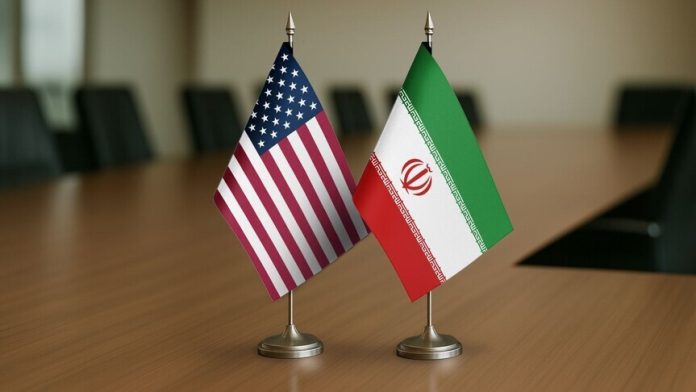


The financial architecture behind the newly announced U.S.-Iran peace framework has become a major focal point for international trade and diplomatic observers. Central to the draft agreement—slated for an official in-person signing on Friday, June 19, 2026, in Geneva, Switzerland—is the disposition of billions of dollars in restricted Iranian capital.
The release of these funds represents a highly complex, conditional mechanism designed to stabilize the geopolitical landscape following more than three months of active warfare.
The Asset Release Breakdown: Tranches and Timing
Initial reports from regional mediators and Iranian state media indicate that the total volume of frozen assets slated for eventual unfreezing sits at approximately $24 billion to $25 billion—roughly representing a quarter of Iran’s total globally restricted sovereign capital.
However, the timeline and mechanics of this capital unlock are subject to starkly different interpretations between Washington and Tehran:
- The Phased Release Model: While early Iranian reports from agencies like Mehr suggested an immediate upfront cash transfer of $12 billion, Western officials and tracking reports indicate the package operates strictly as a “pay-for-performance” pipeline.
- The 60-Day Verification Window: The release of the $24 billion to $25 billion basket will be staggered across a mandatory 60-day diplomatic negotiation period following Friday’s formal signing. Each capital tranche will only unlock as international observers verify that Tehran is actively fulfilling its physical security commitments.
- The Transfer Mechanisms: To bypass standard banking sanctions during the transition, the assets will not be delivered as a single raw currency dump. Instead, the funds will move through a hybrid mix of direct cash transfers, restricted regional credit lines, and specialized humanitarian financial loops managed via co-mediating Gulf nations.
Reciprocal Commitments of the Draft Peace Deal
The unfreezing of these funds is structurally tied to major, parallel security concessions from both nations aimed at permanently winding down the regional conflict:
| United States / Allied Concessions | Iranian De-escalation Commitments |
| Lifting the Naval Blockade: Immediate removal of the defensive U.S. carrier and naval envelope choking Iranian ports. | Hormuz Reopening: Immediate commitment to lift maritime restrictions and open the Strait of Hormuz “toll-free” to global commercial vessels on June 19. |
| Sanctions Exemptions: A temporary 30-day crude oil export waiver to allow legal Iranian tanker shipments to resume. | Nuclear Enrichment Freeze: Agreement to halt further uranium enrichment and freeze the expansion of active nuclear development facilities. |
| Ceasefire Enforcement: Coordination of a permanent termination of military operations across all active fronts, including Lebanon. | Stockpile Dilution: A commitment to dilute highly enriched uranium stockpiles inside Iranian territory via a verification framework. |
Technical Hurdles and Market Reaction
While futures traders reacted immediately to the announcements by dumping geopolitical premiums—dragging global crude prices below the $81/barrel support floor—international banking desks emphasize that operational execution will be a friction-heavy process.
Even after the U.S. Treasury Department issues the necessary legal waivers to authorize the $25 billion transfer, clearing the funds through international clearing houses requires extensive coordination with banking authorities in Europe and Asia. Furthermore, maritime organizations warn that physically unblocking the Strait of Hormuz will require a weeks-long naval demining campaign, meaning that while the financial paperwork may clear rapidly, the physical stabilization of shipping corridors and insurance premiums will be a gradual, long-horizon process.