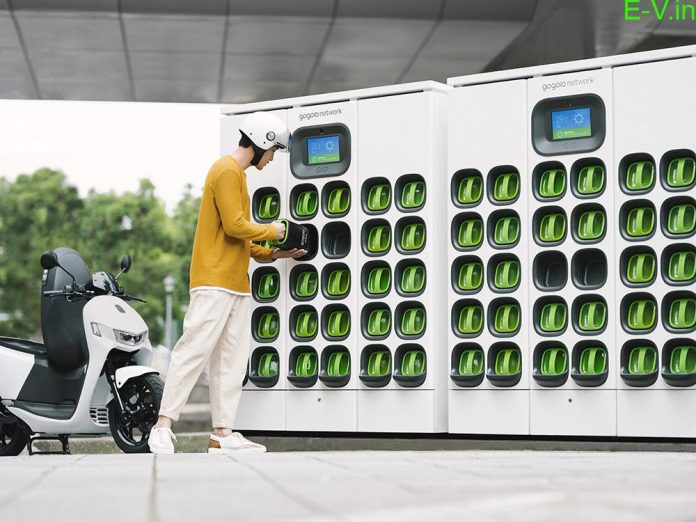


Reliance is utilizing the BaaS model to solve the biggest hurdle preventing mass commercial EV adoption: upfront cost.
By separating the ownership of the vehicle from the ownership of the battery, logistics operators can purchase two-wheelers and three-wheelers at roughly half their standard retail price. The rider simply pays a usage-based subscription fee to swap out depleted batteries, converting an expensive capital asset into a predictable, cheap operational cost.
The Pricing Shift: Relying on Solar Integration
Current battery-swapping operators in India charge an average rate of ₹30 to ₹50 per kWh to cover power procurement and infrastructure overheads. Reliance plans to disrupt this pricing structure by undercutting the market by nearly one-third.
The company is linking its swapping network straight into its massive domestic solar manufacturing pipelines. By drawing power from dedicated solar arrays, Reliance aims to slash raw energy generation costs down to less than ₹5 per kWh. This direct utility loop allows the company to absorb high distribution margins and offer subscription rates that standalone operators cannot match.
Deep Hardware Integration and the Cap Table Moat
The project moves away from generic, outsourced electronics toward complete internal hardware and software control.
- The Silicon Portfolio: Reliance underwrote the core chemistry for these modular cells by acquiring two major global battery innovators: Faradion (for sodium-ion chemistry) and Lithium Werks (for Lithium Iron Phosphate / LFP cells) for a combined investment of roughly ₹1,500 crore to ₹1,700 crore.
- The Full-Stack Powertrain: Reliance did not just design the battery pack; the new energy team engineered the entire electric vehicle powertrain, motor controller, and physical Battery Management System (BMS). Instead of building its own commercial scooters, Reliance is offering this completed technical platform to mid-stage EV startups and entry-level original equipment manufacturers (OEMs). The partners build the vehicle shell, while Reliance supplies the underlying energy platform.
- The CMS Tracking Engine: The network is anchored by a proprietary Central Monitoring Solution (CMS). The cloud-based software manages real-time telemetry communications linking the physical two-wheeler, the digital battery pack, the street-level swapping dock, and the solar inputs.
- The Retail Footprint: Reliance will bypass the real estate acquisition costs that typically drag down infrastructure startups. The initial wave of an estimated 20,000 solar-powered swapping stations will be deployed directly across the conglomerate’s existing corporate footprint, utilizing its thousands of Jio-bp fuel outlets and high-traffic Reliance Retail distribution points.
The Immediate Scale Vector: Internal Fleets First
The operational roadmap follows the exact internal playbook Reliance used to launch its telecom operations. Rather than rolling out to the general public and waiting for consumer habits to adapt, the initial trial phase will use Reliance’s internal supply lines.
The ARAI-certified vehicles and battery variants will be deployed immediately across the delivery fleets of Reliance Retail and Jio. This provides the engineering team with an active, high-mileage testing ground to stabilize the CMS platform and analyze battery degradation metrics under intense daily commercial workloads.
Once the data confirms the platform can handle the stress, Reliance will expand the infrastructure to external commercial fleet partnerships—scaling delivery volumes for e-commerce, quick commerce, and hyper-local logistics giants before ultimately unlocking the network to retail public buyers by the end of the 2027 fiscal year.