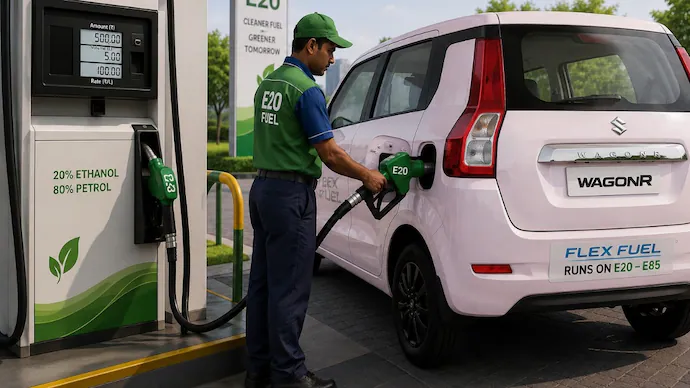


Bharat Petroleum Corporation Limited (BPCL) has officially dismissed claims circulating on social media that E20 petrol (petrol blended with 20% ethanol) attracts ants to vehicle fuel filler caps, calling the viral assertions completely baseless and devoid of scientific truth.
The public sector oil marketing company issued a detailed clarification to counter online rumors suggesting that because ethanol is derived from sugarcane molasses or grain fermentation, its inherent sweetness or odor causes swarms of ants to gather around car and bike fuel tanks.
BPCL dismantled the sugar-adulteration and insect-attraction claims using specific processing and chemical facts:
- Zero Residual Sugars: BPCL explained that fuel-grade ethanol undergoes strict industrial fermentation and distillation setups. The manufacturing refinement completely eliminates all trace sugars from the final chemical product, leaving absolutely no sweetness or glucose residue to function as food for insects.
- Built-in Insect Repellents: To make the fuel industrial-grade, the processed ethanol is mixed with denaturants. These specific chemical additives emit an acrid profile that natively acts as a powerful deterrent and repellent to ants and other insects rather than an attractant.
- Hydrocarbon Odor Dominance: The company pushed back against the idea that an organic ethanol scent masks the fuel tank, confirming that even after a 20% ethanol blend is introduced, the heavy hydrocarbon odor of pure petrol completely dominates the smell profile.
- Suppressed Vapor Output: Lab testing data shows that E20 ethanol-blended petrol actually exhibits lower fuel vapor formation and lower evaporation rates at normal temperatures compared to standard conventional petrol. Because less vapor leaks past a sealed filler cap, there is no physical or olfactory trail for insects to track.
BPCL has urged vehicle owners and the public to rely on verified technical assessments instead of unverified social media videos, reaffirming that any localized ant clusters on a vehicle are driven by external environmental factors—such as parked location or spilled food residue—and carry zero connection to the chemistry of E20 fuel.