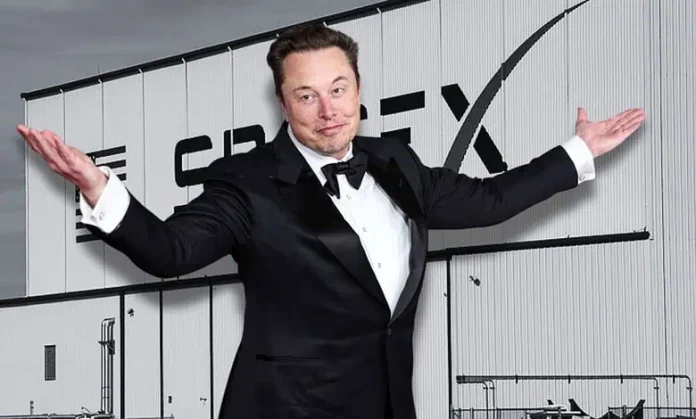


Fresh off cementing his status as the world’s very first trillionaire, Tesla and SpaceX CEO Elon Musk has pushed the boundaries of long-term economic forecasting. Responding to a viral social media discussion regarding what it would take to reach a net worth of $1 quadrillion ($1,000,000,000,000,000), Musk stated that the staggering financial milestone is “not impossible,” though it would require humanity to transition into an off-earth, interplanetary economy.
The comment caps off a historic, record-breaking weekend for the billionaire, whose personal net worth has completely decoupled from the rest of the world’s ultra-wealthy.
The Social Media Exchange: Shifting Beyond the Dollar
The online exchange ignited when the popular World of Statistics account on X pointed out the sheer mathematical gap left for Musk to conquer, noting that he would need to accumulate nearly $999 trillion more to achieve quadrillionaire status.
Musk reposted the claim with a characteristically sci-fi-driven perspective on how such a scale of wealth would actually manifest:
“Not impossible, but definitely requires factories on the Moon and Mars to achieve,” Musk wrote. “By then, I don’t think dollars will be used as currency. Just mass and energy.”
The comment closely mirrors statements Musk made regarding his milestone-driven SpaceX equity package, where he noted that massive multi-trillion-dollar valuations only make physical sense if humanity advances toward a Kardashev II civilization—a theoretical stage where a species is capable of harnessing the entire energy output of its local star.
The Blockbuster Catalyst: SpaceX Directs the Trillionaire Leap
Musk’s latest commentary follows a massive, defining weekend for his aerospace firm. SpaceX officially went public on the Nasdaq exchange under the ticker SPCX, executing the largest initial public offering (IPO) in corporate history by raising $75 billion.
The public debut immediately triggered an intense buying wave on Wall Street:
| Financial Metric | SpaceX IPO Baseline | Day One Session Peak | Current Market Impact |
| Share Offering Price | $135.00 / share | $176.52 / share | Settled at $160.95 (Up 19%) |
| SpaceX Valuation | $1.77 Trillion | $2.18 Trillion | 6th most valuable U.S. company |
| Musk’s Net Worth | Pre-IPO Baseline | ~$1.10 Trillion | Confirmed as world’s 1st trillionaire |
The spectacular valuation surge is heavily driven by a massive pivot in how institutional funds view the aerospace company. Over the last six months, SpaceX has repositioned itself as an AI infrastructure titan, signing massive, multi-billion-dollar deals to provide high-velocity satellite computing and data transport capacity to frontier firms like Anthropic and Google.
The 2030 Roadmap: The Speculative “Moon City” Framework
To back up his long-term trillion-dollar corporate revenue targets, Musk outlined a highly speculative industrial footprint that moves entirely away from traditional terrestrial business constraints.
Instead of relying on standard satellite internet or government launch contracts, the internal SpaceX growth model incorporates sunrise orbital manufacturing verticals. The company is actively mapping out automated asset networks, including “Moon City,” independent lunar factories, and orbital AI data centers designed to process heavy information workloads entirely in space.
While traditional market analysts stress that these deep-space benchmarks depend heavily on unproven technologies and massive, continuous capital expenditures to make Starship fully reusable, Musk’s public debut has proved that public markets are more than willing to fund his grand, sci-fi-inspired vision for an interplanetary future.