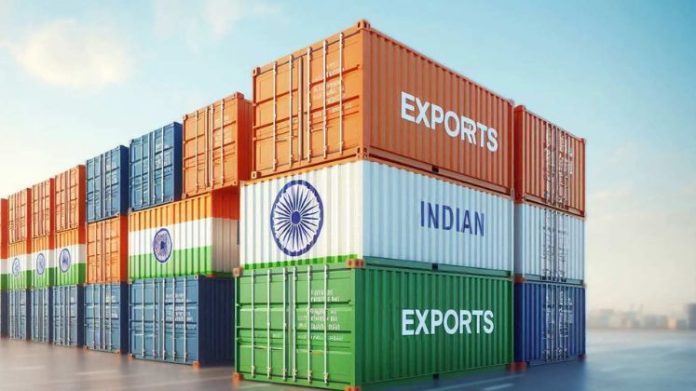


Defying severe global trade disruptions, elevated freight rates, and volatile maritime bottlenecks, India’s engineering goods exports scaled a historic high, touching $122.43 billion for the fiscal year ending March 31, 2026 (FY26).
Data released by the Ministry of Commerce and Industry and the Engineering Export Promotion Council (EEPC) India highlights a robust 4.86% year-on-year growth compared to the $116.67 billion recorded in FY25. This achievement marks the third consecutive year of record-breaking performance for the sector, which has grown nearly 75% over the past 12 years from a base of $70 billion in FY15.
The surge firmly establishes engineering goods as the single largest component of India’s merchandise trade basket, now commanding a dominant 27.71% share of total goods exports.
Navigating the West Asia Shipping Crisis
The record valuation is highly significant given the major supply chain challenges that exporters faced throughout the fiscal year. Military tensions and security risks in the West Asia and Middle East regions heavily disrupted traditional maritime trade routes, forcing a significant portion of Indian shipments to take longer, more expensive detours around the Cape of Good Hope.
This regional logjam directly impacted trade with nearby markets. Engineering exports to the West Asia and North Africa (WANA) region experienced a steep contraction, highlighted by a 10% drop in shipments to the UAE and a 13% decline to Saudi Arabia.
Despite this regional slowdown, Indian manufacturing successfully offset the losses by aggressively expanding its footprint across higher-value Western economies and alternative emerging markets.
Market Diversification: US Demands Hold Strong
An analysis of export destinations reveals a strategic shift toward market diversification, allowing Indian engineering firms to maintain structural momentum despite regional geopolitical issues.
- The United States Stays Number One: The US securely retained its position as India’s top engineering export destination. Driven by infrastructure deployments, shipments to the US expanded by 2.3% year-on-year to hit $19.60 billion, absorbing nearly 16% of India’s total engineering export output.
- The European Union Rallies: Shipments to the European Union grew by a strong 8.6% over the fiscal year. Key advanced manufacturing hubs like Germany ($4.96 billion) and the United Kingdom ($4.74 billion) recorded double-digit demand spikes for Indian machinery, auto components, and industrial castings.
- Alternative Pockets of Growth: India registered strong growth rates across East Asia and Africa, led by significant export increases to China (up 32.3% to $3.53 billion), Vietnam (up 43%), and South Africa (up 15%).
Policy Pillars Cushioning the Bottom Line
The broad-based expansion—which saw 26 out of 34 distinct engineering product categories post positive year-on-year growth—was backed by targeted government policy cushions designed to protect thin manufacturing margins from soaring international logistics fees.
Exporters heavily credited the newly deployed Resilience and Logistics Intervention for Export Facilitation (RELIEF) scheme. The mechanism directly intervened to offset soaring ocean freight insurance and war-risk premiums caused by global maritime disruptions. This support was further bolstered by state interest subvention incentives for micro, small, and medium enterprises (MSMEs), the ongoing benefits of the Production Linked Incentive (PLI) manufacturing schemes, and streamlined regulatory pathways via the National Single Window System.
Regionally, India’s western industrial corridor—anchored by manufacturing clusters across Maharashtra and Gujarat—served as the primary engine room for the milestone, generating roughly 39% ($47.5 billion) of the country’s cumulative engineering shipments.
With fundamentals holding firm and deep bilateral Free Trade Agreements (FTAs) currently under active deployment with the UK and the EU, trade officials reiterated that the FY26 milestone keeps India securely on its structural trajectory to hit its mid-term target of $250 billion in annual engineering exports by 2030.