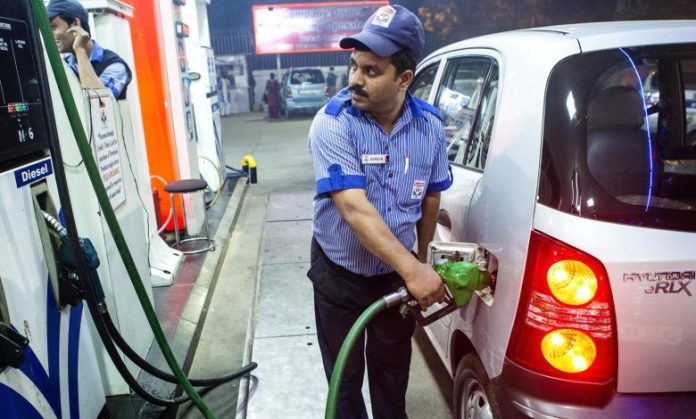


In a major policy intervention to protect individual vehicle owners from localized fuel shortages, the Ministry of Petroleum and Natural Gas has issued an emergency order barring industrial, commercial, and institutional buyers from purchasing fuel directly from retail petrol pumps.
The new directive, titled the Motor Spirit and High Speed Diesel (Temporary Regulation of Supply through Retail Outlets) Order, 2026, takes effect immediately. The regulation limits retail diesel purchases to vehicle tanks or approved containers and introduces a strict daily cap per customer.
Why the Centre Intervened: The Massive Price Gap
The strict measures follow an artificial surge in retail demand over the past few months. State-run Oil Marketing Companies (OMCs) like IOC, BPCL, and HPCL have heavily subsidized retail pump rates to shield common citizens from global energy price spikes tied to the ongoing geopolitical crisis in West Asia.
However, commercial and industrial bulk buyers—including telecom tower operators, construction firms, and factories relying on heavy generators—are legally mandated to pay market-linked rates. This created an unprecedented price disparity that forced bulk buyers to exploit a retail loophole.
| Fuel Type (Delhi Pricing Example) | Retail Pump Price | Bulk Commercial Price | The Price Gap |
| Diesel (per Litre) | ₹95.20 | ₹134.50 | ₹39.30 extra per litre |
| Petrol (per Litre) | Market Regulated | Market Linked | Variable by Region |
To escape paying an extra ₹39.30 per litre, commercial entities began sending fleets of bowsers, modified trucks, and small containers to public retail stations, risking localized supply dryouts for ordinary daily commuters.
Key Restrictions Under the 2026 Fuel Order
The government’s intervention sets clear boundaries to split retail and industrial supply lines, enforceable for an initial period of up to 90 days:
- Mandatory Sourcing Channels: All industrial, commercial, and institutional users are entirely barred from retail stations. They must instead build out their own consumer-operated internal pumps or source directly from authorized bulk wholesale supply points at market rates.
- The 200-Litre Cap: For any retail consumer purchasing diesel outside of a standard vehicle tank, purchases are strictly capped at 200 litres per customer or vehicle per day.
- Container Compliance: Any external diesel purchase must be filled exclusively into containers approved by the Petroleum and Explosives Safety Organisation (PESO).
- Resale Prohibition: The order explicitly states that any retail-procured fuel “cannot be resold.” Violations will trigger severe criminal prosecution under the Essential Commodities Act.
Will This Order Affect Everyday Vehicle Owners?
For standard passenger vehicle owners and two-wheeler commuters, there is no negative impact. In fact, the policy is explicitly designed to safeguard their access to fair pricing. With average car tanks holding between 35 to 60 litres, common commuters will not cross the 200-litre restriction threshold.
Commercial Vehicle Outlook: While daily commuters remain unaffected, operators of heavy interstate logistics trucks, long-haul multi-axle trailers, and luxury intercity sleeper buses—which feature large industrial fuel tanks ranging from 350 to 600 litres—will face operational adjustments and strict daily monitoring at public fuel bunks to prove they are not rerouting fuel for industrial resale.
State administrations and Union Territories have been granted full enforcement powers to monitor retail fuel stations, conduct surprise inspections, and crack down heavily on hoarding, black marketing, or commercial fuel diversion.